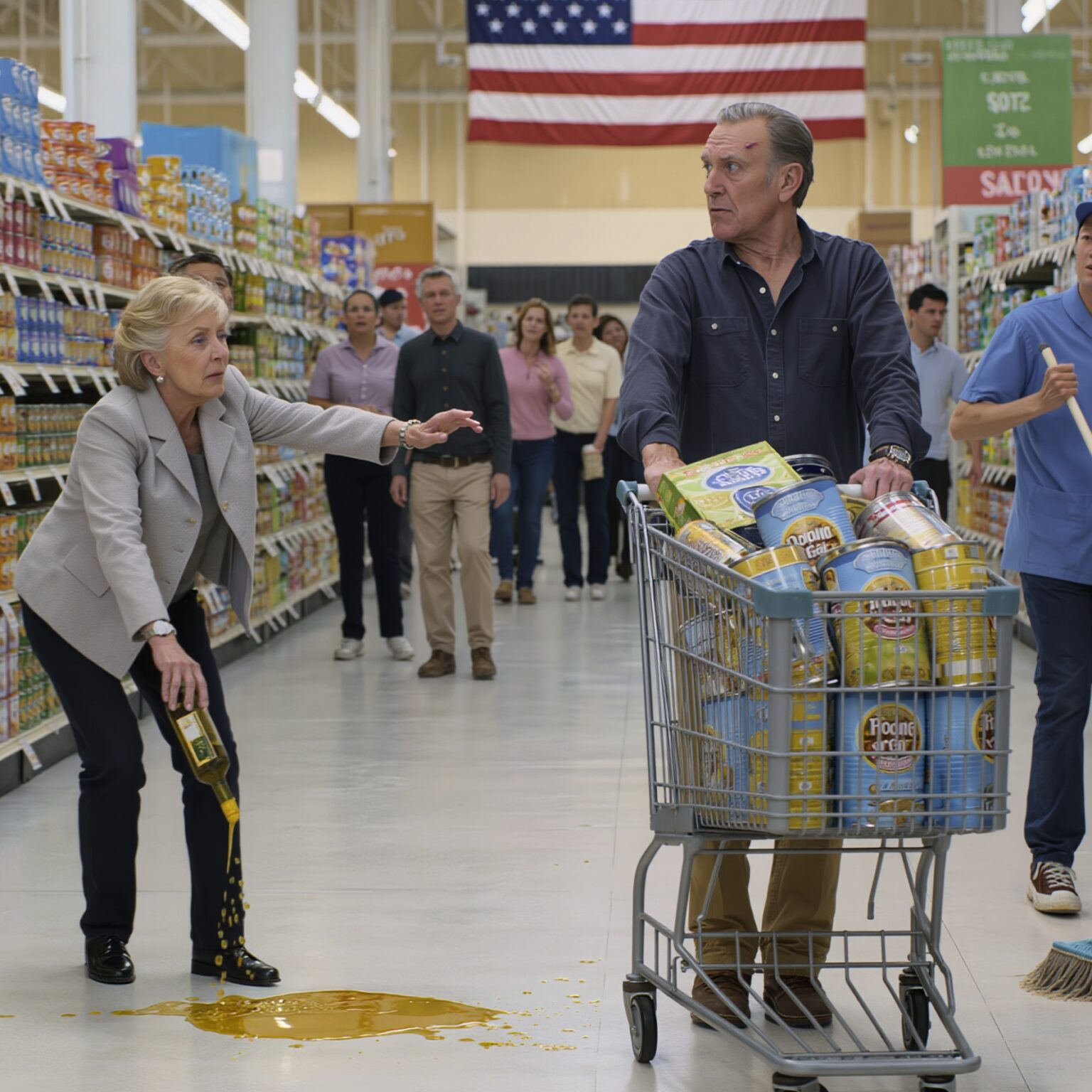
I buried him on a rain-damp morning six months ago, beneath a canopy of weeping willows and the weight of an Italian marble crypt that cost more than I ever imagined spending, polishing each stone with tears my eyes refused to produce after a certain point — not because the grief had ended, but because my capacity for crying had simply run out, like an empty reservoir of saltwater and disbelief. We had chosen the crypt together years before, a grand, quietly elegant memorial he’d insisted on because he said life deserves dignity even in its last moments, and I had spent so many nights sobbing into the cool leather of his jacket that now even the scent of him seemed like an ache I could barely carry. I walked that row of headstones every day for months, talking to him in silence the way you talk to someone you still love even when they’re physically gone, placing flowers and memories and unspoken confessions in the forethought that he was at peace, that I was learning to be brave, that maybe — somehow — this was how life meant to be lived after loss. Then that Tuesday afternoon — ordinary, unremarkable, grocery-errand kind of day — it happened: I turned down Aisle 14 at Costco, scanning for paper towels or peaches, and there he was — unmistakable even in the swirl of fluorescent lights and bulk cereal boxes — leaning on a shopping cart like someone who had all the time in the world, staring at a display of oversized family-size peanut butter jars with one eyebrow lifted, in that same, familiar way he used to do when he was judging price per ounce rather than life’s inevitabilities. My breath hitched in a way I didn’t know a human body still could — like the air itself had been snatched away and all that was left behind was the sound of my own blood rushing in my ears, the universe tilting and blurring the world into one surreal moment where memory and reality collided there between Costco signs and tumble-sized laundry pods. I blinked, once, twice, afraid that the universe had decided to play a cruel trick on me — hallucination, grief-induced mirage, something my heart had dreamed into existence — but then his head turned and our eyes met, and that familiar gleam, unguarded and alive, unlocked something inside me I had locked away with grief and resignation: Hope. He didn’t look startled. He didn’t register shock or confusion or guilt. He just looked — as if he was doing something as ordinary as reading a price tag and not defying everything I believed about loss and finality. For a long moment I just stood there, clutching my list and a package of toilet paper like a lifeline, watching him breathe and exist in the same world where only months ago I had laid him to rest beneath stone and earth. Then, in that strange, weightless instant, I realized something profound: the world doesn’t always operate in the neat categories we assign — life and death, presence and absence, certainty and release. Sometimes it bends, sometimes it surprises, sometimes it opens itself like a door you didn’t know was there. My husband took a breath, tilted his head slightly, and said — just as casually as one might ask someone if they wanted organic strawberries or conventional — “Hey — do you know which brand of olive oil is cheaper here?” There was no apology at first. No explanation. Just that familiar, easy way he spoke, as though nothing at all had happened. My knees felt weak, not from disbelief anymore, but from the sudden, humbling flood of emotion that was not just shock, but recognition. And in that moment, I did what any person who has loved deeply and lost painfully does: I simply asked, “Is it really you?” He smiled — the same slow, warm smile that once made me feel like I belonged somewhere safe in the world — and he said gently, “Yeah — it’s me.” Then he stepped closer, as though the anomaly of his presence wasn’t the strange twist it felt like in my chest, but an everyday errand that somehow still included me. And there, amid pallets of paper towels and oversized jars of pickles, something shifted inside me: the idea that loss is absolute, that departures are permanent, that love ends like a sealed chapter. I didn’t know how or why he was standing there — alive, ordinary, breathing — in a Costco aisle on a Tuesday afternoon. But I knew with an absolute certainty deeper than the grief that had hollowed my days that this was not a trick, not a dream, not a memory spilled out of sorrow. This was him. Fully present. Fully alive. Everything I had buried six months ago — the funeral, the marble crypt, the silent talks I held with the wind at the graveside — suddenly reframed themselves not as endings, but as necessary detours to the moment I was standing in now, heart pounding not because of fear, but because of possibility. I reached out — cautiously, humbly, like someone touching sunlight after months in the dark — and my fingers brushed his arm, warm and real, and all the years of separation and absence seemed like tiny cracks in a bridge that was now whole again. People continued to pass in that Costco aisle, pushing carts, scanning price tags, oblivious to the extraordinary reunion unfolding between cereal boxes and bulk toilet paper. It felt like a sacred secret — something too big for casual conversation but too beautiful to keep in silence. My husband didn’t unfold the story immediately. He didn’t collapse into apologies or dramatic explanation. He just stood there, holding the cart, and said quietly, “Can we talk over coffee after we shop?” And in that simple question — ordinary as grocery errands and everyday life — I felt the whole world expand: not because everything was resolved, not because life suddenly made perfect sense, but because he was here, and the story of us was not over. In that Costco aisle, among the ordinary chaos of bulk goods and weekend errands, I realized that sometimes life writes plot twists we never see coming, and sometimes love — the kind that has lived through gravity and grief — finds its way back into the world not with fanfare, but with the gentle insistence of a familiar voice asking the simplest, most wonderful question: “Are you coming with me?” And I knew — with a clarity that felt like sunrise — that I was.
I Buried My Husband Six Months Ago — Spent $90,000 on an Italian Marble Crypt and Cried Until My Eyes Went Dry — Then I Saw Him Alive in a Costco Aisle, Holding a Cart Like Nothing Happened