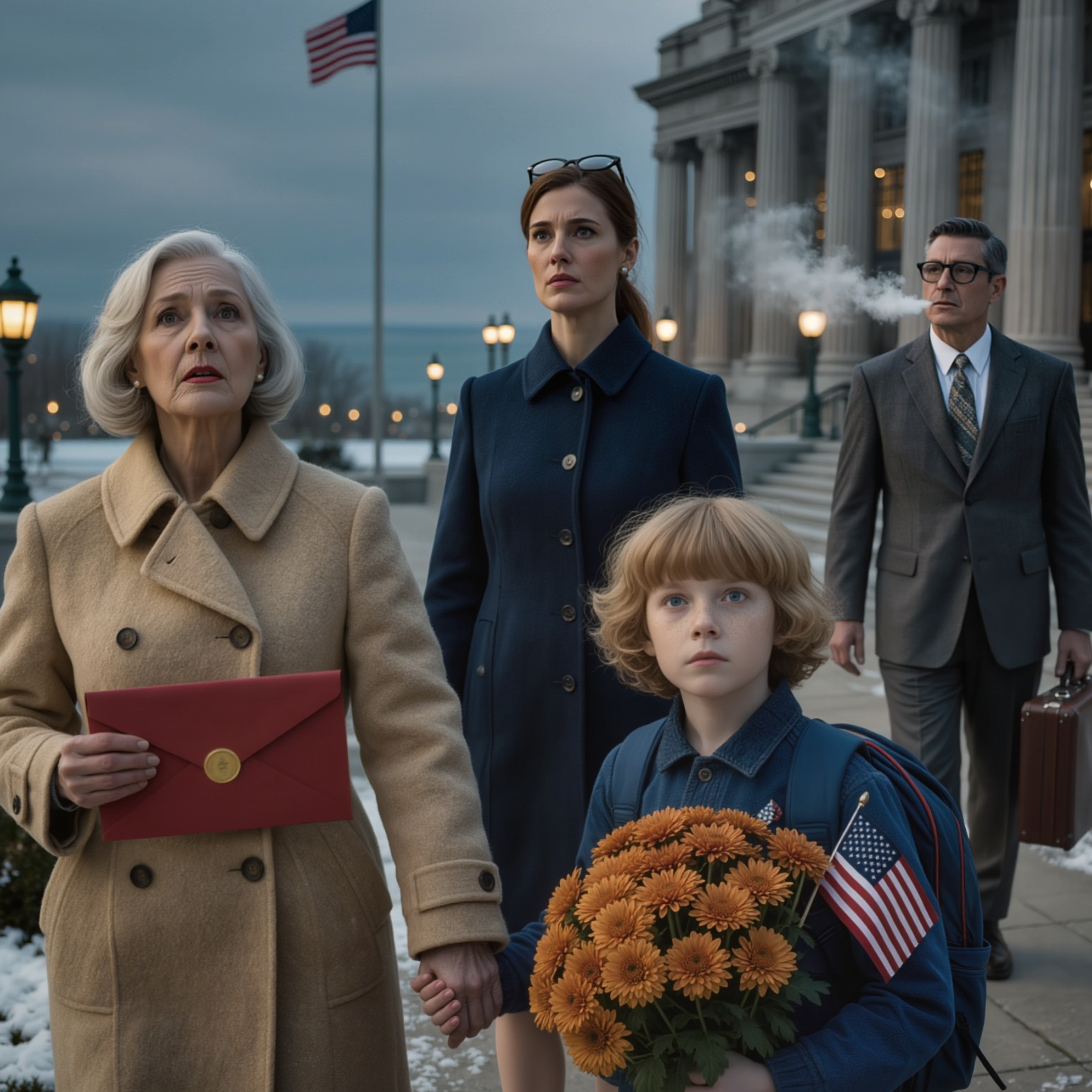
I stood there, surrounded by mourners dressed in black and shadow, clutching my husband’s worn handkerchief as though it could anchor me to reality. His coffin rested in the corner of the room under soft, trembling lights. The funeral had barely ended — the last guest had shuffled away, tissues dabbed at eyes, whispered condolences fading with footsteps — when I felt a presence beside me. My brother-in-law, Marcus, leaned in, close enough that I smelled his cologne, saw the guilt in his eyes. In a low voice meant only for me, he asked: “Whose name is on the house deed now, Helen?”
I frowned. The question felt wrong, meaningless — cruel. Everything had happened so suddenly. The grief, the loss, the emptiness. My husband, gone. I had mourned. I had wept. I had said goodbye. But this question — it cut deeper than pain. “It’s mine and his,” I managed quietly. “Our home, our life.”
He nodded slowly, a hesitant, uneasy nod. “We’ll see about that.”
I stared at him. I didn’t respond. I didn’t want to believe what he meant.
In the days that followed, the world turned into a blur of grief, paperwork, bank calls, condolences — and whispers. I heard rumors at the real-estate office. I heard hushed conversations at the lawyer’s firm. People looked at me with sympathetic eyes, but beneath them curious glances. I noticed the way Marcus avoided me sometimes, the way he sharpened his jaw when I mentioned the “house and office.” I told myself I was paranoid. It must be the grief. The shock. The pain clouding my mind.
But one night, lying awake on the bed I still shared with his memory, the doubt that had been whispering in my mind grew louder. I realized I didn’t actually know. I had signed the mortgage papers with him, but in the chaos after his death — the funeral, the grief, the legacy — I never checked the deed. I never read the fine print. I trusted. I believed. Maybe that trust was the problem.
The next morning I called a locksmith. I hired him to open the office in our house — the small back-room we had used together, lined with files, photos, accounts. I didn’t know if it was needed. I didn’t know what I expected him to find. But I needed certainty.
When the locksmith worked quietly, picking locks, turning keys, I stood outside the door, heart pounding. Somewhere behind that wood and plaster could be the answer to whether I still had a home. Whether the word “widow” carried more weight than “wife.” Whether a legacy — a life I built with love — could be erased by a question whispered at a funeral.
He opened the door. The hinges groaned. I stepped inside. The room was dust-dim and silent, like everything else had been cleaned out months ago. On the floor lay a single envelope, yellowing and worn. My breath caught. I knelt and picked it up. On the outside, only initials: “M.C.” I tore it open. Inside: an original deed to the house, dated a few months before my husband’s death. The specified owner: “Marcus Carter.” Not my husband. Not me. Not shared. Just Marcus.
I re-read the page. Stared. Felt blood drain from my face. My hands shook. I closed the envelope slowly, sliding the deed into my coat pocket. The room felt colder, emptier. The light in the dusty window reflected back at me like blame. I knew now: I had been betrayed. While I mourned. While I grieved. While I walked through hell. He had made this change. Quietly. Secretly. A house — legally his.
I walked out of the room and closed the door behind me. The locksmith cleared his throat softly. I barely heard him. I could only hear the pounding of my heart.
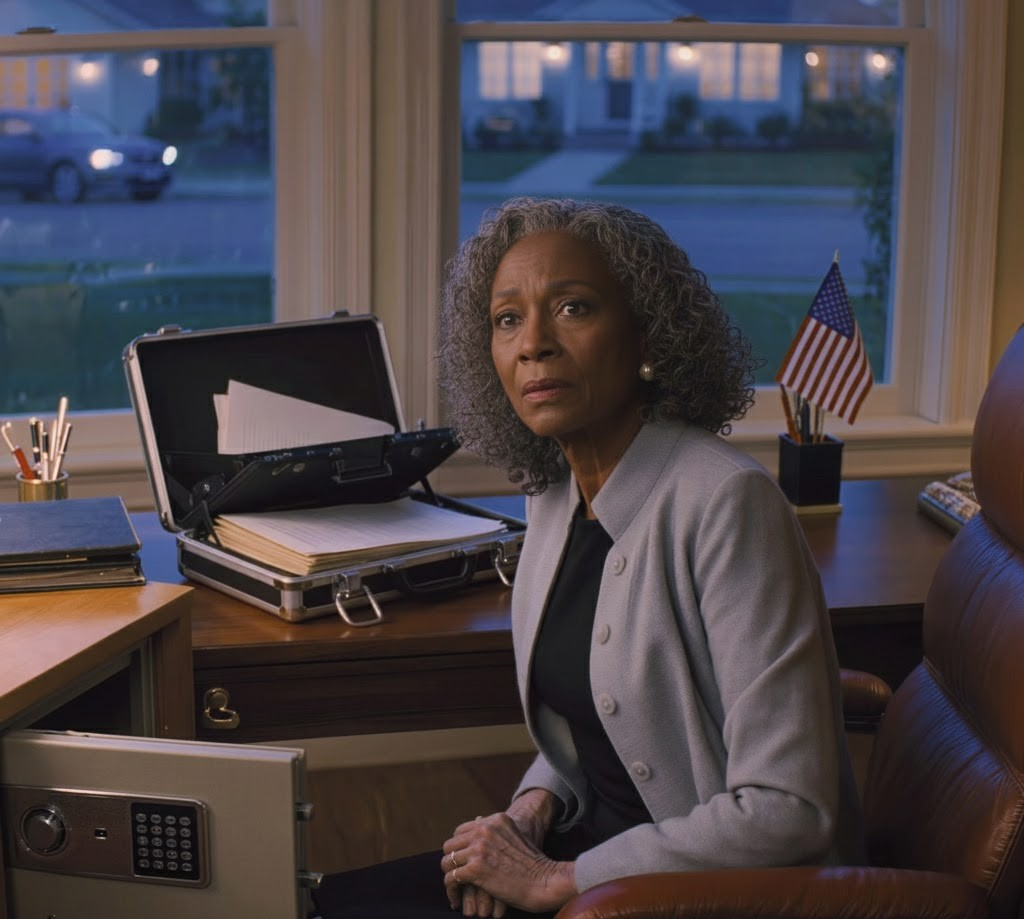
That night I called a lawyer. I sat behind a polished desk, trembling but alert, retelling everything — the funeral, the whisper, the locksmith, the deed. The lawyer flipped pages, frowned, tapped his pen. Then he looked up. His eyes were sharp. “You have reason,” he said. “We can fight this. But you need evidence.”
I swallowed the letter. I thought of my husband’s memory, of the life we built, of the dreams we had shared. I thought of waking up in a house that might be taken away from me, like dust slipping from my fingers. I thought of leaving the place where I had laughed and loved and lived.
The next days were a storm. I gathered documents — mortgage papers, photos with joint property, receipts, joint bank account statements. Every little shred of evidence I had that tied me to that house. I collected voices from neighbors who remembered him paying bills with me. I recalled times he had fixed the door, repainted the fence, planted flowers together. The memories — once warm — turned weapons.
When I finally confronted Marcus, I did it not with tears, not with pleading, but with strength. I laid the deed on the table. I laid out the evidence. I watched his face shift — from surprise, to anger, to something like regret. I told him I would press charges, that I would not allow memory and love to be traded for a signature. I told him I would protect what was ours — what belonged to me and the man I lost.
He left. The door slammed behind him. Silence fell. For a long moment I didn’t move. I didn’t breathe. Then I placed the envelope in a drawer. I turned the lock. I walked out of the house — the home that felt bigger now, heavier with truth — and I shut the door behind me.
That night, I sat on the front step under the cold stars, a cup of tea in my hands trembling. I looked at the empty windows, the silent porch, and I understood something painful and beautiful all at once: grief can break you. Trust can betray you. And love can vanish with a signature. But the truth — the truth lives on. And if you fight for it, you can breathe again.
I survived the funeral. I survived the betrayal. I survived the silence. And I found strength in the emptiness he tried to claim — strength that no paper could revoke.