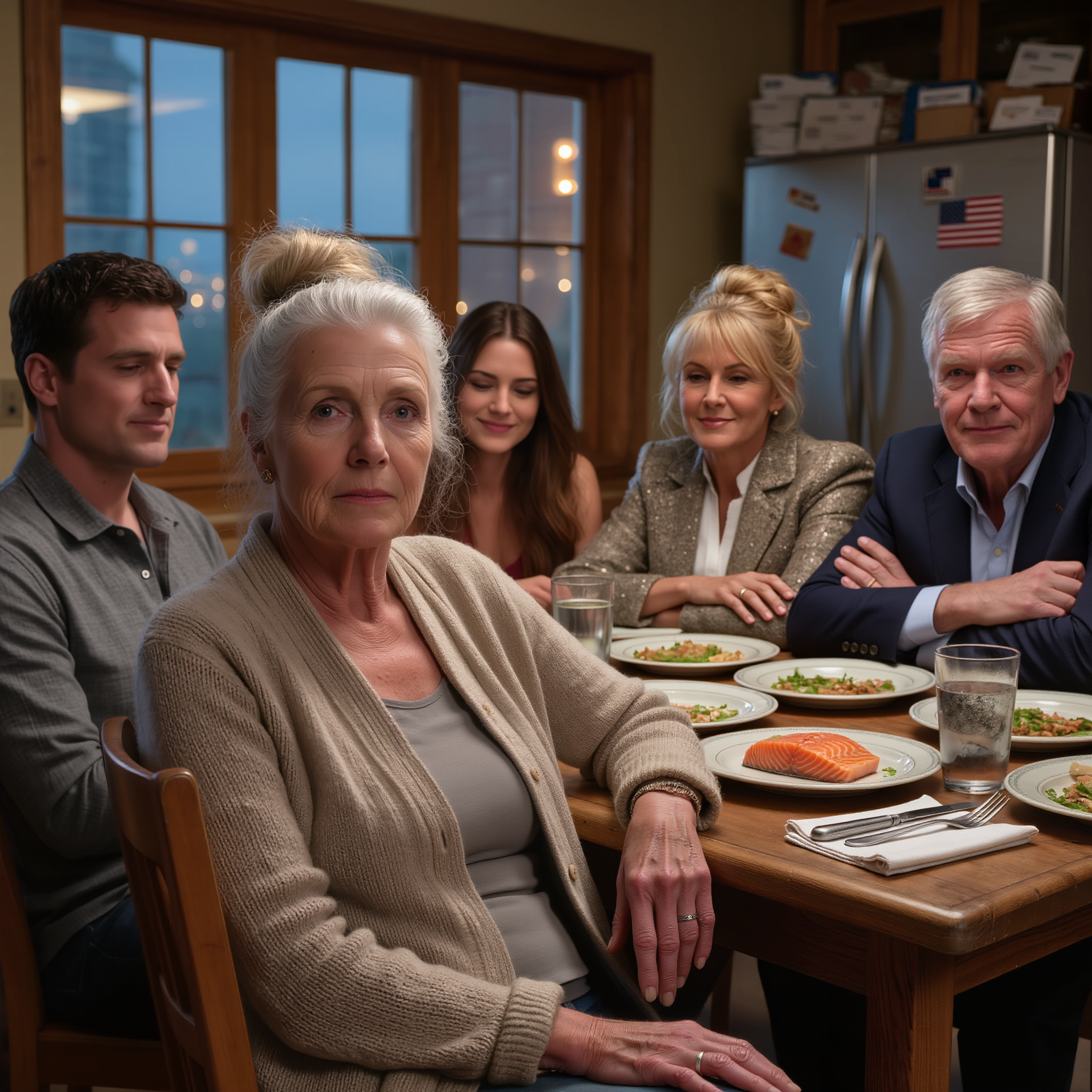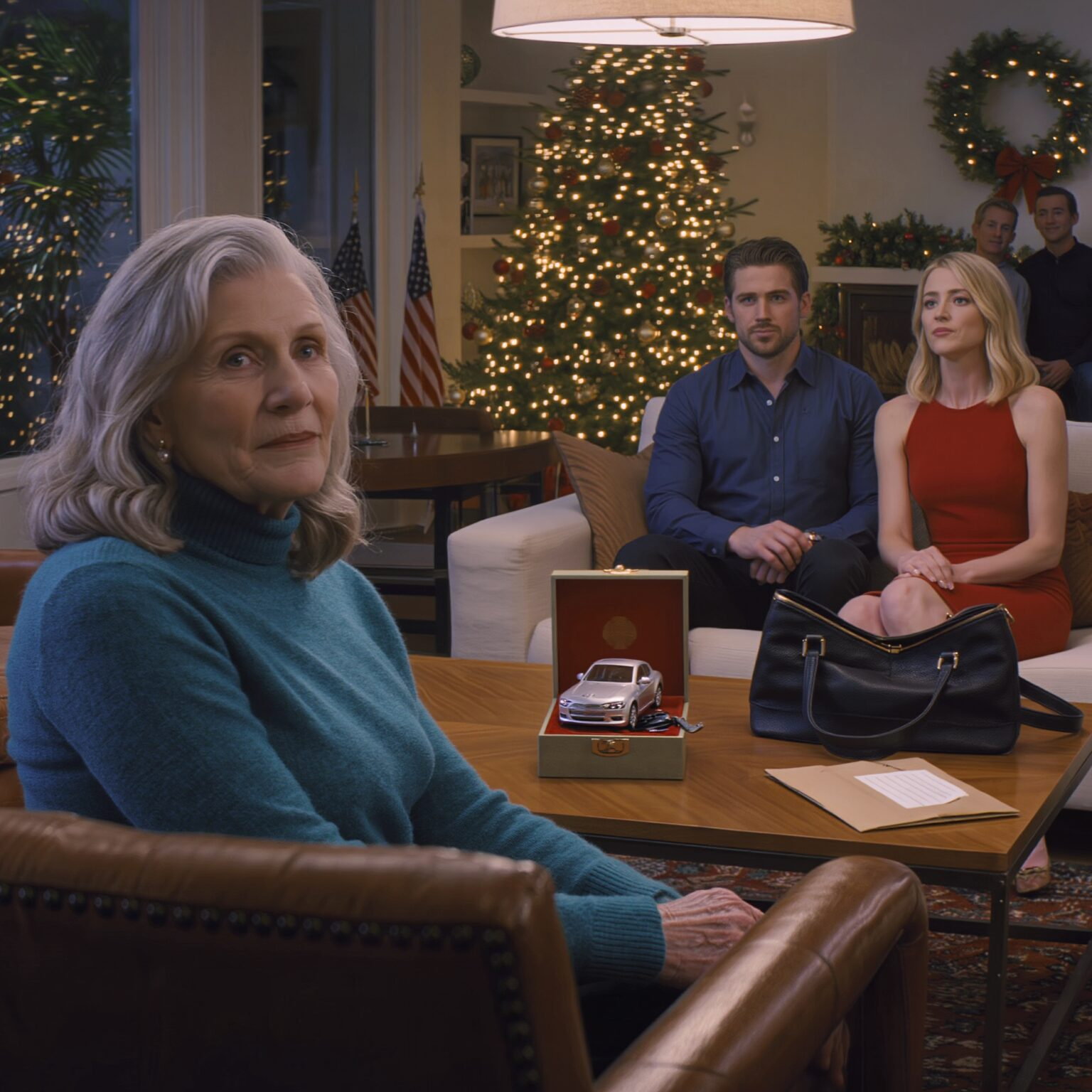
I found the note the same night the priest closed the book of prayers and the last of the mourners drifted out into the cold. A torn scrap of paper tucked not in his will, nor his desk, nor his journals, but hidden behind the framed wedding portrait. Forty years side by side, four decades of anniversaries, dinners, bills, illnesses, celebrations, and I had never once heard him utter the word Marrakech. Yet there it was, written in his precise narrow handwriting:
Rue Al-Fahim 27, Marrakech.
There was no signature, no explanation, not even a directive. Just an address, as if he expected me to know its meaning. As if he assumed I would follow it. It sat in my trembling hand, quiet but violent, challenging everything I thought I knew of the man I buried that afternoon.
I didn’t sleep that night. I stared at the ceiling while his empty pillow felt heavier than his coffin had. I replayed forty years of mornings and nights, the way he kissed my forehead before work, the way he laughed from his stomach, the way he held our children’s hands when they were small. I found nothing suspicious, nothing shadowed. And yet, the address existed.
Within days I was on a plane. Not because I needed answers—I needed truth. There is a difference. Truth destroys, truth rewrites, truth sets flames to memory.
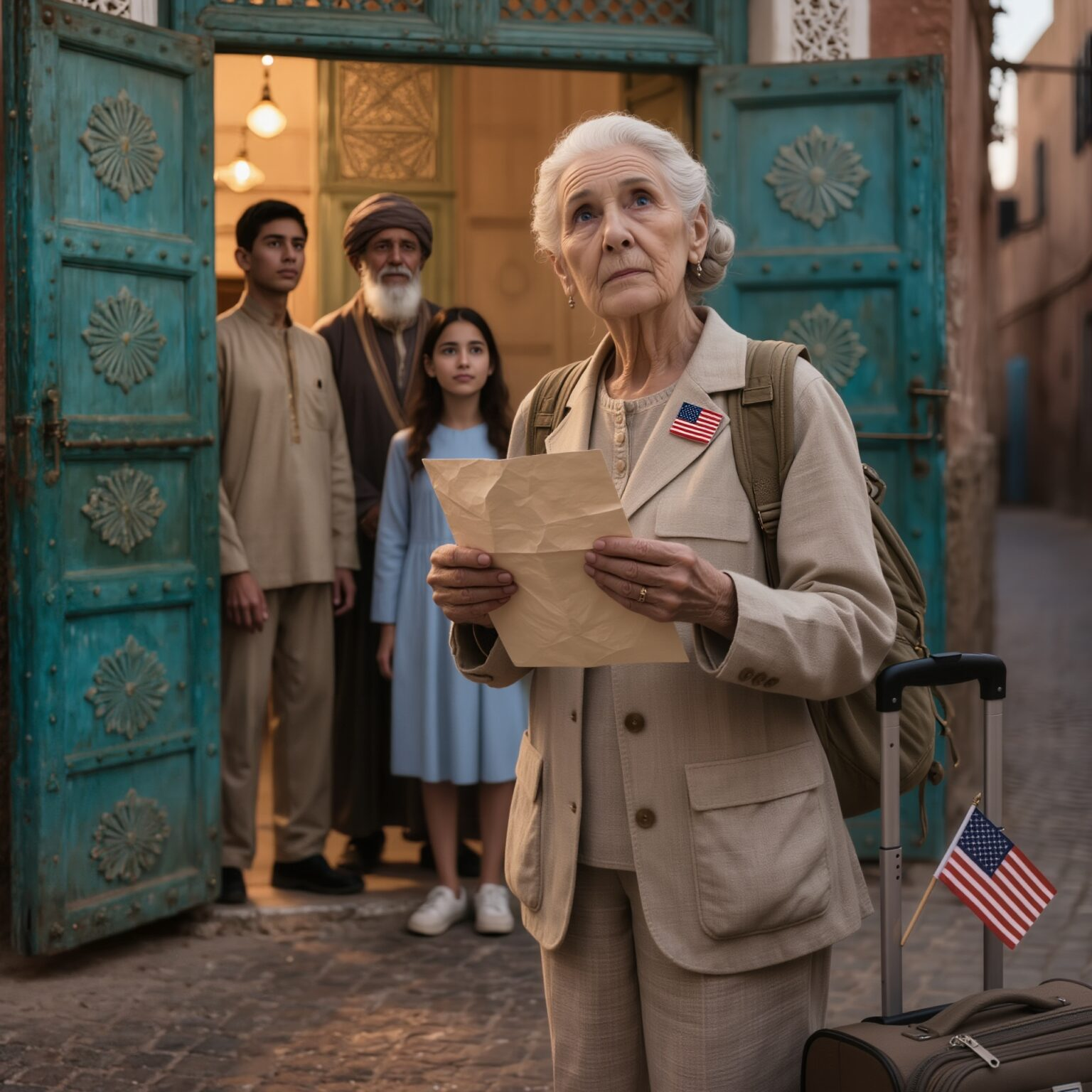
Marrakech opened like a wound. Dry heat, red dust, markets overflowing with saffron and citrus, voices that rose and fell like prayer. I found Rue Al-Fahim easily, not because it was grand, but because it was unremarkable. A narrow street with a rusted gate at number 27. I lifted the knocker, and before I could strike, the door opened.
A young woman stood before me. Her eyes were unmistakable. My husband’s eyes. The exact shade, the exact shape, the exact stunned widening as if she had been expecting a ghost.
“You look like him,” she whispered.
My knees threatened to give way. “Who are you?”
She stepped aside as though she had rehearsed this moment all her life. “I’m the reason he came here. I’m his daughter.”
I had no reply—language, breath, sense all slipped away as though stolen by the desert wind.
Inside, the walls were lined not with my wedding pictures, not our children, not our vacations, but him—smiling with her, holding her, celebrating birthdays I never knew existed, years I could not account for. Photographs spanning decades. I had been in those years, too, but obviously not in the same life.
“He promised he would tell you,” she said, softly, as though she had said it many times before, as though she had been waiting for my arrival.
I sat in a chair older than my marriage and let my heart collapse. “All these years… he had two families?”
She shook her head. “No. He had one life with you. And another life with me. But not love. Love was you. Here was obligation.”
That word sliced deeper than betrayal.
Obligation.
She poured tea. Mint, hot, fragrant. A ritual she knew well, a ritual she had surely shared with him. I cupped the glass but did not drink.
“How long?” I asked.
“All my life. I’m thirty-seven.”
He had been flying “for business,” “for conferences,” “for contracts” since our tenth anniversary. All those airport hellos and goodbyes suddenly rewrote themselves into goodbyes for me and hellos for her. And yet, she didn’t look at me with the entitlement of a thief, nor the arrogance of someone who believed she had won something. She looked at me like a child robbed of her rightful place in the world, but aware she had no right to step into mine.
“He said you would hate him for it,” she continued, “and he was right. But he hoped you wouldn’t hate me.”
Hate. No. Hate was too thin, too temporary a word. What I felt was grief layered upon grief—a second funeral for the man I married and a first funeral for the man he actually was.
She handed me an envelope. His handwriting. My name. I opened it, though my fingers shook.
I could not leave this life without making you whole with truth. I loved you. And yet, before you, before us, I made a mistake. A human life came from it. I could not abandon her. So I built two worlds and lived inside both until my body could not keep the weight. Forgive me if you can. If you cannot, I understand. She is good. She is kind. She is alone now, as you are. Perhaps loneliness can be halved, not carried.
Tears fell without dignity, without order. Forty years of certainty shattered, forty years of devotion cracked open like fruit gone sour at the center.
She swallowed her own tears carefully. “I didn’t want to meet you like this. I didn’t want your pain to make space for me.”
I looked at her—truly looked—and saw not the betrayal, but the collateral. She had not stolen him from me. He had fractured himself between us.
We spent hours speaking, though sometimes silence said more. She told me his favorite place in Marrakech—a stall near Jemaa el-Fnaa where he always bought oranges for her. She showed me the watch he gifted her every year on her birthday. Not expensive, not elaborate. Just thoughtful. Familiar. The same way he lived with me.
I walked out into the fading heat of dusk. The call to prayer rose over the city, steady, haunting, familiar even to someone foreign. I expected rage. Instead, I felt a strange reconciliation—not with his choices, but with the fact that I finally knew the entire map of the man I had shared a life with.
He was flawed. He was split. He was loving and dishonest, devoted and divided. Human enough to build a secret life, coward enough to hide it, brave enough to leave me the truth.
When I reached the gate, she called after me. “You can come back. If you want. Not as replacement. But as someone who loved him too.”
I paused. Forty years stood behind me. A lifetime ahead of her. And somewhere between us, the ghost of a man who had loved us both imperfectly.
“I will,” I said, though I didn’t know when, though I didn’t know how.
The door closed gently. The street was quiet. The city breathed around me, hot and old and unapologetically alive.
I no longer belonged to the certainty of the past, nor to the man I buried. I belonged to truth now—uncomfortable, unrequested, unhidden.
I folded the address into my palm, no longer a fragment of betrayal, but a key to a life large enough to hold two realities. When I looked up, Marrakech felt less like revelation and more like inheritance—not of wealth, nor property, nor lineage, but of clarity.
Even heartbreak, when finally named, becomes a sort of peace.
And for the first time since the funeral, I slept. Not because the world made sense, but because it no longer lied.