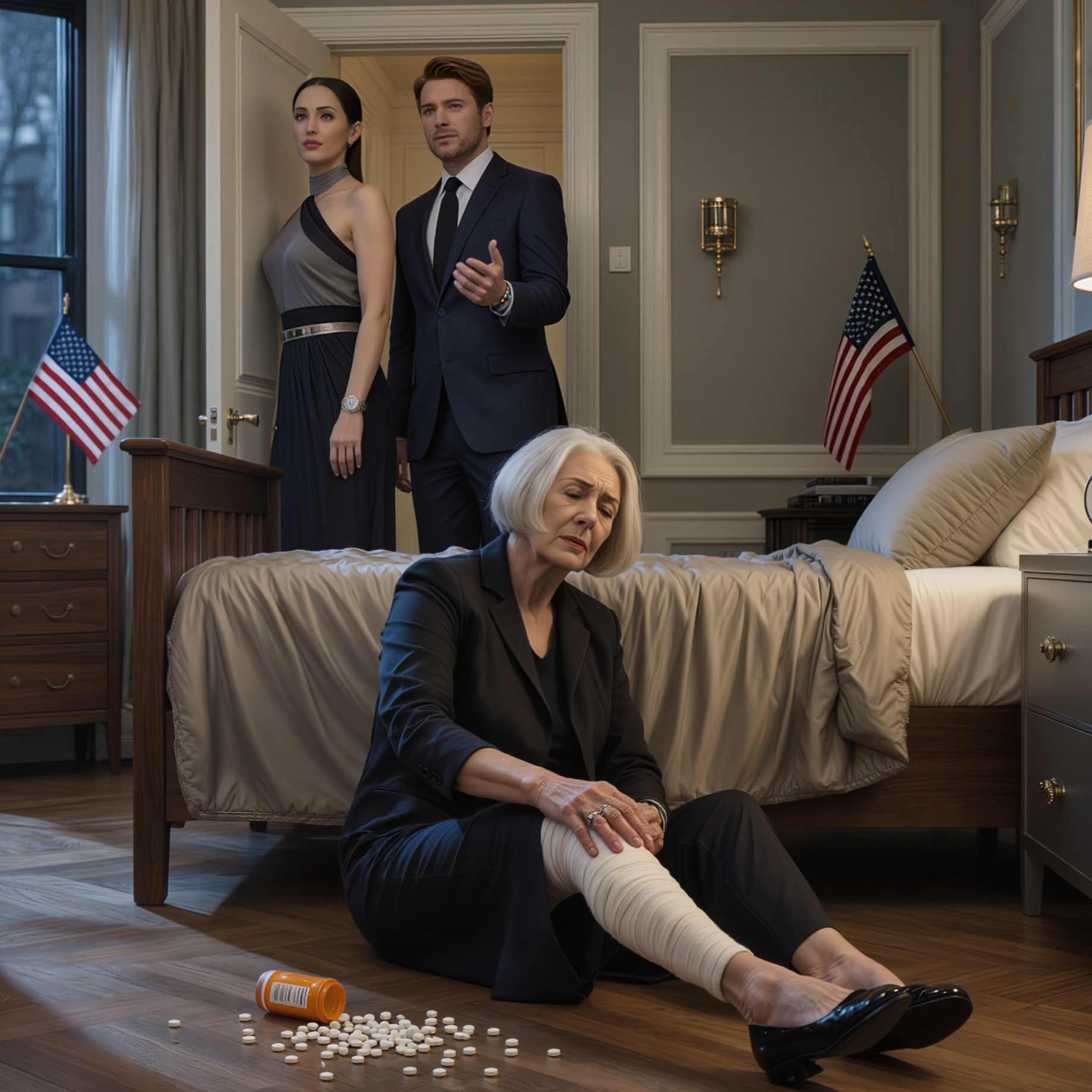
I never expected a single sentence to undo everything I believed about the life I had built — not after thirty-five years of marriage, not after decades of shared memories, shared birthdays, shared quiet mornings, and shared arguments that both bruised and bound us together. But that’s exactly what happened on a rainy Tuesday morning when my husband walked into the kitchen, eyes bright with what he called “the perfect surprise,” and said one simple thing that made my heart stall for reasons I didn’t yet understand: “Pack your bags. You’re flying to Paris today — alone. It’ll be good for you.” I had blinked, confused. I thought maybe it was a joke. Something about experiencing the city of lights had come up in conversation once — at a party, over wine, a memory too small to tie such sudden intention to. Yet here I was, clutching a boarding pass in my hand while rain tapped anxiously at the windows, and my husband smiled like he had won some quiet victory without telling me the rules of the game.
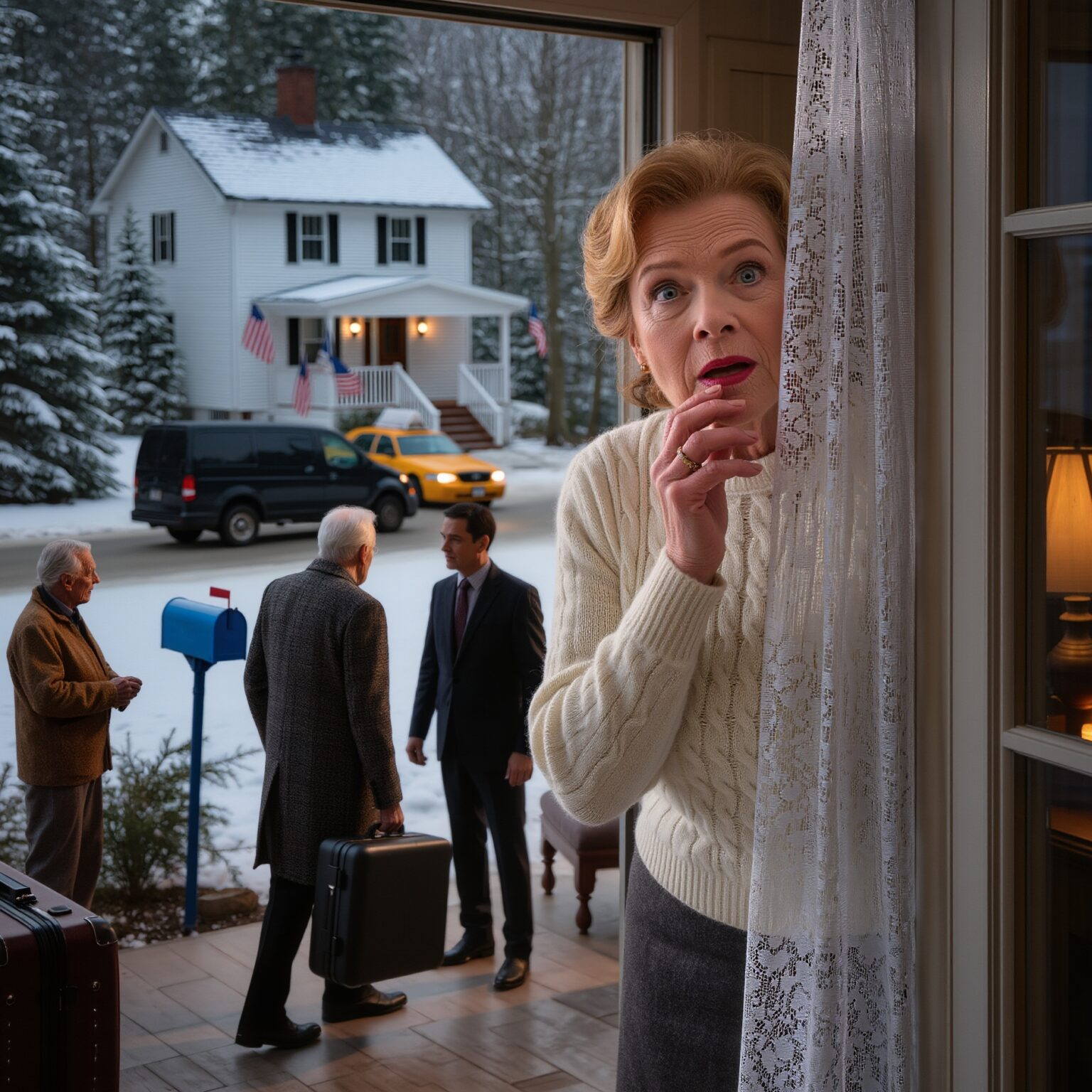
It wasn’t the departure itself that unsettled me — go on a trip: thrilling, spontaneous, yes — but the alone part, spoken with a peculiar sharpness as though my presence with someone else had endangered something only he knew about. I pulled the luggage out to the car, the taxi idling in the driveway, and that’s when I felt a gentle touch at my wrist — delicate yet rooted in quiet certainty. Our elderly gardener, Monsieur Renard, who had tended our roses and peonies for nearly a decade, stood beside me with his weathered cap in hand, the soft kindness in his eyes folding into concern.
“Ma’am,” he whispered, his voice carrying calm urgency, “please don’t go yet.”
At first, I thought he meant something simple — perhaps the rain, perhaps a feeling of caution. But when I looked at his face — lined with years of sun and soil and sincerity — I realized this wasn’t about weather or timetables. It was about intuition. A lifetime’s worth of watching things bloom and wither had taught him how to recognize when something was out of place. And right then, something about the look in his eyes made my heartbeat hesitate — something that said, there is more to this journey than luggage and rain and excitement.
I hesitated. My husband stood a few feet away, trying to look casual, but the tension in his shoulders was too deliberate, too calibrated to be incidental. I gave a small nod to Monsieur Renard and asked him quietly, “What is it?” His gaze didn’t waver, and he lowered his voice further, as though the walls themselves might be listening.
“Ma’am, sometimes gifts come with shadows,” he began, choosing his words with care. “Not all surprises are made from joy. Some are meant to pull you away from what you need to see.”
I frowned, unsure how to parse poetry in a driveway full of luggage and taxi meters ticking. Before I could ask for clarity, my husband called my name — the tone slightly too bright, betraying a ripple of impatience under practiced affection. I turned back toward him, suitcase in hand, and that’s when it clicked — the way he avoided eye contact, the haste with which he ushered me toward the car, the tightness in his grin. It wasn’t just a trip. Something else was going on.
But I didn’t say that yet. I didn’t accuse. I didn’t interrupt the story that was about to be written for me without my consent. I took a breath and looked at Monsieur Renard again — the man who had never once spoken out of place or out of turn. “Please,” I asked him, “tell me what you see.”
He didn’t offer dramatic proclamations or wild speculation. He just said gently, “I have watched you two tend the garden together. I have tended this garden for years. I know how you look at the roses you plant, and how he looks at the ones he only waters when others are watching.” His voice was tender, but it held a weight I couldn’t deny. I glanced at my husband then — watching us, eager to be the hero of this departure, unaware that the very symmetry of his expression was what made it crack under scrutiny.
I walked back inside with Monsieur Renard and asked for a cup of tea. Not in drama. Not in confrontation. In quiet. I didn’t need to raise my voice. I needed to see clearly. We sat in the warmth of the kitchen that had borne so many meals and memories, and I listened as he spoke in simple, unhurried terms about why his instincts were shaking that morning. Not sensational suspicion. Just a slow, blooming awareness he had gathered like petals falling in silence: there had been whispers of changes in behavior at home, small things unspoken but felt, like the scent of roses that precedes a storm.
When he said that, something inside me shifted. It wasn’t fear. It was clarity blossoming like sunlight through overcast skies. I stood, thanked him quietly, and walked back out to the driveway where my husband was fidgeting with the taxi meter as though time itself was urging him on. I didn’t raise my voice. I didn’t cry. I didn’t accuse. I just stood there, suitcase half-zipped, and looked at him with a calm that felt stronger than anger.
“I’m not going,” I said simply.
He blinked, genuinely taken aback by the lack of uproar. He attempted another smile, a softer one, balm under scrutiny, but in that moment I saw past the veneer to something unsteady — an impatience that had nothing to do with travel and everything to do with retrieval, like something in the shadows of our life together needed to be put away quickly before it could be seen clearly.
My husband tried to protest — flustered, hesitant, trying to reclaim the narrative of surprise — but I shook my head. Not in rejection of the trip. In refusal of being led away from truth. I set the suitcase back down on the ground, clicked it shut, and waited. That simple act — walking away from departure — was the very turning point of everything I thought I knew about us.
What followed wasn’t dramatic. It wasn’t immediate clarity or confessions in tears. It was simply time — that strange, unhurried teacher that reveals truth when we finally stop fleeing from it. Conversations happened later, quiet and honest, not explosive but revealing. Not every detail was poetic, but every truth was necessary.
In the weeks that followed, I didn’t go to Paris. I stayed home, revisited old photo albums, and saw my reflection clearly for the first time in years — not as someone polished and orchestrated for others’ expectations, but as someone grounded in her own agency. I didn’t resent the trip anymore. I resented only the exclusion of choice, the assumption that another person’s plans were meant to sweep away my own voice.
And then, one evening, as I tended the roses with Monsieur Renard — who had taught me long ago that gardens grow only where intention and care meet — I realized something: life’s most meaningful journeys cannot be folded into a suitcase and shipped off. They are the ones where we stay, choose ourselves, and walk forward in clarity rather than confusion.
My husband never did get to see me off to Paris that day.
Instead, I walked off —
toward something far more vital: my own truth.