I woke up to the sound of a machine breathing for me, slow and mechanical, like it was deciding whether I deserved another second of air, and for a long moment I didn’t understand where I was or why my body felt like it belonged to someone else, heavier than I remembered, distant and numb, as if I were listening to my own life through a wall. The ceiling above me was unfamiliar, white and cracked near one corner, and when I tried to move my hand nothing happened, not even a twitch, just a dull pressure that told me it was still there but no longer fully mine.
The nurse noticed my eyes first. She froze, then leaned forward so fast her badge swung into my line of vision, and she said my name the way people do when they’re afraid they’re imagining things. When I blinked again, slower this time, she called for a doctor, and suddenly the room filled with voices, shoes, hands adjusting wires, and I faded in and out while they spoke about timelines and responses and recovery as if I weren’t there at all, as if I were a chart that had surprised them by breathing again.
It wasn’t until hours later, when the room finally quieted and the machines settled into a steady rhythm, that my son came in.
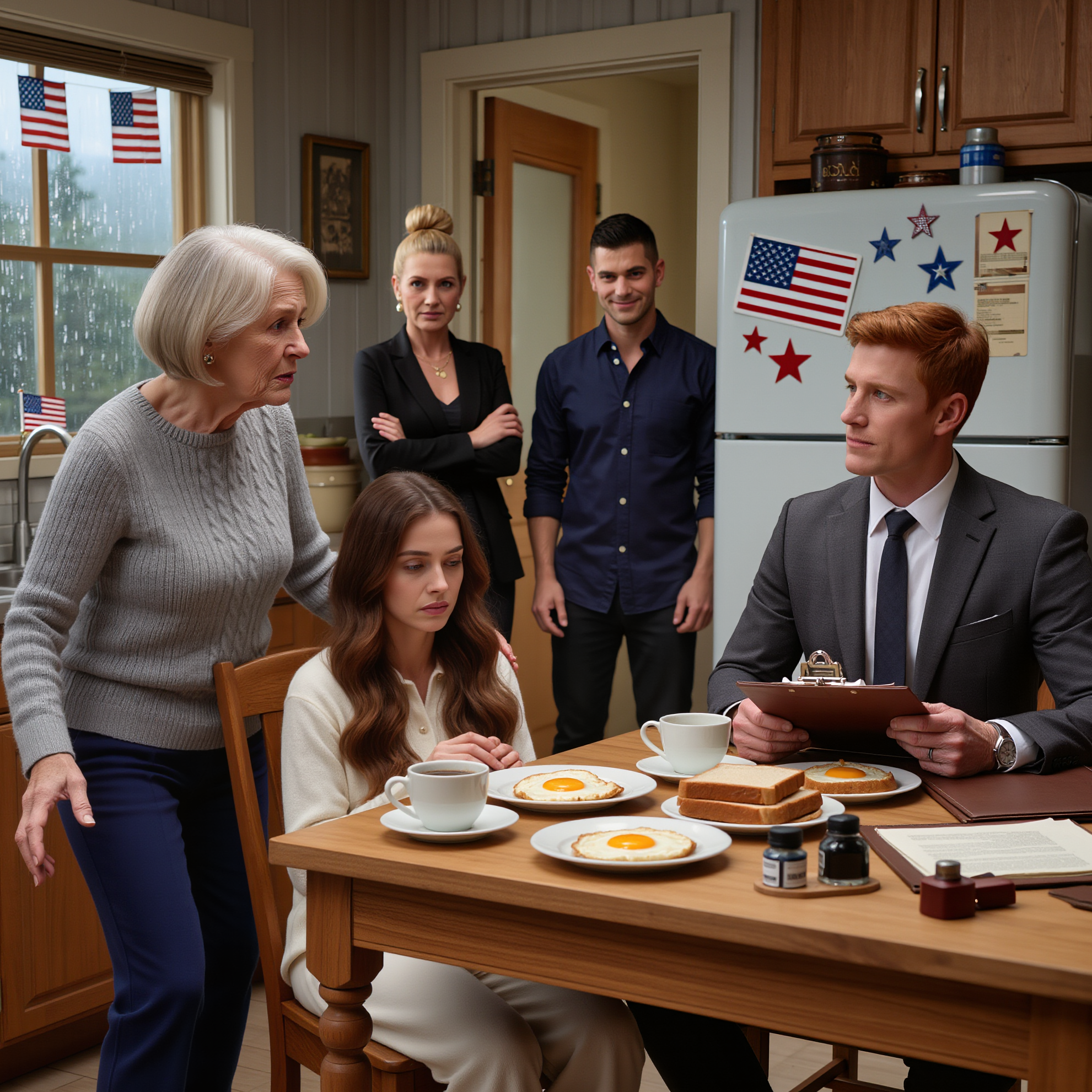
He stood at the foot of the bed at first, not rushing to me, not touching me, just staring the way people stare at something they thought was finished. He looked older than I remembered, heavier around the eyes, and behind him stood his wife, arms folded, her face carefully neutral in a way that immediately made my chest tighten. I tried to speak, but my mouth wouldn’t cooperate, so I just watched them, waiting for relief, waiting for tears, waiting for anything that resembled a son seeing his mother alive.
Instead, he exhaled and said, “Mom… you’ve been out for six months.”
I blinked once.
He nodded, like that confirmed something for him. “The doctors told us you probably weren’t going to wake up. They said if you did, it would be… limited.”
His wife shifted her weight, glanced around the room, then looked back at me with a small, tight smile that never reached her eyes.
“We had to make decisions,” my son continued. “Practical ones.”
I didn’t understand what he meant until he said the sentence that split my understanding of my life cleanly in two.
“I already handed the house over to my wife’s family,” he said. “We honestly thought you were going to die.”
There was no pause after that. No apology. No softness. Just the words, dropped into the space between us like something already settled.
His wife finally spoke then, her tone calm, almost rehearsed. “The place was just sitting there. Empty. It didn’t make sense to let it go to waste when my parents needed somewhere stable.”
I tried to move, tried to shake my head, tried to force sound out of my throat, but all I could manage was a shallow breath that made the machine beside me react. My son mistook that sound for confusion.
“You don’t need to worry about it,” he added quickly. “You’re… you’re not going back there anyway. Rehab will take months. And after that, assisted living is probably better.”
Better for who, I wondered, as I lay there unable to ask.
That house wasn’t just walls and paperwork. It was the only place I had left after my husband died, the place I paid off over decades, the place where my son learned to ride a bike in the driveway and slammed his bedroom door for the first time and came home drunk from college crying about a girl who didn’t love him. I had kept that house when everything else fell apart because it was proof that something in my life had stayed mine.
And in one sentence, he told me it was gone.
They didn’t stay long. My son said the doctors advised against overwhelming me. His wife said she’d “check in later.” Then they left, and the room felt colder without them, quieter in a way that made the machines feel louder, more accusing.
I stared at the ceiling for a long time after that, replaying his words over and over, trying to find the place where he must have misunderstood something, where this could still be fixed by explanation alone. But the more I thought about it, the clearer it became that this wasn’t confusion. It was a decision. One made without me, about me, while I was still alive.
Recovery was slow. Painfully slow. Each finger movement felt like a negotiation. Each step in physical therapy felt like dragging my body back from somewhere it didn’t want to return from. But beneath the exhaustion, beneath the fear, there was something else growing steadily and quietly inside me.
Clarity.
A social worker came by one afternoon and asked if I had someone managing my affairs. I told her what my son had said, haltingly, ashamed even as I spoke. Her expression changed immediately, professional calm giving way to something sharper.
“Did you sign anything?” she asked.
I shook my head.
“Was there a power of attorney in place?”
Again, no.
She nodded slowly. “Then he had no legal right to transfer anything.”
Those words landed differently than comfort. They landed like footing.
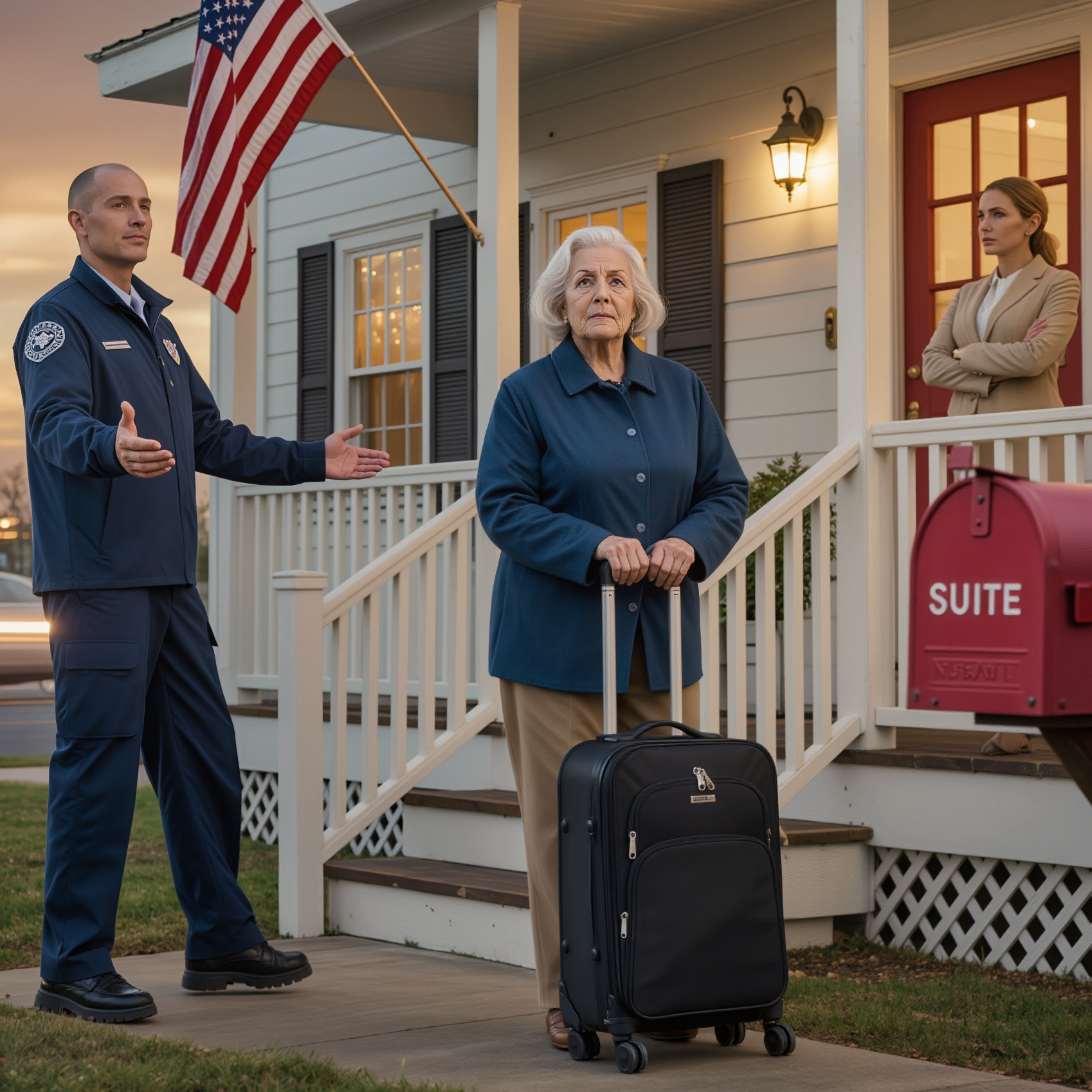
Over the next weeks, as my strength returned inch by inch, I learned what had actually happened. My son hadn’t sold the house. He couldn’t. Instead, he had let his wife’s parents move in, changed the locks, forwarded mail, and told neighbors I was “in long-term care” and unlikely to return. He had acted as if permanence could be created simply by confidence.
What he hadn’t counted on was me waking up.
I didn’t call him right away. I didn’t confront him. I listened. I let the social worker connect me with a legal aid attorney. I learned my options. I learned timelines. I learned how easily people confuse access with ownership, how often adult children believe survival entitles them to inheritance.
When I was finally discharged to a rehabilitation facility, my son didn’t come. He texted that he was busy. His wife sent a message saying she hoped I was “finding peace.”
Three months later, with a walker and a body that still ached in unfamiliar ways, I stood on the sidewalk across from my house and watched lights flicker behind the windows.
My windows.
I didn’t knock. I didn’t announce myself. I went straight to the lawyer’s office instead.
The process wasn’t dramatic. No shouting. No courtroom theatrics. Just paperwork, notices, deadlines, and one very clear legal reality: the house was still mine. Always had been.
When the formal eviction notice was delivered, my son called me for the first time since the hospital.
“Why are you doing this?” he demanded, his voice tight with anger rather than shame. “They have nowhere else to go.”
I held the phone with steady hands. “Neither did I,” I said.
His wife took the phone next. “After everything we did for you,” she said, disbelief thick in her voice. “This is how you repay us?”
I thought of the hospital room. The machines. The way they spoke about my death as a logistical inconvenience.
“I’m not repaying anything,” I replied. “I’m reclaiming.”
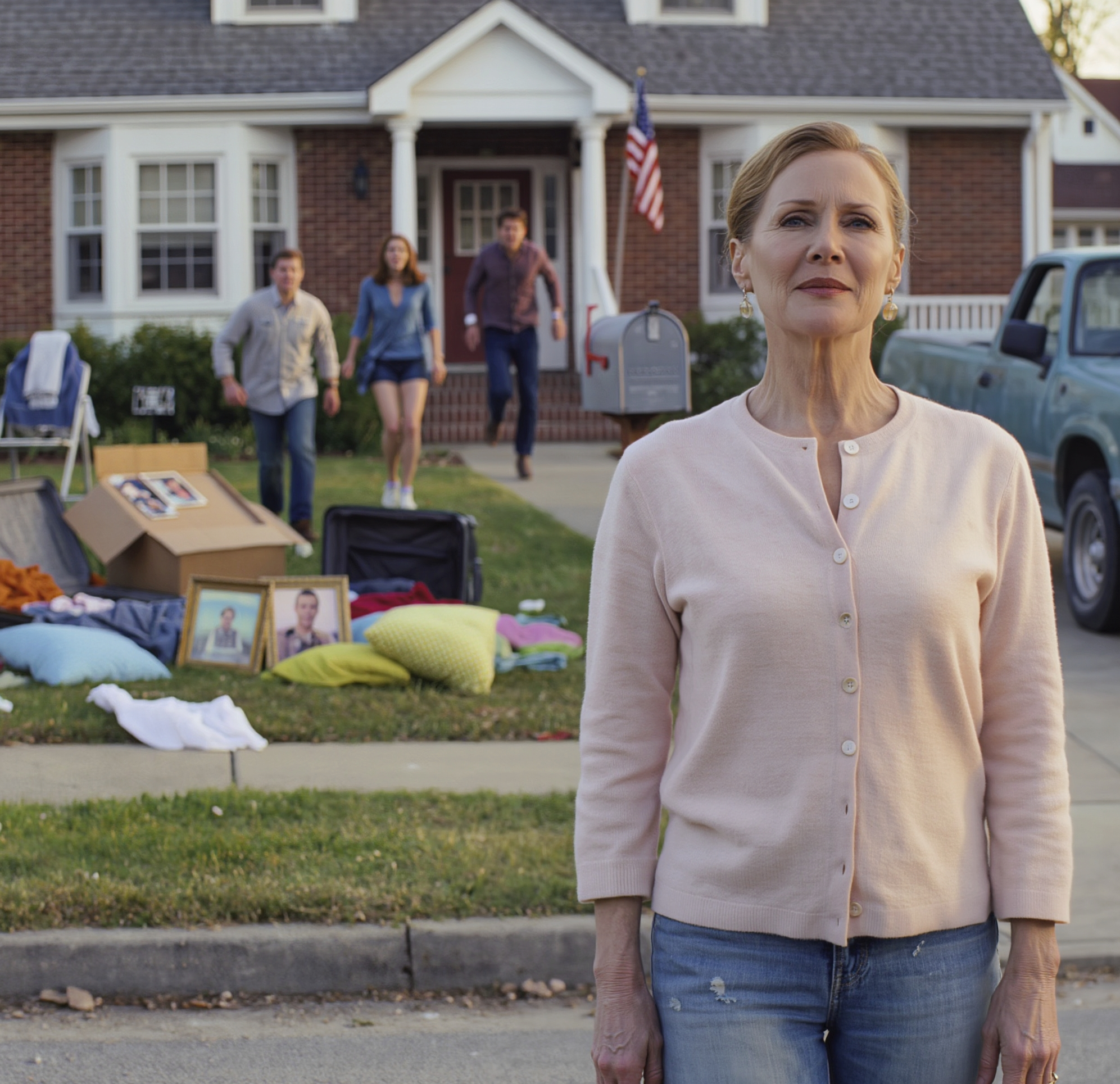
They were out within thirty days.
I didn’t move back into the house right away. Not because I couldn’t, but because I needed time to decide what it meant to return to a place that had been so casually taken from me. In the end, I sold it. Not out of spite, not out of fear, but out of understanding.
I used the money to secure my future on my terms. A smaller home. Care arranged by choice, not assumption. A lawyer retained permanently. Boundaries written clearly, legally, unmistakably.
My son didn’t speak to me for months after that. When he finally did, his apology was thin, tangled in excuses and regret that centered more on consequences than conscience.
I listened. I accepted what felt genuine. I rejected what didn’t.
I survived six months in a coma. I survived waking up to betrayal. I survived the quiet realization that being someone’s mother does not protect you from being treated as disposable.
And I learned, too late but clearly, that staying alive isn’t the same thing as being considered present.
Now, every morning I wake up in a place that is undeniably mine, in a life I actively protect, with the full knowledge that love without respect is not love at all — and survival, when paired with clarity, can still be a form of victory.