I felt the phone slip from my trembling fingers and hit the floor softly, but the world didn’t respond to the sound. Instead, the numbers on the screen repeated themselves like a secret chant: 50 , 00 0 , 000 — the moment I realized the odds had folded in my favor, life had changed with one slip of paper. I looked down at my little boy sleeping beside me — his soft curls, his quiet breathing, innocence untouched by worry — and I grabbed his hand. I whispered, half‑crying, half‑laughing: “We’re going to be okay now.” We stepped out into the warm morning light together. I clutched the lottery ticket like a lifeline. I felt hope blossom inside me, fragile but bright.
I dressed quickly, tying my headscarf tight, brushing my hair, slipping a small coin purse into my pocket. I told my son: “Stay close. Hold my hand.” Under the sun‑drenched streets we hurried, walking fast past busy shops, midday crowds, the hum of city life that felt distant from our poverty. I pictured a new home for us — a proper apartment, sunlight through wide windows, toys on shelves, laughter instead of worry. I pictured security. I pictured dignity. I pictured a future.
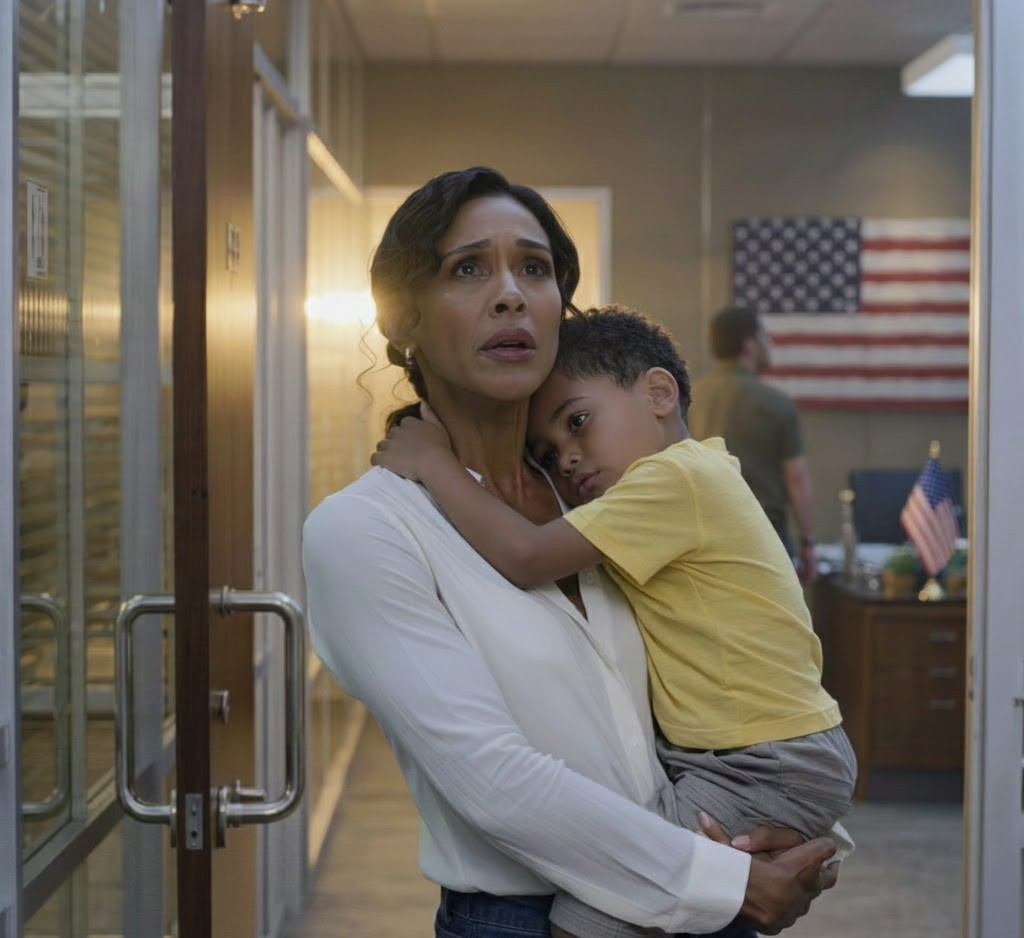
When I reached my husband’s office, I paused at the glass door, looked up at the tall building with its polished windows reflecting the sky. I felt my heart beat like a drum inside my chest — hope so loud it drowned every fear. I opened the door and stepped into the lobby, held my son close, and waited for him to return. A woman at the reception asked if I had an appointment; I shook my head, voice shaking: “I — I’m… I need to speak to him. It’s important.” She hesitated, frowned, after a moment pressed a button on the intercom. I stared at the floor, at the tile patterns beneath my shoes, at the faces around me — polished, suited, indifferent. I clutched the ticket again.
When he emerged — my husband — I felt joy lift me on its fragile wings. He looked tired, worried, eyes dim with responsibility. I smiled and held the ticket out to him. “Look,” I said. “We’re saved. Fifty million dollars. For us. For our son. No more fear.” His gaze dropped to the ticket, then to my face, then to the child clutching my skirt. For a moment, I thought I saw relief there. But then he looked away, turned pale, and quietly asked me to sit. My heart stopped.
He said slowly that there were things I didn’t know. Bills piled, loans we took to survive, debts hanging like chains. He admitted that the home we lived in — the only thing still ours — was already mortgaged beyond repair. That when the debts were settled, nothing would remain. My dream dissolved in his words. The lottery ticket, once golden, looked cheap, crumpled, worthless in my shaking hand. My son tugged at my sleeve: “Mom, what’s wrong?” I closed my eyes. I breathed. I told the boy softly: “Nothing. Everything’s fine.” I folded the ticket back, suddenly heavy, like a cruel reminder that sometimes hope brings light — but light can blind you.
I left the office without words, without tears. I walked back through the crowded streets, holding my son’s hand tighter than before, as though that connection—simple, small—was all I had left. He looked up at me, concerned, asking again what happened. I forced a smile. I told him I had bad news. That the money wouldn’t save us. That sometimes even miracles bring storms. He didn’t understand — how could a six‑year‑old understand broken promises? He only looked at me, eyes wide, searching for comfort I couldn’t give.
That night I sat by the small kitchen window of our cramped apartment, opened the ticket again and stared at it. The numbers still flashed, dancing under the dim lamp’s light. But they felt empty. Words we’d whispered — home, safety, love — felt thin, paper‑fragile, ready to tear. I closed the ticket and placed it on the table. I picked up my child and held him close. I told him bedtime stories anyway. About princesses, kind kings, and happy endings. Even when endings are uncertain. Even when fortunes lie broken under weight.
In the days that followed, I tried to make sense of what luck and love really meant. I visited the creditors we owed, negotiated what I could, apologized for what we couldn’t pay. I sold small things — old jewelry, a few old clothes, our second mattress — anything that might buy time, buy grace. I worked extra hours washing dishes at night, carrying heavy crates at dawn, doing anything that gave honest coin in exchange for sweat and hope. My son helped sometimes — with small chores, little errands, fetching water, bringing food. He was young. Worried. But hopeful. I tried to mirror strength — even when it cracked quietly deeper inside.
One rainy evening, as water dripped from the leaking roof onto my hair, I sat on a plastic chair in the dim room, holding my child close under a thin blanket. Outside, thunder grumbled softly. The city lights blurred behind streaks of rain. I stared at the crumpled walls around me, at old stains that refused to wash away, at a life frayed but not severed. I realized something important — that saving a family, protecting what matters, doesn’t always come from sudden fortune. Sometimes it comes from steady hands, whispered promises, honesty after debt, rebuilding after loss.
I folded the lottery ticket and tucked it into a drawer beside old papers. I didn’t throw it away. I kept it there. Not as hope. Not as promise. As a lesson. I would not expect miracles anymore. I would not gamble on chance. I would live on what I could earn, on what I could build, on what I could love — with all my strength, all my truth.
Slowly — painfully — I started again. I mended our lives with work, with small kindness, with patience. I found a cheaper flat, but safer. I found a small scholarship for night classes, studying courses in bookkeeping. I allowed myself to dream quietly of someday being stable — not rich, not fancy — but honest, respectful, enough.
My son grew. He learned to laugh again. He learned to trust. I held him close whenever storms came. I told him stories of resilience, of strength, of mothers who stand even when the ground shakes. And I told him: “Money can buy comfort. It can’t guarantee love. It can’t buy respect.”
Years later, I walk along familiar streets, arms empty but heart steady. I watch mothers pushing strollers, children playing, lives moving under the swirl of day and night. I breathe gently, feel the sun on my face, smell bread from bakery shops, hear the soft hum of distant traffic. I think about that lottery ticket — and I feel neither regret nor longing. I feel clarity. I understand now that hope is fragile. Dream is fragile. But life — real life — is built on sweat, honesty, and the courage to keep walking when everything else falls.
I carry scars — emotional, financial, silent. But I also carry strength. I carry memory, love, the loyalty of a child, and the quiet dignity of a woman who refused to be saved by luck, but chose to save herself. And every morning, when light breaks through curtains of modest flat, I rise. I breathe. I live.