I never expected the sound of a lawyer’s voice to feel like the tolling of a bell for a life I once knew. When the news came that I had inherited $5 million from my late Aunt Evelyn—a woman who lived in a house that smelled of lavender and old books and whom I hadn’t seen in a decade—I didn’t scream for joy. I didn’t rush out to buy a sports car or book a flight to the Maldives. Instead, I sat at my small kitchen table, staring at a chipped coffee mug, and felt a strange, cold shiver of apprehension.
Money is not just currency; it is a lens. It changes the focal length of every relationship you have. It turns friends into creditors and family into strategists. And as I sat there, a woman of sixty-five who had spent her life scraping by as a librarian, raising a son on prayers and overtime pay, I found myself paralyzed by a single, haunting question: Who would my son be if he knew?
My son, Leo, was my world. I had worked two jobs to put him through college. I had sat in the front row of every soccer game, every graduation, and eventually, his wedding. I had watched him grow into a man of ambition—a man who lived in a gated community, drove a car that cost more than my first house, and married Sarah, a woman whose smiles were always “thin and practiced,” like a line of calligraphy that had run out of ink.
I loved him with a ferocity that only a single mother can understand, but lately, I had felt a shift. A subtle distancing. A sense that I was becoming a “legacy project”—someone to be visited on holidays and managed with polite phone calls, but no longer a central character in his story.
So, I decided to do something that most people would call cruel, but I called necessary. I decided to test the bridge before I crossed it with five million dollars in my pocket.
The Phone Call
I waited until a rainy Tuesday evening, the kind of night that feels lonely even if you aren’t. I sat in my darkened living room, the shadows stretching across the floor like accusing fingers. I took a deep breath, dialed his number, and forced my voice to tremble.
“Leo?” I whispered when he picked up. “Leo, honey, are you there?”
“Mom? Is everything okay? I’m right in the middle of a conference call,” he said, his voice clipped, efficient, professional.
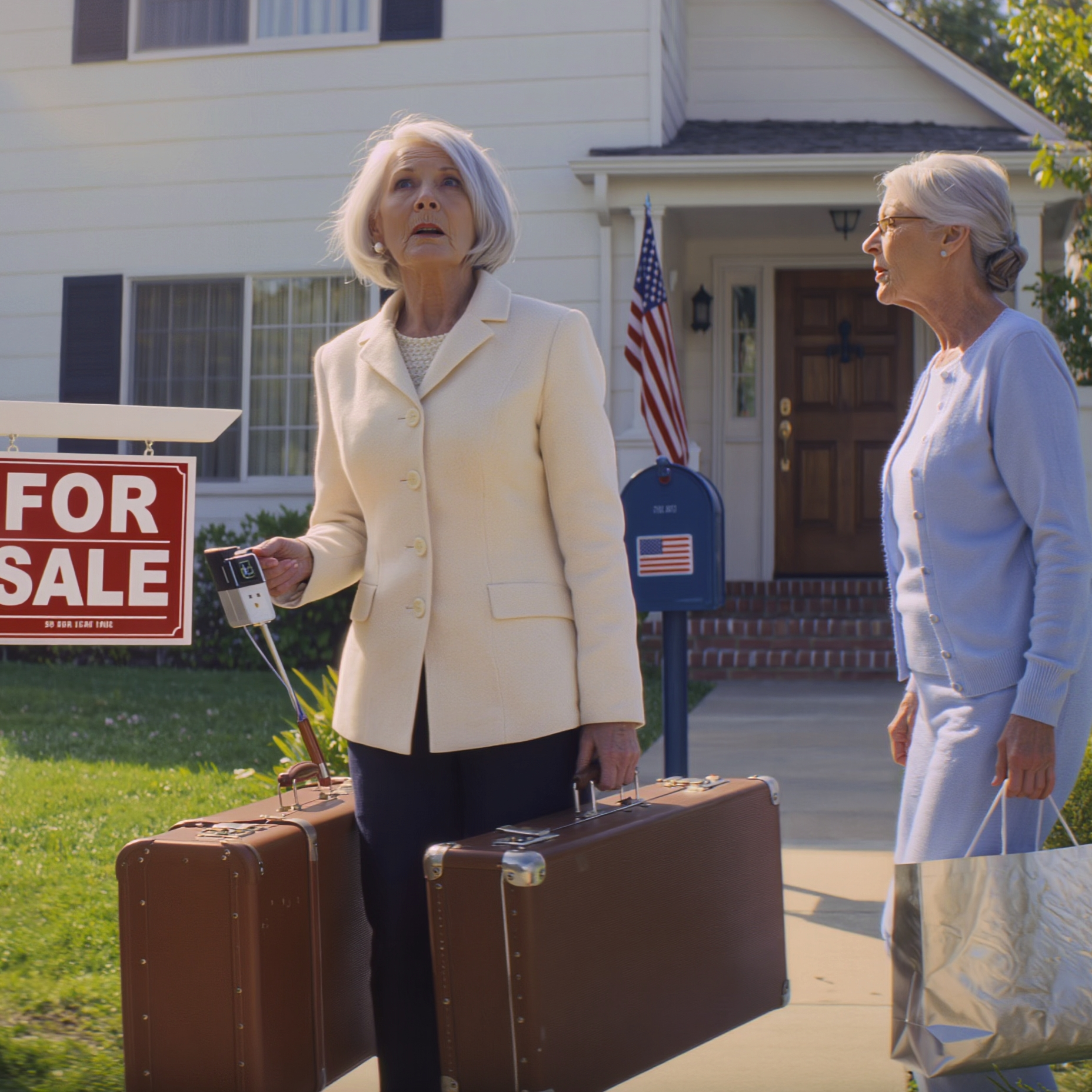
“Leo… something terrible has happened.” I let a sob catch in my throat. “The investment… the one your father left in that trust… it’s gone. Everything is gone. The house is being foreclosed on. I—I don’t know what happened, Leo. I have nothing. I’m standing here with a suitcase and nowhere to go.”
The silence on the other end was heavy. It wasn’t the silence of a son processing a tragedy; it was the silence of a man calculating a deficit. I could almost hear the gears turning in his head—the logistics of his square footage, the social cost of a “broke” mother, the inevitable conversation with Sarah.
“Mom,” he finally said, his voice devoid of the panic a son should feel for a mother in ruin. “That’s… that’s a lot to take in. Why didn’t you tell me things were getting bad?”
“I was ashamed,” I lied, the words tasting like copper in my mouth. “I just need a place to stay for a while. Just until I get on my feet. Can I come over?”
“Just… come over tonight,” he said. “We’ll talk.”
The Arrival at the Threshold
I didn’t take my new car. I took the old, rattling sedan I’d been driving for twelve years. I packed a single, battered suitcase with my oldest clothes—sweaters with pilled wool and shoes with worn-down heels. I wanted to look like the person he thought I was: a burden.
As I pulled into his driveway, the automatic floodlights snapped on, illuminating his pristine lawn and the stone facade of his five-bedroom home. It was a beautiful house, but as I stepped out into the rain, it felt as cold as a mausoleum.
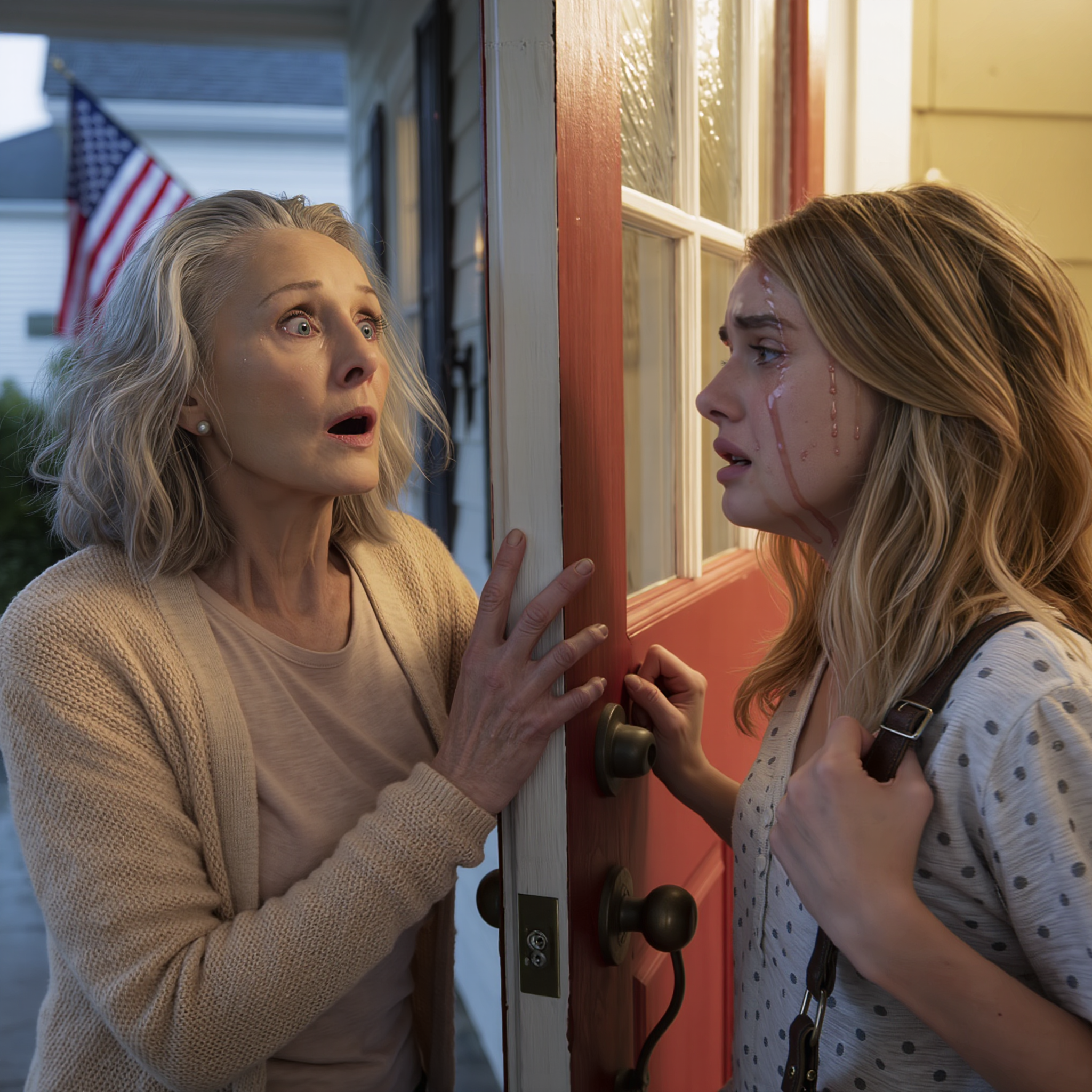
I knocked on the heavy oak door. When it opened, Leo stood there. He didn’t reach out to grab my bag. He didn’t pull me into a hug and tell me everything would be alright. He stood in the doorway, his body a physical barrier between me and the warmth of the foyer.
Behind him, Sarah appeared. She was dressed in a silk loungewear set, her hair perfectly coiffed even for a night in. She gave me that smile—the one I had seen a thousand times at birthday dinners and holiday brunches. It was the smile of someone watching a tragedy from a safe distance.
“Mom,” Leo said, his voice flat. “Come in for a second.”
I stepped into the hallway, my wet shoes leaving marks on the polished marble. I felt small. I felt like a stain on their perfect canvas.
“We’ve been talking,” Leo said, glancing at Sarah for support. “And look, Mom, we love you. But our lives are very complicated right now. The guest room is being converted into a nursery for the new baby—” (I hadn’t even known they were trying) “—and Sarah’s sister is coming to stay next month to help. There’s just no physical room.”
“I can sleep on the couch, Leo,” I said, my voice barely a whisper. “I just need a roof over my head for a few weeks.”
Sarah stepped forward then, her voice honey-sweet and poison-sharp. “We just think it would be better for your dignity, and for our family dynamic, if you found something more… permanent. There are some lovely assisted living facilities that take state aid. We could help you look into those.”
The word “dignity” felt like a joke. She was talking about my dignity while suggesting I move into a ward for the indigent.
The Chair Beside the Trash
“You don’t want me here,” I stated. It wasn’t a question.
Leo looked away. “It’s not that we don’t want you, Mom. It’s just that you’re… you’re a lot right now. And we have a certain image, a certain way we live. Having you here in this state… it would be hard for everyone.”
He led me toward the kitchen, but he didn’t offer me a seat at the grand island where they usually ate. Instead, he pointed to a small, wooden chair that had been pulled out into the mudroom, near where the recycling bins and the trash cans were lined up for morning pickup.
“Just sit here while we finish dinner,” he said. “We’ll call you an Uber to a motel for the night. We’ll pay for the first two nights, of course. After that, we’ll have to see.”
I sat down on that chair. The air smelled of expensive roasting chicken from the kitchen and the faint, sour scent of the garbage bins beside me. It was a choreography of exclusion so precise it could have been rehearsed. In a house with five bedrooms and three living areas, I had been placed in the transition zone—the place where things go before they are taken away.
As they ate in the other room, I could hear the clink of silverware and the low murmur of their voices. They weren’t grieving for me. They were relieved. They had “managed” the situation. They had set the boundary.
I sat there, and for the first time in years, the “numbness” I had always feared became my greatest strength. I looked at the trash cans. I looked at the muddy floor. And I realized that I wasn’t looking at my future—I was looking at their character.
The Revelation of Self-Worth
I didn’t wait for the Uber. I didn’t wait for the motel voucher.
I stood up from that wooden chair beside the trash. I straightened my old cardigan. I felt the weight of the bank statement in my purse—the one that proved I could buy their entire neighborhood if I felt like it. But more than that, I felt the weight of my own life. I had raised a son who valued his “image” more than his mother’s breath. That was my failure as a parent, perhaps, but it was no longer my burden as a woman.
I walked into the dining room. They both looked up, startled.
“Mom? The Uber isn’t here yet,” Leo said.
I looked at him—really looked at him. I saw the fear in his eyes, but it wasn’t fear for me. It was fear that I would make a scene.
“I’m leaving, Leo,” I said. My voice wasn’t shaking anymore. It was as solid as the oak trees in the yard. “And don’t worry about the motel. I think I can manage.”
“Where will you go?” Sarah asked, her eyes flicking to my battered suitcase.
“To a place where I belong,” I said. I gave her the same thin smile she had given me for a decade. “And surprisingly, it isn’t beside your trash cans.”
I walked out the door and into the rain. I drove to the finest hotel in the city—the kind of place where the doorman holds an umbrella for you and calls you “Ma’am” with genuine warmth. I checked into a suite with a view of the skyline. I took a hot bath. I ordered room service.
And I cried. Not because I was poor, but because I was suddenly, devastatingly rich and yet completely alone.
The Aftermath
The test was over. The results were in.
Over the next few weeks, I began the process of building my new life. I bought a penthouse with floor-to-ceiling windows and a terrace that smelled of jasmine, not garbage. I hired a financial advisor. I donated $1 million to the library where I had worked for thirty years.
I didn’t call Leo. I wanted to see how long it would take for him to check on a “destitute” mother.
It took three weeks.
He called me on a Sunday. “Mom? I’ve been trying to reach you. The motel said you never checked in. Where are you? We were worried.”
“I’m fine, Leo,” I said.
“Look, Sarah and I felt bad about how things ended that night. We found a small apartment—it’s in a rough part of town, but the rent is low. We can co-sign for you if you—”
“I bought a house, Leo,” I interrupted.
There was a long pause. “You… what? With what money? I thought you were broke.”
“I was testing you,” I said, the words falling like stones into a still pond. “I inherited five million dollars. I wanted to see if my son had a place for me when I had nothing. And you showed me exactly where you thought I belonged. You put me by the trash cans, Leo.”
The silence that followed was different this time. It was the silence of a man who realized he had just thrown away the winning lottery ticket—and his mother’s heart—in the same breath.
“Mom… I… we were just stressed… Sarah was—”
“It doesn’t matter who was what,” I said. “What matters is that I know the truth now. You can’t buy back a moment like that. You can’t un-say ‘This is where you belong.'”
The Final Lesson
He tried, of course. For months, the flowers arrived. The invitations to dinner. The apologies that grew more desperate as he realized the scale of the inheritance. Sarah even sent a handwritten note about how much she “admired my spirit.”
But the damage was done. Not out of spite—I didn’t hate them—but out of a newfound respect for myself. I realized that love that depends on your bank balance isn’t love at all; it’s a transaction. And I was done being a line item in someone else’s budget.
I spent my time traveling. I met people who liked me for my stories, not my stock portfolio. I learned to paint. I sat in chairs that were comfortable, in rooms where I was the guest of honor, and I never again let anyone make me feel small.
One evening, a year later, I saw Leo at a local charity gala. He looked older, tired. He approached me with a tentative look, his drink shaking slightly in his hand.
“Mom,” he said. “Can we just… start over? Forget the money. Forget the chair. I miss you.”
I looked at him, and I felt a pang of the old love—the mother-love that never truly dies. But I also felt the strength of the woman who had walked out into the rain.
“I miss the son I thought I had, Leo,” I said gently. “But we can’t go back. I’ve moved on to a life where I don’t have to test people’s hearts to see if they’re real. I just surround myself with people who don’t need a reason to be kind.”
I walked away from him then, my heels clicking on the marble floor. I didn’t look back.
The lesson I learned wasn’t about the $5 million. It was about the fact that true belonging isn’t something someone gives you. It’s not a seat at a table or a room in a house.
True belonging is the quiet, unshakeable knowledge that you are worthy, even when you are standing by the trash cans. And once you know that, no one can ever make you feel invisible again.
I am not a victim of my son’s coldness. I am the architect of my own warmth. And that, I realized, is the only inheritance that truly matters.