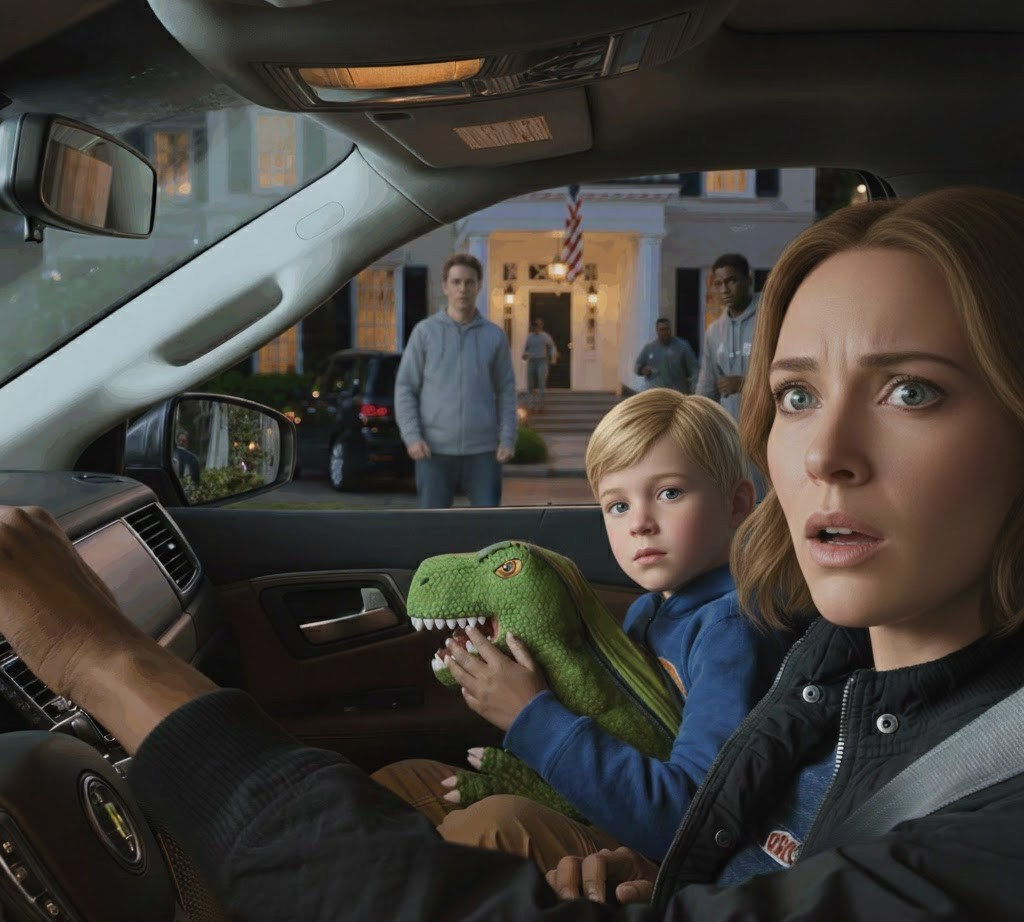
That night, the words of a child rang in my ears like thunder: “Mom… Dad said he’s getting ready to do something bad to us.” I froze for a moment, the kitchen knife still in my hand, the chopped vegetables scattered across the counter. The clock on the wall ticked loudly, but the world felt silent, heavy, freezing around me. I watched my little boy’s eyes — wide, frightened, trembling — and I felt something shatter inside: the illusion of safety, the walls of home turning into bars, the warmth of family revealed as danger.
I gathered him gently in my arms, whispered softly that everything would be okay, though my heart pounded against my ribs like an alarm. I grabbed the small bag in the hallway where I kept spare clothes, medicines, important papers: his birth certificate, my ID, a few hundred bills I managed to hide over the years. I moved so quietly — each step a prayer that the floor wouldn’t creak, that the house wouldn’t betray us. The cold night air outside was bitter when I opened the door, but it felt better than staying. I stepped into darkness with him in my arms, walking away from memories, from pain, from fear.
We didn’t look back. We walked to the outskirts of the suburb, past silent streetlights, empty sidewalks, distant sounds of life we no longer belonged to. My son held onto me tightly, small fingers buried in my coat, whispering things like “Are we safe now, mom?” I didn’t promise him safety — because I had none to offer — but I promised him truth. Honesty. A mother’s vow that whatever came next, I would protect him.
We reached a small motel that night, a room cheap and worn, but ours for the hours we needed. I tucked him into bed under a thin blanket, held the small stuffed toy he clung to, and tried to sleep. Sleep didn’t come easily. The silence buzzed around me, memories clung to the walls, the weight of what we left behind pressed on my chest. But I stayed awake, planning, breathing softly, listening for any danger, any betrayal, any call. None came. Only the quiet hum of the city at night, distant and detached — as though we had been cut out of it.
The next morning, with the soft light seeping through thin curtains, I wrapped my son in the same coat, held his hand, and walked to a nearby bus station. I paid for tickets with the small savings I had scraped together. As the bus rumbled away from the suburbs, pulling us toward the unknown, I closed my eyes and whispered: This is survival.
In the city I found a shelter for mothers and children — a small cramped room, a bunk bed, thin blankets, but safety: a space where no one knew us, where no fear greeted us at the door. They welcomed us quietly, offered food, warm showers, a chance to start again. I thanked them with a voice rough from tears, but steady. My son sat by the window, pressed his nose to the glass, watching the passing buildings, the busy streets, the hurried lives — and I realized: we were invisible again. Anonymous. Safe.
Days turned into weeks. I found work — small jobs washing dishes in a diner, cleaning floors, doing laundry. Early mornings and late nights, but honest work. My hands ached sometimes, my back tired, my spirit heavy — but each paycheck meant a roof for us, a meal, a step forward. My son went to a small school nearby, shy with new classmates, but curious. He asked about the city, lights, traffic, strangers. I told him only what was true: “We are safe now.”
At night, I tucked him in, read children’s stories in a soft voice, watched him sleep, worried about nightmares. I held his tiny hand in mine, massaged his forehead, whispered lullabies. And I promised myself: I will never let fear decide our fate again. I will not build dreams on fear. I will build hope.
Months passed. The nights felt less heavy. The days less sharp. I found a small apartment, cheap and modest, but ours. I painted the walls a warm cream, placed a potted plant on the windowsill, hung old photographs of earlier days — not the ones filled with pain, but those rare moments of love, laughter, childhood. I cooked simple meals. I made pasta. I made stew. I made tea. I watched my son grow confident again: smiling at school, making friends, drawing pictures of brighter days.
I didn’t tell him what happened — not all of it. He doesn’t need to carry fear on his shoulders forever. He deserves innocence. He deserves childhood. Every night when I watch him sleep, I touch his hair gently, and I feel the weight lift — not completely, but enough to keep walking.
I wrote letters on scraps of paper sometimes — notes to myself: I am strong. I am enough. I am a mother. I am safe. I folded them, kept them in a small box under my bed. I never planned to send them. They were for me — reminders when the world felt too big, when loneliness crept, when regret whispered.
One sunny morning, I walked by the riverside with my son. He ran ahead, laughed at the ducks, collected pebbles. I followed slowly, breathing the fresh air, watching the water ripple with sunshine, letting the breeze carry away the ghosts of that dangerous night. I felt — for the first time in a long time — lightness. Relief. Quiet hope.
If someone asked me then: “What did you lose when you ran away?” I would answer: “Fear.” I lost fear. And in losing fear, I found freedom. I found dignity. I found love — real, gentle, protective love.
This is our new life. Not perfect. Not safe from pain. But ours. Built on trust, on truth, on tiny steps taken with trembling hands toward a horizon not of shadows — but of light.