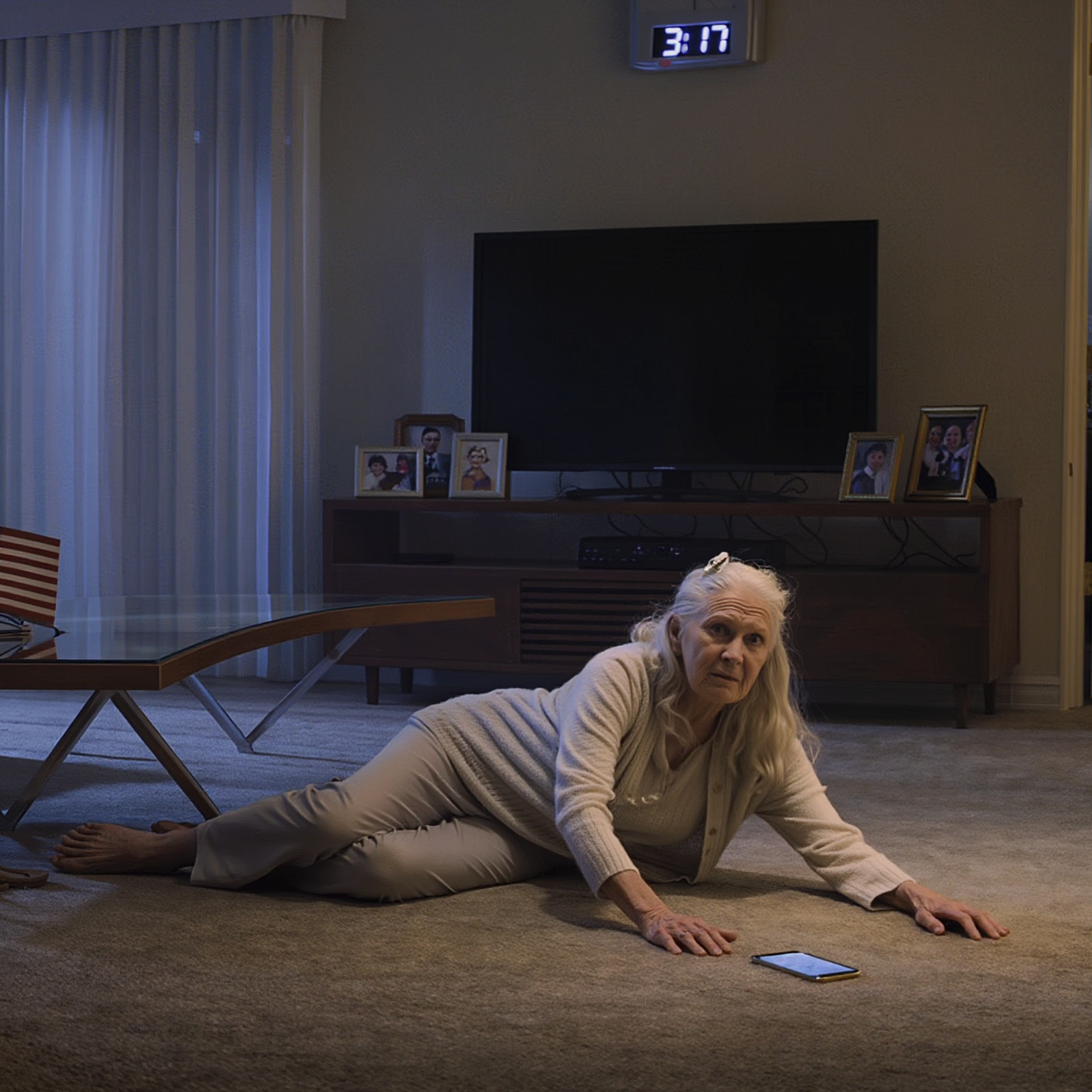
I never believed loneliness could make sound until that night. It hummed in the walls, in the dark, in the aching space between my heartbeat and my breath. I had gone to bed early, feeling the age in my knees, the tremor in my fingers, the quiet thinning of strength that nobody warns you is the true sign of the body closing its doors one by one. At seventy-nine, sleep is never deep. It is fragile, like frosted glass. I woke at 3:07 a.m. — strangely alert, suddenly aware that the room was too still, the house too heavy, the air too thick inside my lungs. I stood, then faltered, the floor tilting, my bones forgetting who commanded them. I reached for the dresser, missed, and fell with a sound only the carpet heard. It didn’t hurt immediately. Age delays pain. Age waits before deciding what to punish.
I lay there, cheek against the rug, the smell of dust and detergent filling my nose, and I listened. There should have been footsteps. Once, there would have been. Once, when he was young, my son would have raced toward me barefoot, terrified I had bumped a toe or sneezed too loudly. But adulthood does something brutal to certain hearts — it teaches them that mothers are durable, disposable, self-repairing. I whispered his name. It floated into the hallway and died before it reached his bedroom door.
In the thin silence, the television in his room played softly. A sitcom laugh track, a burst of canned joy. Then I heard something else — their voices. My daughter-in-law’s laugh came first, low and amused, the sort of laugh that doesn’t belong in the presence of mortality or collapse. “She fell again,” she murmured, as if sharing a joke, not a life. My son, my once-little boy with scraped knees and birthday cake crumbs on his cheeks, chuckled. “Leave her. If she needs help, she’ll get up.” They were so close I could picture the exact glow of the TV against their faces.
The floor felt icy, even through my nightgown. I tried to lift myself, but my arms trembled, refusing to remember youth. I had fallen before — not physically, but in ways motherhood never teaches you how to recover from. The first time he forgot my birthday. The first time he answered a call with a sigh instead of a greeting. The Christmas he told me not to bother baking because they preferred store-bought. There are many kinds of collapse, and some take decades to reach the floor.
I stayed down because I could not rise yet, not in body, not in spirit. I stared at the shadow of the sofa, at the window’s faint gray outline, at the memory of the world I once built. I gave him everything — food before myself, heat before my own winter coat, education before my retirement. I never told him that I pawned my grandmother’s earrings to pay his university deposit. What should have been an heirloom became a tuition fee, vanished into the future that now shut its door on me.
Their voices changed again. My daughter-in-law, sharper now: “She uses weakness to control you. Let her lie there.” My son didn’t protest. I don’t think he has protested her in ten years. He no longer belongs to himself, nor to me. I am a relic he houses, not a person he holds.
Time passed — an hour, maybe more — the kind of hour that is not measured in minutes but in heartbeats that threaten to stop. When I finally pushed myself upright, it was not because I believed they would help. It was because I realized, with a clarity harsher than dawn, that I no longer needed them to.
I sat on the couch, upright, breathing carefully. My heart fluttered like a bird trapped in a chimney. I listened again — more laughter, more whispering, a door shutting, then silence. They slept while I held my rib, spotting the bruise blooming beneath my skin like a purple sunrise.
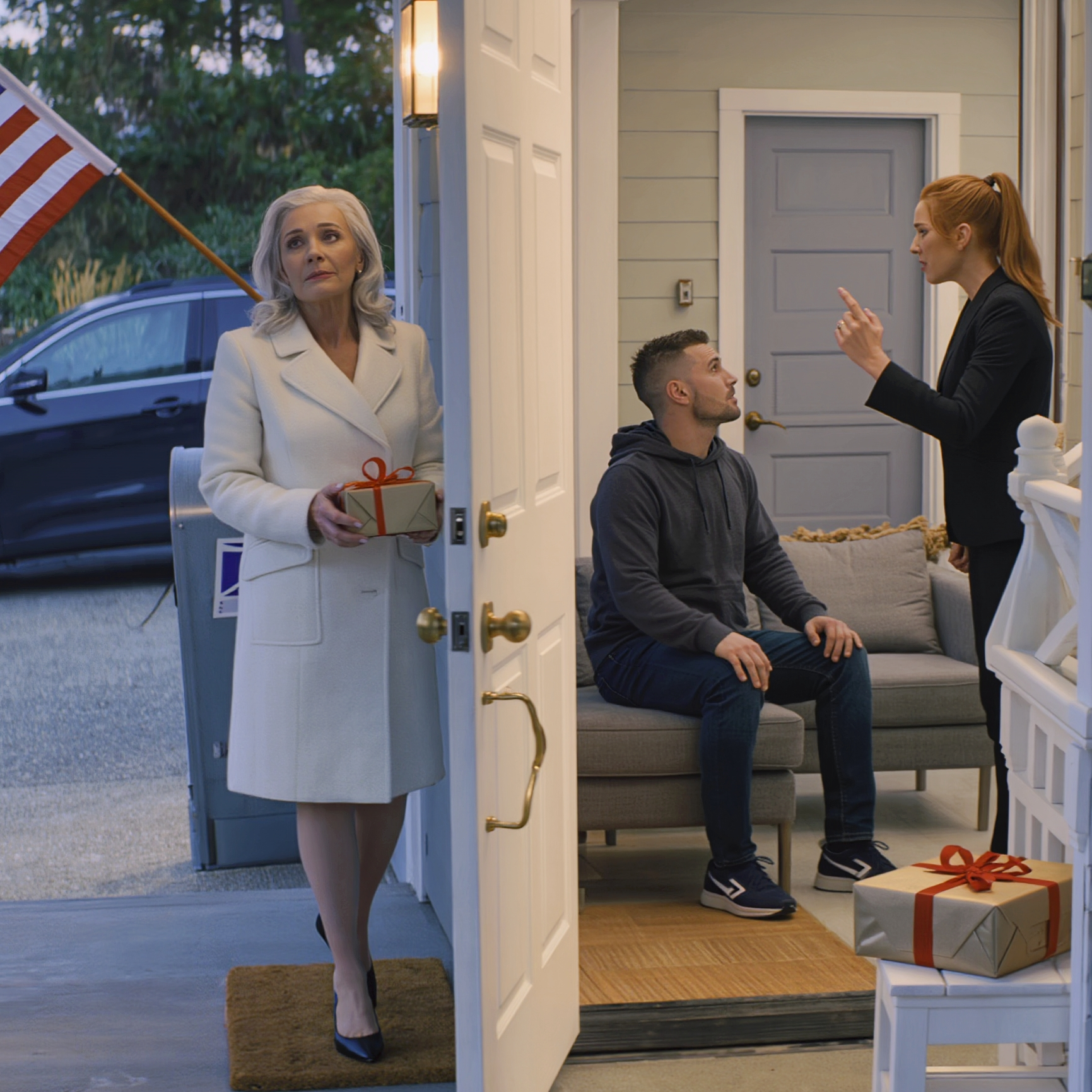
When the real sunrise arrived, I sat at the kitchen table with my tea. They emerged hours later, rested, uninterested. No mention of the night floor, no inquiry. My son mumbled “morning,” not looking up. My daughter-in-law scrolled her phone, nails clicking like impatient insects.
I looked at them without speaking, and in the pale light, I realized something almost gentle: it was over. Not love, not motherhood — but the expectation that anything I gave would return.
Two days later, I made my calls. Quiet, calm, without anger. I transferred the house deed. I updated emergency contacts. I scheduled movers for memory instead of furniture. I chose a small apartment near the ocean, a place with gulls instead of grudges. No explanations. No final scolding. Just a decisive severing of invisible strings.
When I left, I did not wake them. I placed the keys on the table beside a single note that said nothing dramatic, nothing desperate, only: Be well. Take care of yourselves. Goodbye.
I closed the door and found that the world outside was brighter than it had been in years. It smelled of salt and coming rain. My taxi driver lifted my suitcase with kindness my own son no longer possessed. I sat by the window and watched the neighborhood shrink, the house becoming a memory, not a wound.
In my new apartment, I unpacked slowly. I boiled tea. I opened all the windows. The ocean air felt like youth returning in small, merciful fragments. The elderly couple next door brought cookies without knowing my story. They didn’t need to. They simply saw me.
Some nights, I remember the carpet, the cold, the laughter behind the door. But it no longer paralyzes me. It simply confirms that freedom sometimes begins with collapse. I did not die on that floor. I rose, not with help, but with decision.
At seventy-nine, I learned the secret everyone hides: it is never too late to leave where love has expired.
And when I walk by the sea at dusk, I feel not abandoned but reclaimed. I whisper to the wind, not in bitterness but in relief:
I was not unheard. I was simply done begging to be heard.