I had been awake since dawn that Christmas morning, moving quietly through my own kitchen while the house was still dark and calm, the way it used to be when my children were small and Christmas meant whispered excitement instead of tension. I peeled vegetables with stiff fingers, basted the turkey, set timers, wiped counters, and moved from stove to sink like it was second nature, because for decades it had been. This was my home, my kitchen, my rhythm. I told myself that the warmth would return once everyone gathered, that laughter would soften sharp edges, that Christmas still had room for grace.
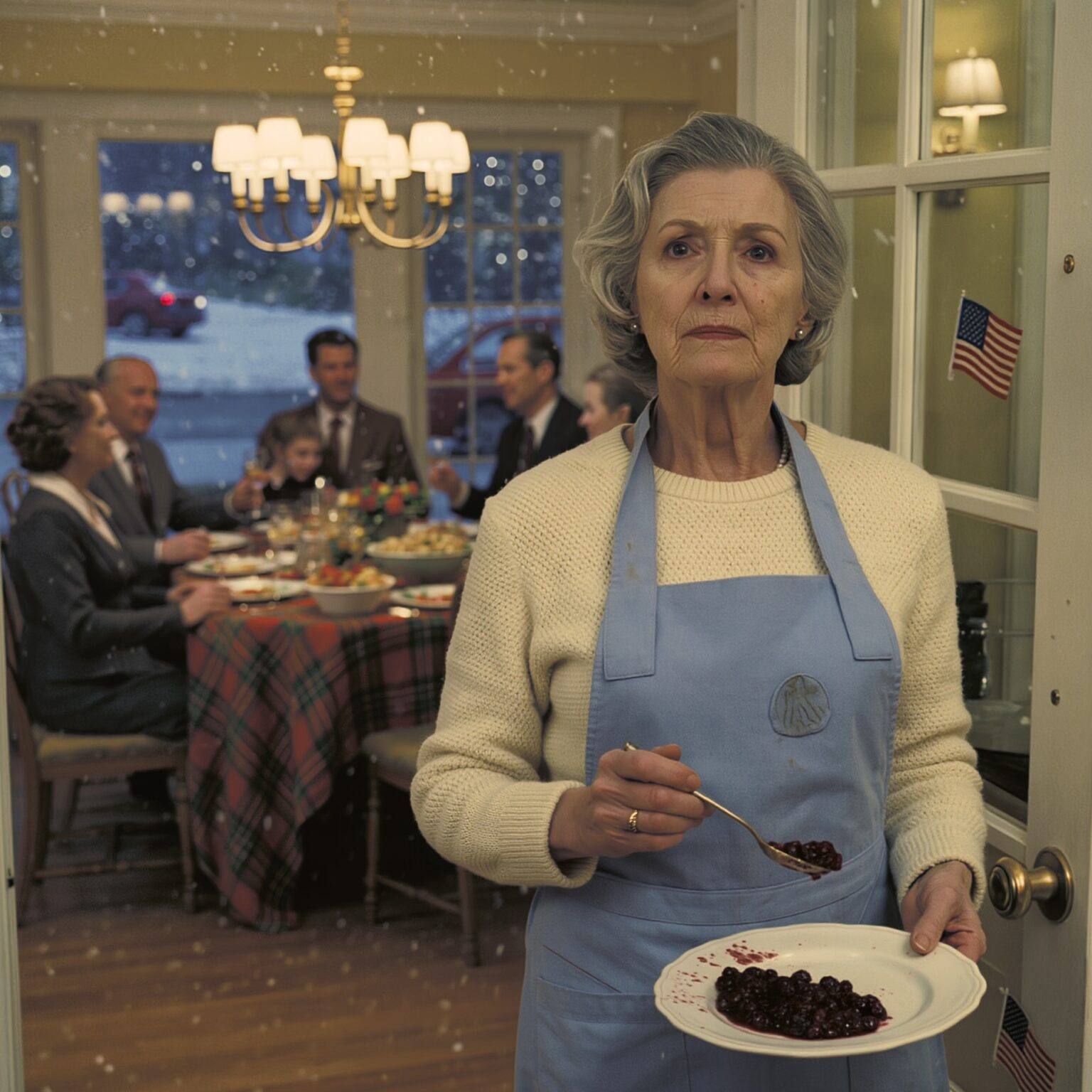
By mid-afternoon the house was full. Coats piled on chairs, voices overlapping, music playing just loud enough to sound festive without being joyful. I noticed how no one asked if I needed help, how plates appeared on the table while I was still stirring gravy, how conversations floated past the doorway without ever turning toward me. When I finally stepped out of the kitchen, apron still on, my daughter-in-law smiled briefly and said, “Don’t worry about sitting yet — just focus on the food, we’ll handle the table.”
I stood there for a moment, unsure if I had heard her correctly. Then I looked at the dining room and saw it clearly: every chair was filled. My son sat at the head of the table, laughing loudly, wine glass raised, while my grandchildren leaned close to him, their plates already served. They had placed a second table nearby, smaller, pushed slightly off to the side, where coats and purses rested instead of people. No chair had been left for me. Not in my own home. Not at my own table.
No one looked back when I returned to the kitchen. No one noticed the quiet except me. I plated the food carefully, carried it out one dish at a time, set it down, and stepped back again, invisible in plain sight. I listened to the laughter, the clinking glasses, the casual conversation about vacations and plans and things that did not include me. And for the first time that day, I stopped rushing.
I leaned against the counter and let the moment settle. Not anger. Not tears. Just understanding. This wasn’t accidental. This wasn’t oversight. This was expectation. I was expected to serve, to hover, to disappear into usefulness without presence. I realized then that I had been shrinking myself for years without even noticing, mistaking endurance for love, silence for peace.
When dinner was nearly finished, my son called out, “Mom, can you bring more bread?” His voice was casual, comfortable, unaware of how sharp it sounded in the stillness of the kitchen. I brought the bread, set it down gently, and instead of turning back, I spoke — not loudly, not dramatically, just clearly.
“I’ll be sitting now.”
The room went quiet in a way that wasn’t festive. Chairs scraped. Someone coughed. My daughter-in-law looked up, confused, and said, “Oh — we didn’t think—”
“I know,” I replied softly. “That’s the problem.”
I walked to the table, pulled a chair from the corner where coats were piled, and placed it at the end. I removed my apron slowly, folded it neatly, and sat down. My hands rested calmly in my lap. I didn’t glare. I didn’t accuse. I simply took the space that had always been mine.
No one argued. No one apologized right away. But the laughter didn’t return as easily. Conversations shifted. People became aware of themselves. And in that awareness, something important changed — not because I demanded it, but because I finally allowed myself to be seen.
Later that evening, after dishes were done and guests had begun to leave, my son stood awkwardly near the doorway. He didn’t meet my eyes at first. “I didn’t realize,” he said finally.
“I know,” I answered. “But now you do.”
That night, after the house was quiet again, I sat alone at the table where I had eaten Christmas dinner at last. The candles had burned low. The air smelled faintly of pine and spices. I didn’t feel bitter. I felt resolved. Because respect doesn’t come from shouting, and dignity doesn’t require permission. Sometimes it comes from choosing to sit down when the world expects you to stand aside.
That Christmas changed something in me. Not loudly. Not all at once. But permanently. And that was enough.