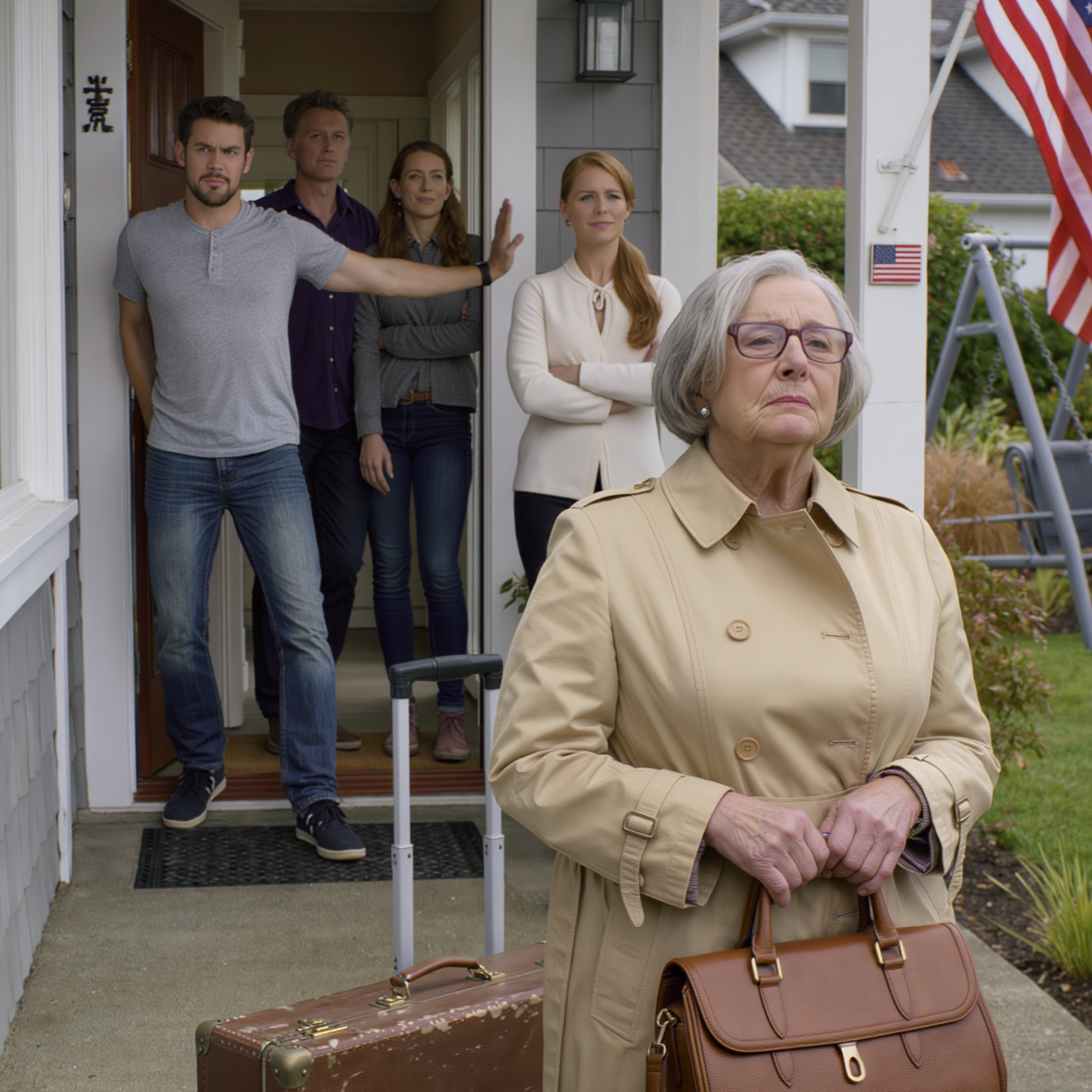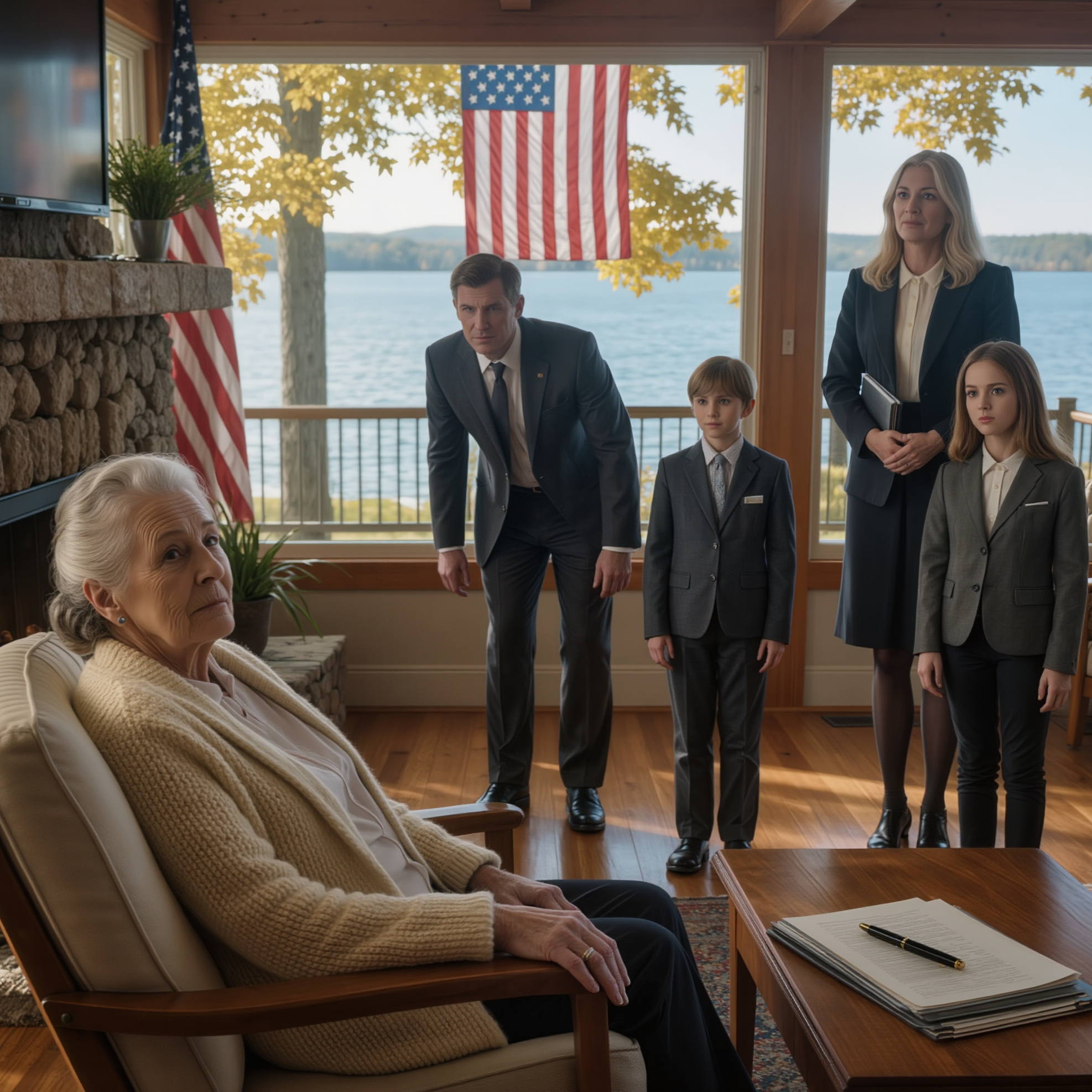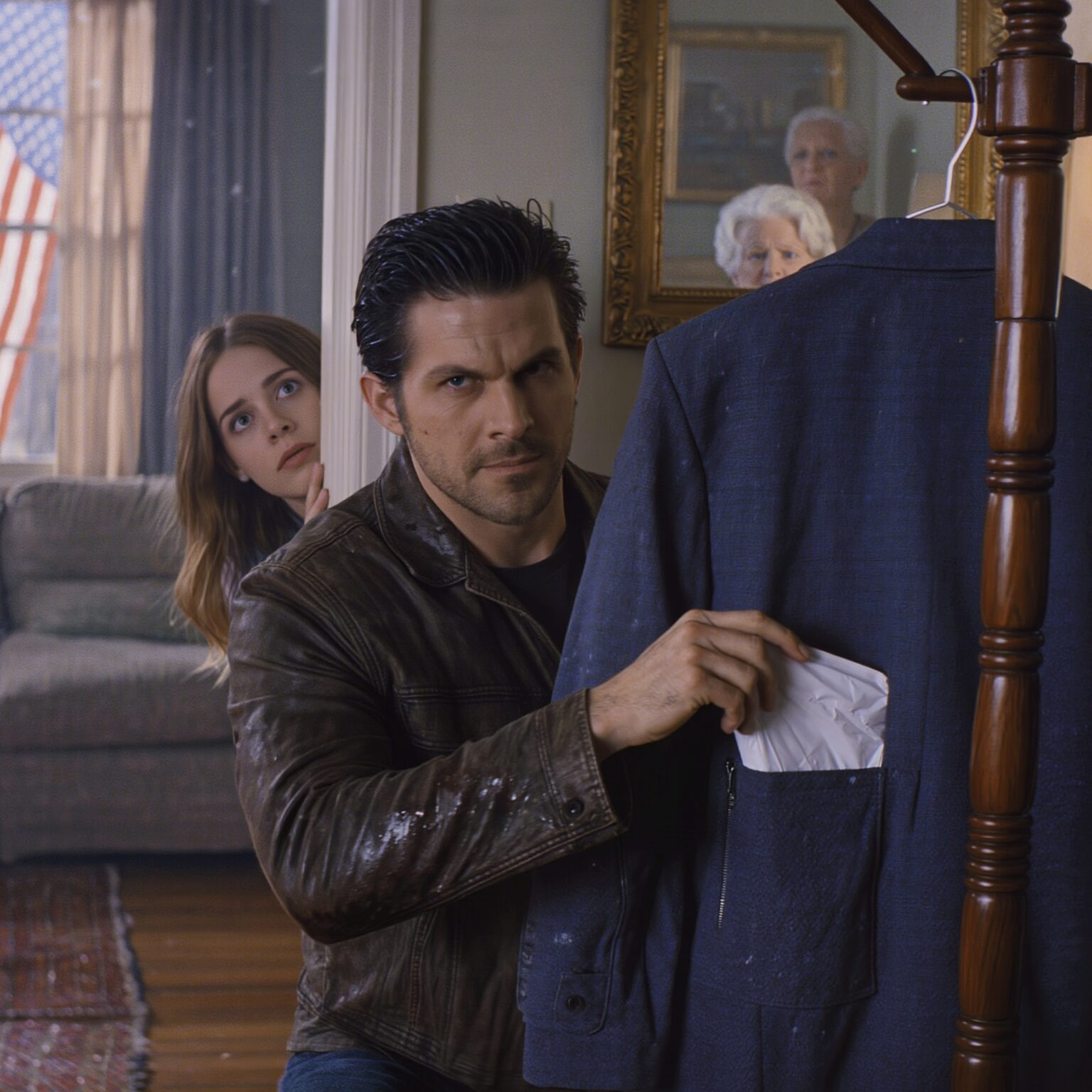
My name is Olivia. I’m 60 years old, and for most of my life, I believed that family was forever — that bonds forged by love and shared history could withstand the twists and turns of circumstance. I believed laughter, tears, grievances, and forgiveness were the embroidery that held us together through time, not the fraying thread that could unravel everything. I believed this even when life offered me reasons to doubt it — the cold shoulders, the unspoken tensions, the small distances that had grown quietly over the years. I believed in family because it felt sacred and unassailable. But I learned very differently on a day that began like every other Sunday: warm light through the curtains, the scent of breakfast lingering in the kitchen, and the quiet comfort of routine.
Richard — my son, my firstborn, the boy whose small hands I once held through scraped knees and awkward first days at school — was sitting across the kitchen table. His coffee was half-drunk, his eyes tired but steady, as though he had rehearsed what he was about to say. The conversation started with something simple — a question about dinner plans — and then his expression shifted, like someone tightening a grip on a truth they’d been burying for years. “Mom,” he began, not angrily, not tenderly, but with a flatness that made my heart stall for reasons I didn’t yet understand, “I think it’s time we talked about the house. I want my share.” That alone wasn’t the thing I remember with such sharp clarity. It was what came after — when, in a moment that I had only ever heard about in whispered cautions from others, he raised his hand toward me — not to caress, not to gesture, not as part of conversation — but in a motion so abrupt, so startling, that it felt like the room itself held its breath.
I didn’t move.
I didn’t cry out.
I just watched — stunned, rhythm steadying itself like someone learning a new kind of shock — as his hand paused in the air between us. There was no connection, no contact; yet I felt the implications of that raised hand echo more deeply than any physical blow ever could.
He didn’t strike me.
He didn’t apologize mid-gesture.
He simply lowered his hand and said, “I’m serious, Mom. We need to talk about your money, your property, everything.”
No warmth. No regret. Just a transactional claim — spoken with a calm ambivalence that felt harsher than outright hostility.
In that moment, something inside me shifted — not in the dramatic way you see in films, but in a quiet rearranging of what I had always assumed family meant. I realized that love is not automatic. Kindness is not inherent. Loyalty is not a given simply because blood flows in shared veins. I sat there, the morning light soft and unchanging across the tablecloth, and absorbed the truth that some people love conditions, not connections. He didn’t touch me, yet the gesture mattered — not because it was violent, but because it laid bare a willingness to threaten rather than protect. In that second, family stopped being a sanctuary and became something colder: a space where entitlement could outweigh empathy.
I didn’t scream. I didn’t push him away. I didn’t crash into accusations. I simply set down my cup, looked him straight in the eyes with a calmness that surprised us both, and said, “I hear you. But I will not be spoken to this way.” Not anger. Not denial. Just truth, stated with a steady kindness that held its ground.
There was an uncomfortable pause, as though the universe itself paused to measure the gravity of that exchange. Then my son looked away, shifting into a different kind of speech — the kind that contained all the justifications people build when they want something without considering the humanity of the person from whom they want it.
The rest of that conversation unfolded like a slow unspooling of assumptions. He spoke of bills, expectations, plans, inheritance, investment, entitlement, all framed as logic and necessity. I listened, not dismissing his concerns but also not surrendering my dignity in the face of someone who had just raised his hand as though boundaries were negotiable.
After he left, I didn’t collapse in tears. I didn’t replay the moment in a loop of pain. I simply walked to the living room, sat in my favorite chair, and asked something I had never allowed myself to ask before: What do I want now? Not whom I loved. Not whom I survived for. Not whom I needed approval from. What I wanted — in terms of peace, respect, and dignity in the second half of my life.
That question, so simple yet so profound, became the hinge on which everything turned.
In the weeks that followed, I didn’t avoid Richard. I didn’t erase him from my life. But I drew new boundaries — not in anger, not in revenge, but in calm self-respect. I absorbed lessons others learn only after years of bruising: that family is not a contract guaranteeing unearned respect, that love is something actively chosen, and that kindness does not require you to accept being spoken to in hurtful ways.
I restructured my will — not out of spite, but out of clarity. I allocated my possessions to causes and people I respected, excluding nothing out of vengeance but simply organizing in ways that reflected my values rather than someone else’s sense of entitlement. I sought legal advice, not to punish, but to protect my autonomy. And I began tending to my own well-being in ways I had postponed for decades — travel, long walks in the park, afternoons with friends who saw me for who I truly was, not who they assumed I should be.
One afternoon, Richard visited again — a quieter version of himself, devoid of bravado, perhaps unsettled by the firmness of my boundaries. I greeted him politely, offered tea, and listened to him speak more softly this time, his tone less combative, more tentative. He didn’t raise his hand. He didn’t laugh. And when he asked if we could talk respectfully, I agreed — not because I didn’t feel hurt, but because healing, like love, can be chosen again in a different form.
That conversation wasn’t perfect. It wasn’t a fairy-tale reconciliation. But it was something deeper: it was mutual acknowledgment of humanity. I didn’t erase the past. I simply refused to let his moment define the rest of my life.
Family isn’t automatic.
Belonging isn’t guaranteed.
Respect is not inherited.
It’s built.
And sometimes, it’s rebuilt —
after moments that shake you to your core,
not to break you,
but to clarify who you are
and what you will no longer accept.
My name is Olivia.
I once believed family was forever.
Now I know it is not given.
It is chosen.
And I choose peace, clarity, and dignity —
every time.