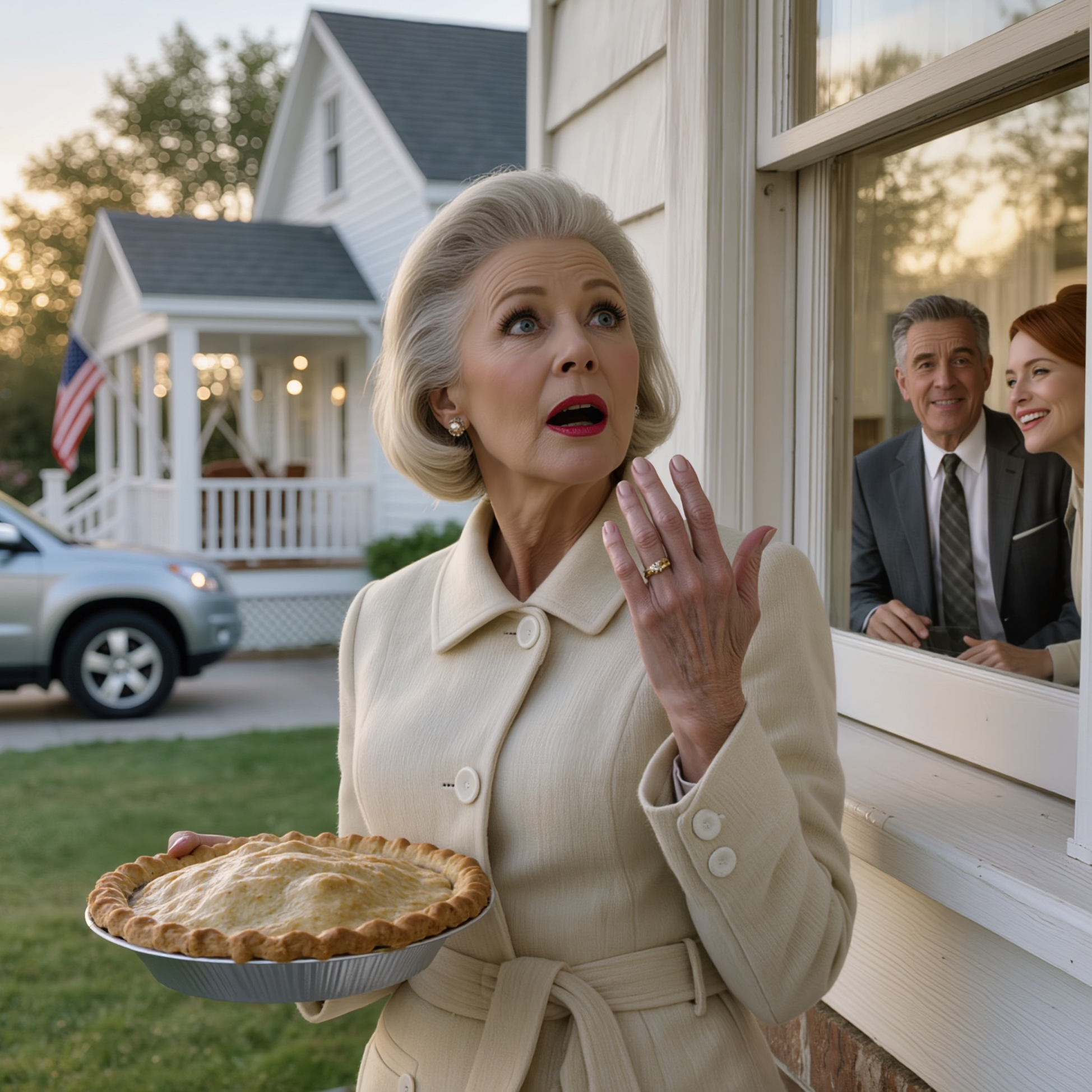
When the day finally came — the day I walked out of the building with a small cardboard box of personal items and the official stamp of “Retired” on my badge — I expected relief, maybe even a quiet celebration. After forty-seven years of work, deadlines, and early mornings, I thought I’d feel a soft kind of freedom take over: a slow sunrise instead of alarms, leisurely afternoons instead of urgent meetings, the gentle pleasure of writing without interruption, the joy of wondering what would happen if I simply chose me for a while. But instead, the moment I stepped through the front door of our family home — framed by the familiar echo of laughter and the clatter of everyday life — I was met with a new kind of announcement: somewhere between the stink of old coffee and the jangle of keys, my daughter-in-law looked me up and down and declared, “I’m selling your old car. You don’t need it anymore.”
She said it casually, with the ease of someone who believes decisions about your life belong to them once you reach a certain age, as though the car was just an object and not a repository of decades of memories — road trips with wind in the hair, grocery runs when hands were full of bags and thoughts, evenings late after work when that car was the first sign of “home” after long days. I didn’t argue. I didn’t frown. I just smiled — the kind of smile that conceals more than it reveals, a quiet mask worn so often that it had become part of my face.
“Thank you for letting me know,” I said softly, not out of agreement but out of clarity that confrontation wasn’t what was needed in that moment. There was an odd stillness in the air, like someone had dimmed the lights of courtesy without warning, and while part of me wanted to unfold my thoughts in an argument, another part simply stepped back and observed — not hungry for approval, not collapsing into hurt, just aware.
That night, I went to bed thinking about retirement and plans for morning coffee, not about conversations I hadn’t had. I slept with the quiet certainty that dawn would settle in a new chapter. I didn’t anticipate what the sun would bring.
The next morning, I stepped outside with my robe wrapped snugly around me, breathing in the fresh air of a day meant to be mine, and paused. The driveway — usually home to that old car with its memory-worn seats and familiar hum — was empty. No car. No keys dangling from the hook by the door. Just the neat concrete expanse and the distant hum of street noise. My heart didn’t spike with fear. It didn’t twist with bitterness. It just observed with that same calm clarity I had offered the day before: the car was gone.
I walked back inside, poured myself a cup of coffee, and sat down at the kitchen table, my breath warm against the cool mug, thinking about the small but sharp edges of life where moments of exclusion meet choices about self-worth. I didn’t make a fuss. I didn’t call names. I didn’t demand explanations. Instead, I leaned into that quiet moment and asked myself a simple question: What do I want to do now?
And the answer, when it came, was not driven by indignation. It was driven by dignity.
I called my son first — not to argue, not to accuse, but to inform him gently that the car was no longer in the driveway, and if anyone had “handled” it, I hoped it was with clarity of ownership and respect. There was a pause on his end, a moment where his voice sounded uncertain, like something he hadn’t expected — a mother who didn’t collapse when excluded, but stood still.
Then I called my dentist to reschedule appointments for the next few weeks, my gym to update my membership, and — most importantly — my travel agent. I’d been considering a small trip after retirement, maybe someplace quiet and coastal, maybe a city I had always wanted to walk through without rushing back to work. I booked the trip that very morning. I didn’t use the money from the old car sale — that wasn’t mine to touch anymore, a lesson in ownership and boundaries that needed no explanation. Instead, I used my own savings — the lifetime of work that never belonged to anyone but me — and chose a destination that felt like dawn instead of dusk: the Amalfi Coast.
Packing for that trip, I realized something profound: people can take objects from you — cars, seats at tables, invitations, titles — but they cannot take your agency unless you hand it over willingly. Exclusion doesn’t have to be rejection if you choose to redefine the meaning of presence. My daughter-in-law’s words had been casual. Her actions had been dismissive. But my response — quiet, deliberate, self-respecting — was the moment I reclaimed my third act in the story of my life.
The day I left for Italy, I didn’t look back. I didn’t need a parade. I didn’t need applause. I simply stepped into a taxi with my suitcase, the sun warm on my shoulders, and breathed deep — not with the relief of escape, but with the calm of someone who finally was living for herself.
And that — the unspoken choice to flourish rather than falter — was worth far more than any old car ever was.