When my sister’s email arrived one morning — simple, short, final — I didn’t imagine it would upend the fragile peace I’d built after years of quiet living. She was always direct, the kind of person who never lingered on sentiment unless it had permission to be real. Her message said only that she loved me, that she trusted me, and that her will had been updated accordingly. I didn’t fully process the details until the law firm called: “Your late sister’s estate has been left entirely in your name.” That phrase — entire estate left entirely in your name — felt strange in my mouth, like a sentence I didn’t know I was capable of living. My sister and I had been close in childhood and distant in adulthood, but in those fractured years we still held respect for one another — a quiet, unspoken agreement that life was complicated enough without manufactured drama. I assumed her generosity came from that place. I did not expect it to become the spark that lit the fuse of an estrangement I thought long buried.
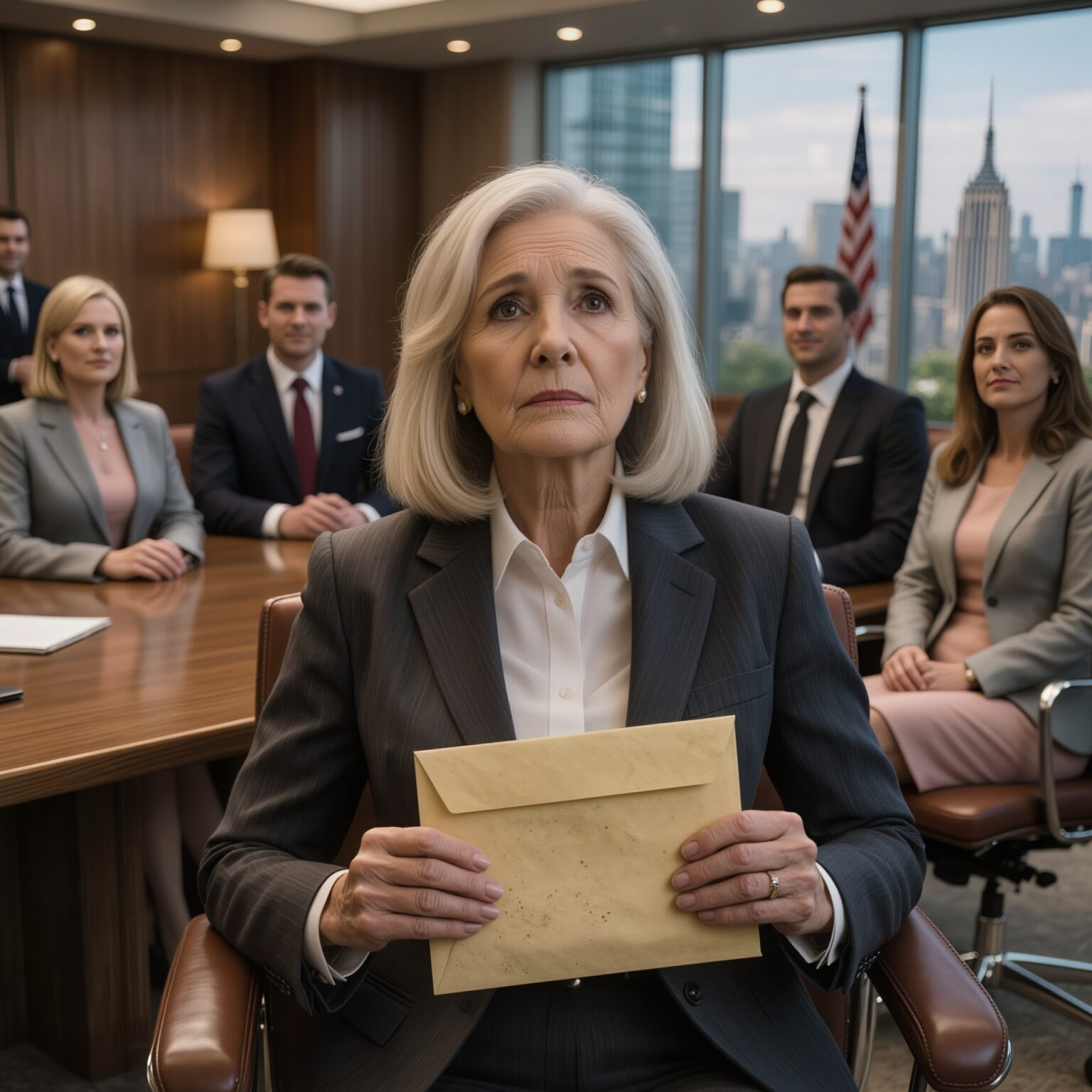
I walked into the downtown law office that afternoon with a calm heart, thinking the first conversation would be procedural: signatures, explanations of what she owned, final arrangements. Instead, I walked into a room where three familiar faces — my children’s faces — turned toward me with the kind of visceral surprise that felt more like accusation than reunion. They hadn’t spoken to me in eighteen years — not a birthday call, not a Thanksgiving dinner, not even a text on Christmas — and yet there they were, standing in a semicircle, eyes hard with something that looked less like shock and more like outrage. One of them, my eldest, stepped forward and said, “So this is what you’ve been up to? Waiting for someone to die so you can take everything?” A sharp, bitter sentence, delivered as though it were fact, not question.
I didn’t flinch. I didn’t rise to defend myself with emotion. I simply stood steady — not uncaring, but composed — and set my purse on the chair beside me. The attorneys shifted slightly, sensing the tension in the room, but I held my ground with a quiet steadiness born from long practice at not collapsing into other people’s expectations of me. I said, evenly, “Your aunt left her estate to me. That’s her decision and her legacy. We can discuss what she intended and why, if you’d like to understand it better.” Not a plea. Not a confrontation. A beginning of conversation, not assumption.
My middle child scoffed and raised a hand — the gesture not for peace, but for voice. “You were never there for us when we needed you. Not when we were sick. Not when we struggled. And now you’re suddenly rich because she died? That’s convenient.” The words came not from inquiry, but from long-stored grievance, as though years of absence were waiting to erupt like dormant embers finally given wind. In that moment I saw not just anger, but hurt — decades of it — and I realized how much pain and silence had shaped their assumptions about me. I could feel the history in the room like a layer of dust on old wood, years of unspoken moments filling the air between us. I could see how, in their absence of contact, they had constructed a narrative not about who I am, but about what they believed I must be.
I didn’t yell. I didn’t cry. I sat down slowly and met each of their gazes one by one with nothing defensive, but honest: “I made choices — sometimes imperfect ones. I didn’t always know how to be the parent you needed. I stayed quiet because I didn’t want to fight you over things that mattered to you more than to me at the time. I wasn’t absent because I didn’t love you — I thought stepping back would make it easier for you to stand on your own.” My voice was calm, not rehearsed, not hollow. There was no dramatic revelation, just truth spoken in the neutral tone of someone who has lived long enough to understand that words carry more weight when they’re not weapons.
There was an awkward pause that felt like the world holding its breath. My children didn’t soften immediately. They didn’t apologize. They didn’t collapse into tears or sudden contrition. They just looked — perhaps for the first time in years — and really heard what I said rather than reacting to the assumptions they had made in my absence. In that silence, deeper than any argument, something unspoken began: recognition that life doesn’t always condense into clear categories of blame and innocence, but rather into complexity and human imperfection.
The attorney cleared her throat politely, aware that legal matters had stalled in a room thick with emotion and raw history. She gently explained the specifics of the will: how my sister had explicitly chosen me as executor and heir, her reasons outlined in private letters and codicils, her long gratitude for the support I had given in ways unseen by others. I hadn’t shared those letters with my children yet — not because I wanted to hide anything, but because I knew love’s explanations don’t unfold through documents alone. They unfold through presence, through listening, through acknowledgment.
One of my children — the youngest, who had always been quieter and more tentative in family gatherings — finally opened their mouth and said something that wasn’t accusation: “Did she say why?” Not why you deserve it, not why you should have it, but genuinely curious: why she chose you. That tiny shift — from assumption to curiosity — felt like a door cracking open in a house that had been sealed by silence for too long.
I slid the folded letters across the table — not dramatically, not triumphantly, but gently — and said, “She did. And I think it might help you understand her heart. But I also want to talk about us, not just her intentions.” I didn’t demand reconciliation. I didn’t expect it. I simply offered space for conversation rather than confrontation.
The afternoon stretched on — not in heated conflict, not in theatrical reconciliation, but in gradual understanding. We didn’t fix eighteen years of distance in one legal meeting. What happened instead was far more subtle and significant: for the first time in nearly two decades, we talked — not in accusations or old wounds, but in real words about how time, fear, and misunderstood intentions had shaped each of us.
I left the law office that day with the estate matters still ongoing, but with something even more valuable beginning to shift: the possibility of connection. Not yet healed, not yet whole, but acknowledged. My children didn’t hug me in the parking lot. They didn’t promise to come home for dinner every week. But they walked out beside me rather than across from me — a quiet, human step toward belonging that was more important than any inheritance.
Later that night, back at my quiet home — the same home where my sister and I once sat under maple leaves talking about dreams we had for our families — I sat in the living room with the letters open on the coffee table and realized something profound:
Love is not earned through presence alone.
It can be rediscovered through honest conversation,
shared vulnerability,
and the willingness to meet each other
not as assumptions,
but as people with stories worth hearing.
The estate left to me was not a burden of wealth but a bridge of possibility — not just for distribution of assets, but for the distribution of something deeper:
understanding, reconciliation, and the soft, persistent hope that family can find its way back to itself when people choose to listen before they judge.
And that — more than any financial legacy —
is worth valuing deeply.