When I sold my house for ten million dollars, I didn’t celebrate like most people would. There was no champagne, no cheering, no dramatic moment of looking at the bank account with wide eyes. Instead, the moment the last document was signed and the new owner shook my hand, all I felt was an odd, hollow quietness in my chest. That house had been the center of my life for forty-eight years, a place where my wife raised our children, where birthday candles melted into tablecloths, where arguments echoed in hallways until they softened into apologies, where laughter clung to the walls even after everyone moved out. But after my wife passed, and after my children slowly drifted away into their own shiny worlds, the house became something different: a museum of ghosts that only I visited. Selling it felt less like a gain and more like closing the door on memories that had been begging to be freed. But even then, I didn’t tell my children. I didn’t want congratulations. I didn’t want fake excitement. I wanted something I hadn’t felt from them in a long time—genuine concern. And the truth was, deep down, I already suspected I wouldn’t get it.
The idea to test them didn’t come from bitterness—it came from a quiet, painful curiosity. Over the last few years, I had begun to notice how their calls grew shorter, how their visits became “maybe next week,” how holidays turned into rushed meals instead of warm gatherings. When I once asked my daughter to help me with a leaking pipe, she told me she was “too drained” from her Pilates class, and maybe I should “just hire someone instead of relying on people.” When my son visited during Easter, he spent more time checking the clock than talking to me; the moment dessert was done, he was already standing by the door, his keys spinning around his finger. I wasn’t angry—it happens to many aging parents. But after selling the house, I realized something awful: not one of them had asked where I planned to go afterward. Not one. So I decided to give them the opportunity to show who they truly were. I knew the test might hurt me. I didn’t know just how much.
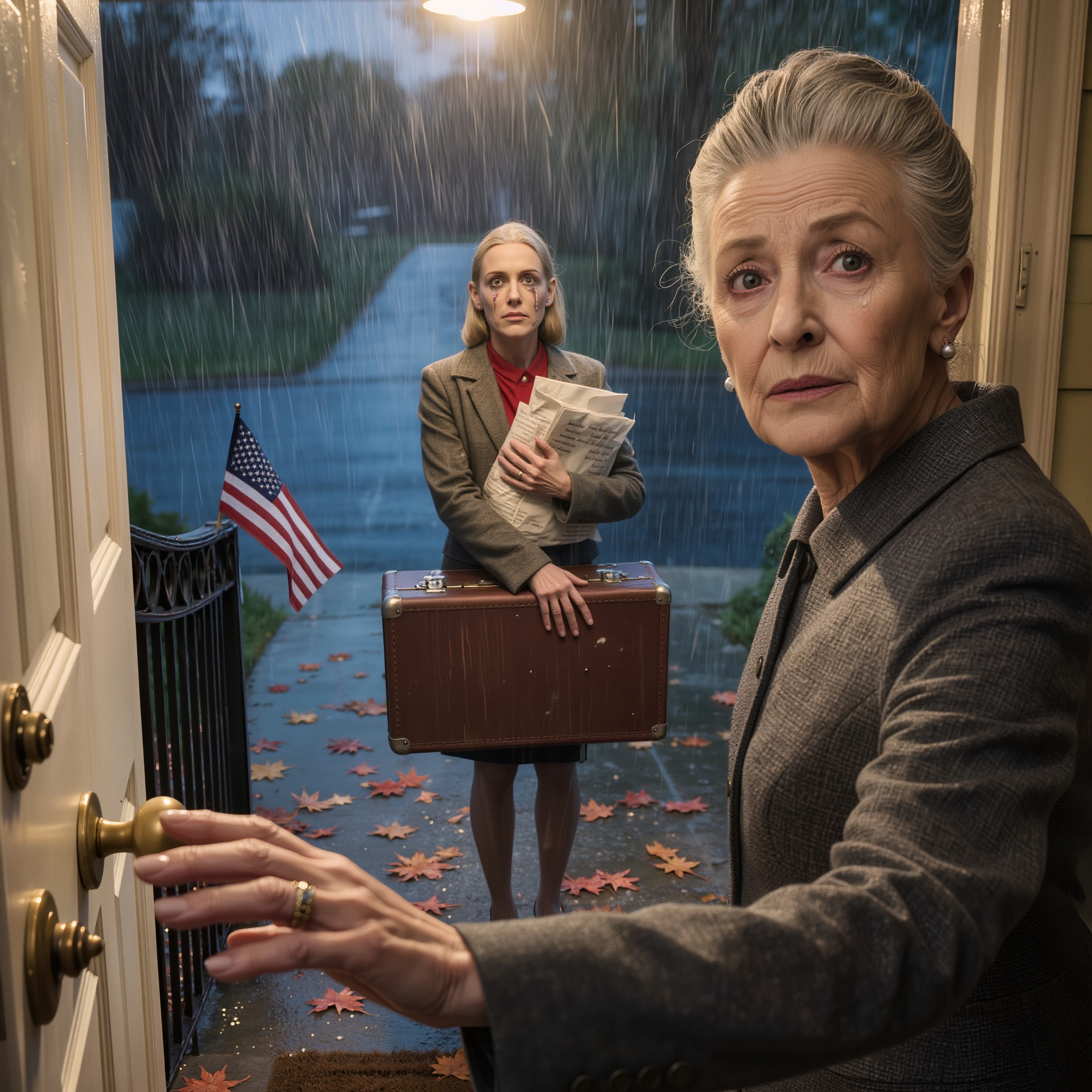
The first person I went to was my eldest daughter, Melanie. She opened the door with a smile that froze halfway when she saw me standing there with an old duffel bag. Her eyes flicked from my tired face to the worn straps on the bag, and something like annoyance flashed across her expression. “Dad… what’s going on?” she asked, her voice stiffening as though she already felt inconvenienced. I told her gently—almost embarrassed—that the house was sold and I didn’t have a place to stay yet. I told her I didn’t want to impose, only needed a couch for a few nights until I sorted things out. The silence that followed stretched so long I could hear the ticking of a clock inside her living room. She finally forced a smile, but her tone had a thin, nervous tremble. “Dad, I wish you had told me earlier. We… we’re really busy right now. The kids have exams. And honestly, there’s just no space. Maybe you can check in with one of your friends? Or maybe stay at a motel for a bit?” She kept talking, giving excuses as though she practiced them in the mirror, her eyes never quite meeting mine. I felt the sharp sting of disappointment—like a needle sliding under the skin. She didn’t even ask if I was okay. She didn’t ask why I sold the house. All she wanted was for the problem—me—to disappear quietly.
My son was next. I arrived at his place hoping—foolishly—that he would react differently. He opened the door halfway, blocking the entrance with his body as though expecting a salesman. The moment I explained my situation, he let out a long sigh and ran his hand over his face, a gesture I had seen him use since childhood whenever he didn’t want to deal with something. “Dad,” he said with a tight voice, “you can’t just show up like this. I mean, you should have planned better. You can’t expect us to rearrange our whole life with zero warning.” He suggested—very politely, with rehearsed concern—that I look into shelters. “They help old folks all the time,” he added, as if that softened the blow. When I reminded him I only needed a temporary place to stay, not a permanent arrangement, his response was colder: “I’m sorry, Dad. I really am. But it’s just not possible. We’re already under a lot of stress.” I looked over his shoulder into the living room. There was space. Plenty. But the one thing missing was any desire to make room for me.
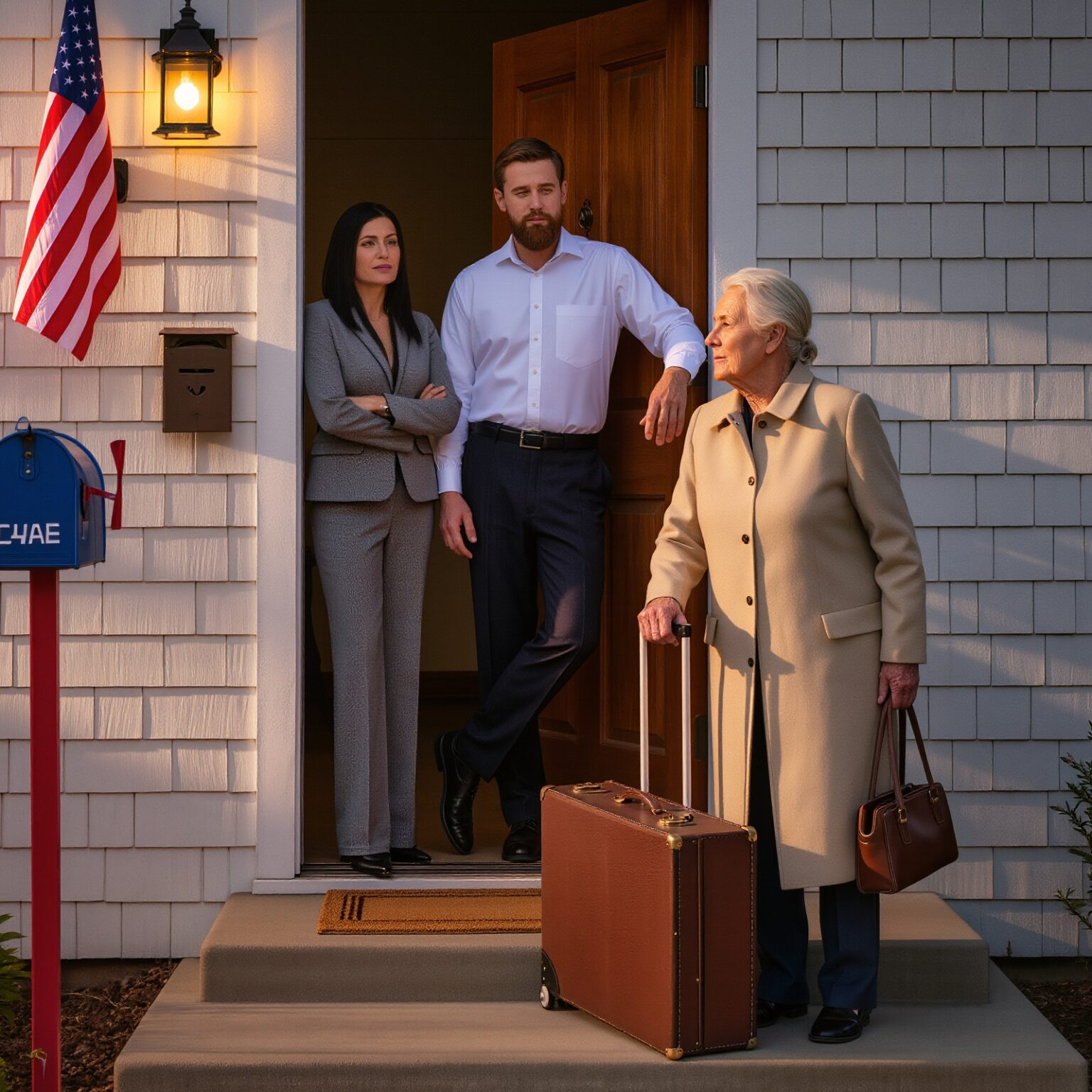
My youngest daughter, Elise, was my last hope—and she was the one who broke me most. She didn’t even pretend. She crossed her arms, leaned on her doorway, and frowned at me like I was a stray cat that wandered in begging for food. “Dad, this is ridiculous,” she said, shaking her head. “You’re being dramatic. You sell your house without telling anyone, then show up expecting charity? Why didn’t you plan? Why didn’t you think?” Every question stabbed deeper because the answer was the same—I did think. I thought they still cared. She continued, now clearly irritated, telling me she couldn’t “babysit a grown man” and I needed to “get it together.” Then she closed the door. Just like that. No hug. No hesitation. Not even a goodbye.
I stood on her porch alone, gripping the duffel bag that suddenly felt heavier than I could carry. The sun had started to set, and the sinking orange light made the neighborhood glow in bittersweet warmth. Children laughed in driveways. A couple walked their dog past me. And I just stood there, realizing that in the span of a single day, I had been rejected by the three people I loved more than anything. I told myself I wouldn’t cry—but tears aren’t something you can bargain with when your heart cracks. For the first time since my wife’s funeral, I felt genuinely, horribly alone.
That night, I didn’t go to a motel. I didn’t go to a shelter. I sat at the old bus stop downtown, watching strangers walk by, each wrapped in their own worlds. The irony was bitter but simple: I was one of the richest men in the city, and yet I was sitting on a cold metal bench like I had nothing. Maybe that’s what makes loneliness so cruel—it doesn’t care about your bank account. Around midnight, when my back started to ache and the cold settled into my bones, someone tapped my shoulder softly. I turned and saw her: Anna. My neighbor from three houses down in the old neighborhood. A woman I barely spoke to beyond the occasional wave or small talk about weather and gardening. She stood there in a thick sweater, holding a grocery bag, her eyes widening when she recognized me. “Mr. Thompson?” she said. “What on earth are you doing here at this hour?”
I hesitated, embarrassed. But something in her gentle expression disarmed me. I told her everything—not the part about the money, just the part about being homeless and my children turning me away. Her reaction was immediate: she didn’t ask me why I sold the house. She didn’t ask me why I didn’t plan better. She didn’t scold or judge or sigh. She simply said, “You’re coming with me. You’re not spending the night out here.” I tried to protest, but she shook her head firmly. “No arguments. Let’s go.”
She brought me to her small apartment above the corner bakery where she worked. It wasn’t fancy. It wasn’t spacious. But it was warm. She made me tea. She gave me blankets. She listened. Really listened. And when I apologized for imposing, she smiled softly and said words no one else had said to me in years: “You’re not a burden.”
I stayed with her for a few days while she helped me search for apartments—even though I already had the means to buy a dozen if I wanted. She checked on me constantly. She cooked extra portions so I wouldn’t feel like a guest eating too much. On the fourth day, when I woke to scrambled eggs and the smell of coffee, something inside me shifted. Here was someone who owed me nothing, someone who had no idea that I had ten million dollars, someone who helped me simply because it was the right thing to do.
That’s when I told her the truth.
I told her about the house sale. The money. The test. My children’s rejection. The inheritance I originally planned to leave them. She listened quietly, her eyes wide—not with greed, but with disbelief and sadness. When I asked her what she thought I should do, she reached across the table, placed a hand on mine, and said, “I think you should give your love and time to the people who give theirs back. Money… should follow the same rule.”
That evening, I rewrote my entire will.
My children received nothing.
Anna received everything.
But more importantly, she received something priceless: my trust, my gratitude, my companionship. Over the next months, we became family—not through blood, but through kindness. And when my children eventually discovered what happened, suddenly eager to see me, suddenly full of apologies, it was too late. They had shown me who they were when they thought I had nothing.
And Anna… she showed me who she was when she thought I had nothing too.
But only one of them chose love.
And that made all the difference.