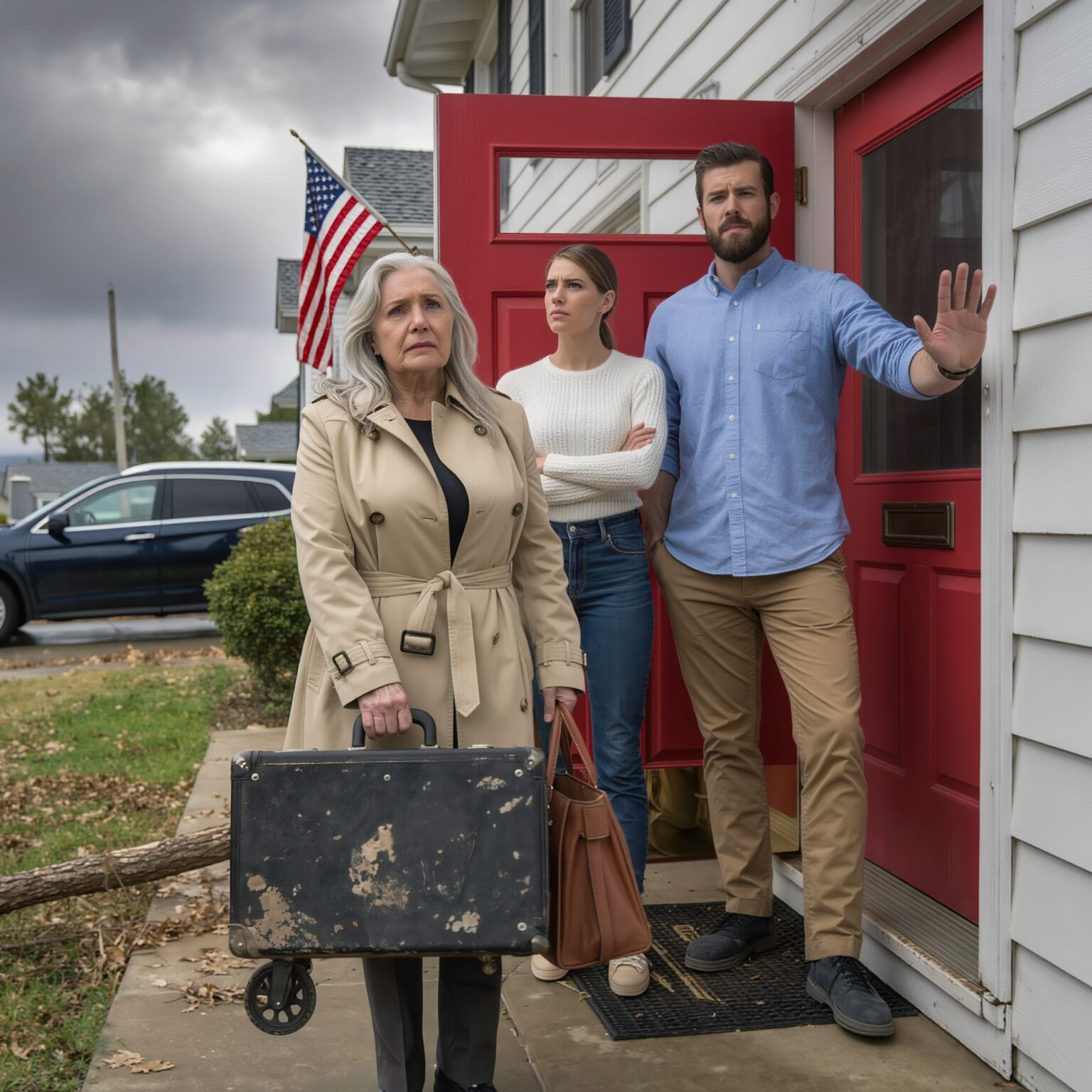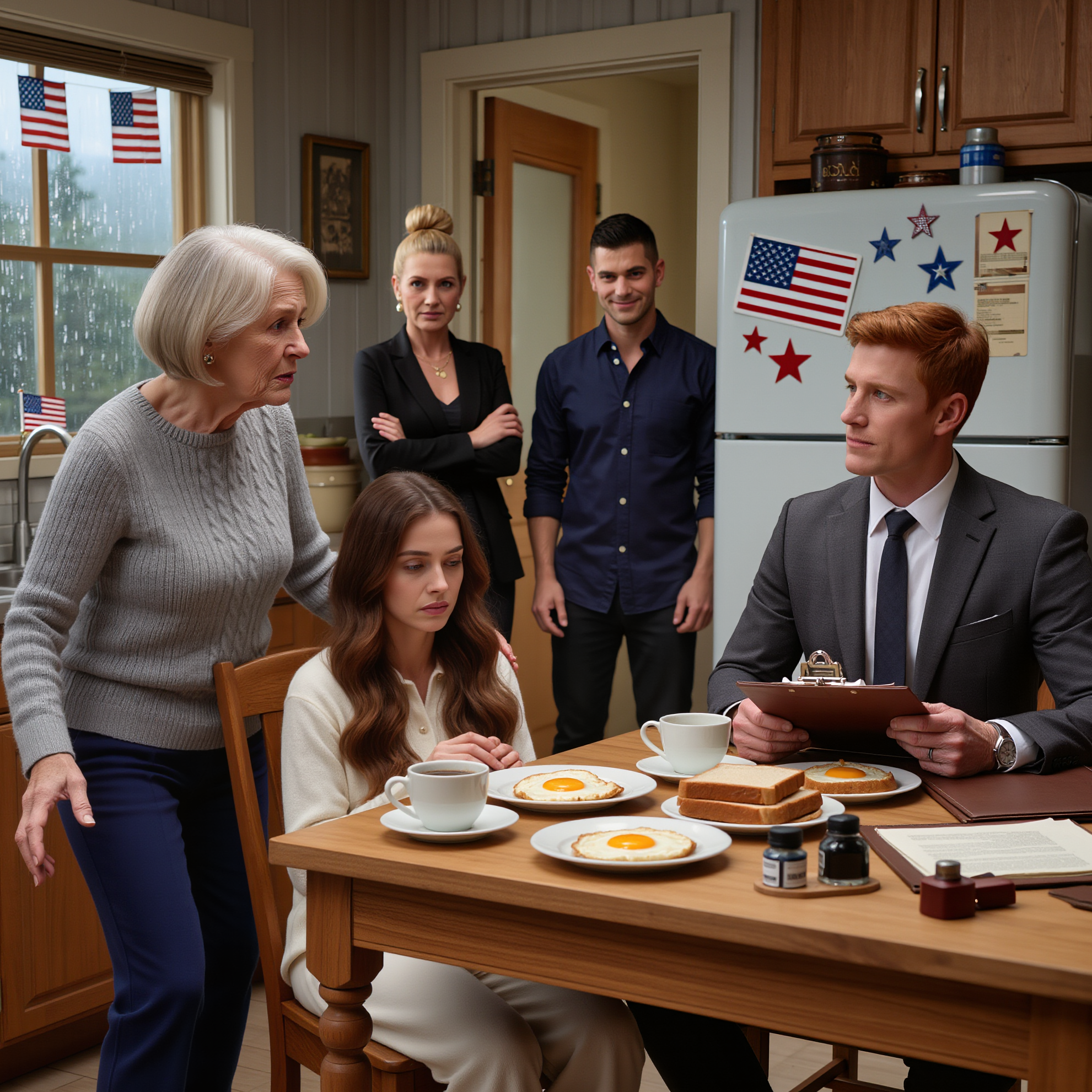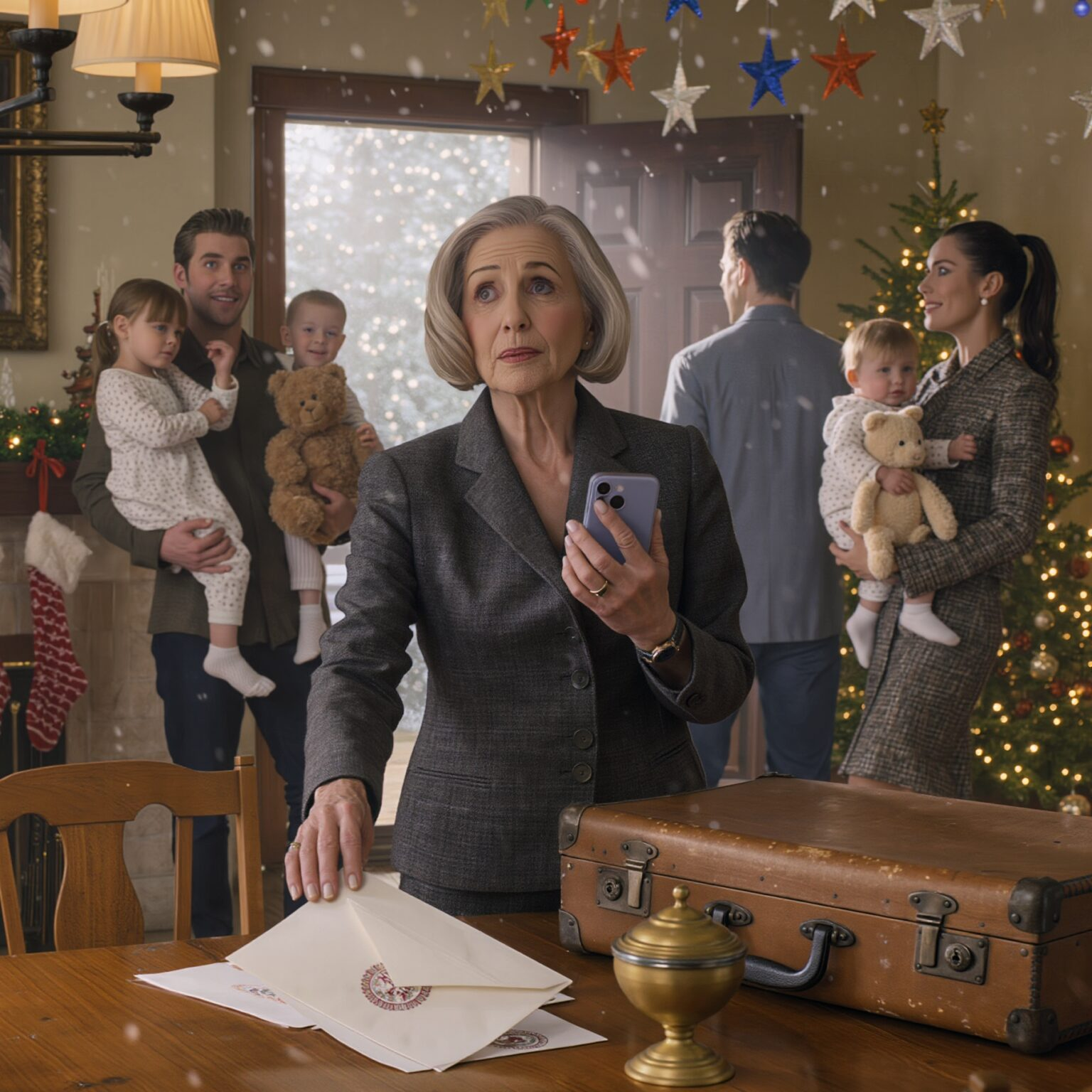
I remember the moment my son announced he was canceling Christmas like a sentence carved in cold stone — not a discussion, not a negotiation, but a declaration delivered with the same certainty someone might give the weather forecast. We had gathered in the dining room, the table set with plates and candles and untouched wine glasses, the smell of roasted turkey still drifting between rooms, and he simply said, “There’s no Christmas this year. We’re spending it with my wife’s parents — and we’d rather not have you there.” The words didn’t land like shock. They landed like erasure, as if I had never existed in his Christmas memories at all. It was the kind of thing people use in stories, not in real life — cold, abrupt, dismissive of decades of traditions, laughter, and the countless times I stood in this very kitchen while Christmas carols drifted through the house.
I didn’t shout. I didn’t cry. I didn’t beg. I sat there, the silence around me thicker than the gravy on the table, and I felt a strange calm descend — not peace exactly, but clarity, sharp and quiet. He didn’t see me flinch. He didn’t have to. The meal I had spent all day preparing sat between us like a barrier I suddenly didn’t want to cross. No one spoke for a long time. The air felt like winter wind. My daughter, who had been sitting beside him — bright smile, eyes glowing with the kind of excitement only new in-law holiday plans can bring — lifted her fork and cut into her vegetables as if nothing had happened. That calmness was what haunted me most.
And then, later that night, after the awkwardness settled into desperation, we gathered for a smaller family dinner with whoever was still willing to stay behind. My daughter, her posture perfect and distant, looked at me and said, without softness, “You don’t deserve to sit at the same table with my family. You don’t belong here anymore.” She said it like she believed it. Like distancing myself from her was a logical conclusion rather than a cold blow.
I stayed seated. I didn’t lash out. I didn’t raise my voice. I didn’t chase after her with tears or pleas or arguments proving how much I had given to this family or how many Christmas mornings I had spent waking early to put presents under the tree and make breakfast and greet every cousin and niece with a hug. I watched her say those words and felt something settle inside me — not defeat, not anger, not heartbreak that would make me crumble. Instead, there was this astonishing, grounding thought: I can choose who defines my worth.
I ate my dinner slowly, deliberately, without looking at her again. The silence between us was not humiliation. It was recognition — a recognition that sometimes people say things in moments of loyalty to someone new that they later wish they could take back, and sometimes they don’t. And either way, the words don’t get to dictate my identity.
That night, after the house quieted and the lights dimmed, I didn’t sit alone in bitterness. I walked into the living room, lit a candle, and stood before the small Christmas tree we hadn’t taken down from years past. I didn’t decorate it with expectation. I decorated it with intention — reminding myself that rituals matter when they are meaningful, not when they are demanded. I strung lights slowly, deliberately, thinking of every Christmas where laughter had felt effortless, every moment where family hummed not with perfection but with warmth and genuine connection.
The next morning, instead of waiting for my son to feel remorse or my daughter to soften, I did something unexpected: I made myself hot chocolate and sat on the porch, wrapped in a blanket, letting the quiet of snowfall be the kind of peace that isn’t permission — it’s ownership of one’s own calm. The absence of their presence didn’t diminish my Christmas spirit. In fact, it clarified it. I realized I didn’t need approval to celebrate warmth, tradition, connection, or love. I needed only integrity and self-respect.
A few days later, I invited a small circle of friends — neighbors who had no stake in our family drama — to share a belated Christmas dinner with me. They came with casseroles and pies, with laughter and stories of their own holiday mishaps, and the house felt full in a way that was gentle instead of tense. We toasted to resilience, to unexpected traditions, to love in its many forms — not just the forms that existed in bloodlines. We gave thanks, not reluctantly, but honestly, for connection that wasn’t earned by vacation photos or holiday invites, but by everyday smiles and willing presence.
Word trickled back to my son and daughter about that dinner — not as a taunt, not as a show of triumph, but simply as a fact: I celebrated Christmas anyway. I filled my day not with what’s lost, but with what remains true. A few weeks later, my daughter called. Her voice was unsteady — familiar yet unfamiliar. She said she was sorry. Not perfectly or without defensiveness, but genuinely. She said she had let someone else’s influence make her forget who she was, and she missed the person I used to be. I listened, and instead of reopening old wounds, I accepted the apology for what it was: an olive branch, humble and sincere.
I didn’t rush to forgive. I didn’t pretend the words spoken that night didn’t hurt. What I did was this: I acknowledged that hurt doesn’t vanish simply because an apology arrives, and respect doesn’t have to be earned through suffering. I told her, gently, that we were both learning how to love differently now — not through proximity or obligation, but through honesty and growth.
A few holidays later, my son showed up at my doorstep with a small wrapped gift and a tentative smile. It didn’t fix everything overnight. But it started a conversation — one that was quieter, humbler, more authentic than any previous attempt to force a picture-perfect family holiday.
Christmas after that wasn’t about who sat where at the table. It wasn’t about approval. It wasn’t about tradition or protocol or the unspoken hierarchy of families. It was about presence — brave, deliberate, imperfect presence. It was about showing up not because it was demanded, but because connection, when it’s real, is chosen again and again.
And in that choice — not in the pain of exclusion, not in the sting of rejection — I found a truer understanding of what family means: it’s not defined by blood, age, or loyalty to new alliances. Family is defined by who stands with you when the candles flicker and the room goes quiet; who speaks truth with compassion; who loves not because it’s easy, but because it’s intentional.
I kept celebrating Christmas — not as the mother who waited for invitations, not as the wife remembered only by tradition, but as the woman who chose her own joy, her own peace, and her own capacity to forgive without forgetting, to hope without desperation.
In that shift, I found not just healing — but freedom. And that, more than any holiday meal, is what makes a table worth gathering around.