The afternoon light slanted softly through the living room window, dust motes dancing in beams that should have felt warm — but on that day they felt cold, harsh, accusing. I sat on the sofa quietly, trying to steady my breathing after the surgery that had left me weak and fragile. My son-in-law paced past me, his steps heavy, words sharper than knives. The air thickened, tension humming like static. I sensed danger, but I didn’t realize how close it was until the first strike — sudden, unannounced — sent me crashing to the floor, the world spinning around me like broken glass. Pain exploded through my body, before shock cooled its edges into numbness.
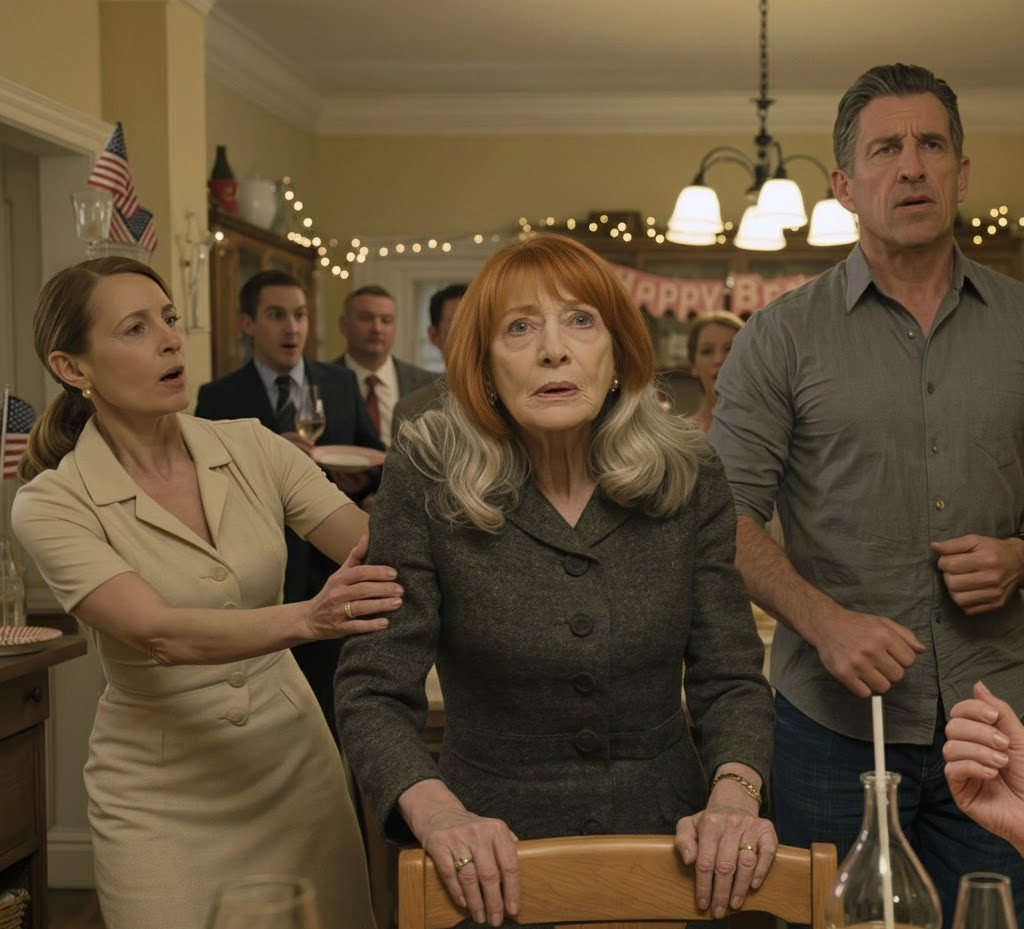
I lay there, hearing nothing but my heart pounding, the thud of my head against the floor echoing painfully in my mind. The room tilted, walls blurred, voices distant and distorted. Then my daughter’s hand thrust down into mine. She pulled me up with gentle strength, her face pale, lips quivering, but eyes sharp and clear. As I struggled to stand, dizzy and shaking, I remembered laughter from nearby houses, children playing outside, familiar neighbors drifting through their afternoons. I felt their eyes — not the warm kind, but curious, shocked, horrified — sweeping through the window, registering every move like witnesses of a crime.
We stumbled outside under the bright sky. The cold air hit my skin, sharp and honest. My daughter gripped my hand as though anchoring me to reality — to safety. Neighbors peeked from behind curtains and doorframes, murmurs rising, whispers flitting through the air like fragile birds. No one rushed in. No one intervened. They only watched. I felt humiliation, fear, sorrow — but also a strange surge of clarity. This wasn’t shame. This was exposure. This was truth laid bare under the open sky.
My daughter called an ambulance, voice trembling but firm. While we waited, she held me close, whispered words of love, apologies I never deserved, promises of protection. I felt tears slip down — not from shame, not from pain, but from gratitude, from relief that someone saw me not as a matriarch, not as a burden, not as a family name — but as a woman, a mother, a human being who deserved care.
At the hospital, the nurse cleaned my wounds gently, the doctor nodded at paperwork, medicine, rehabilitation. I looked at my daughter standing by the bed, tired eyes, clenched jaw, silent vow in her posture. I realized I wasn’t alone. I had lost many things — comfort, trust, safety — but I had found something unexpected: solidarity. Love. Awareness that sometimes home isn’t a safe place. Sometimes the people who vow to protect you become the source of your pain.
The days that followed blurred: calls, reports, afraid whispers from relatives, awkward silence from people who once smiled at me, and the deep ache that runs through a woman’s bones when the betrayal comes from someone you trusted. I felt weak, vulnerable, exposed. But each morning — slow, painful, fragile — I woke. I breathed. I fed myself. I let the bruises fade. I counted the scars as proof I lived. I accepted visits from my daughter and grandchildren. I refused to let hatred, shame, or silence bury me.
I found a small support group — women like me, faces lined with pain and irritation, hearts heavy but honest. We sat in a dusty community hall, drank lukewarm tea, exchanged stories in shaky voices. Some came from marriages that ended quietly; some from families that turned their backs. All of us carried at least one wound — physical or emotional — and all of us believed that silence would heal. But we discovered together that silence buries truth and gives power to violence. We talked. We cried. We healed.
Slowly, I gathered strength. I took steady steps: I met with a lawyer to understand my rights. I moved to a small apartment near the city center, not luxury, but mine. I called my children separately — the ones who loved me — apologized for dragging them through pain, asked forgiveness for having allowed the abuse silently. I didn’t beg. I didn’t demand. I simply stated facts. I asked for comfort, respect, honesty.
Some answered. Some didn’t. The silence of absence hurt. But it hurt less. Because I had built a foundation strong enough to stand — respect for myself, faith in what’s right, the courage to walk forward even when the road shook beneath my feet.
Years passed. The scars faded. The bruises lost their color. The memories sometimes came in dreams — shadows crossing light, raised voices, walls shaking. I woke with a catch, but not panic. I opened the window, breathed morning air, felt the sun on my face and remembered: I am alive. I am more than what happened to me. I am more than pain. I am enough.
Now I walk the streets slowly, but with steady heart. I smile at soft greetings. I carry a small purse with keys, medicine, simple clothes. I listen to distant music drifting from open windows, children’s laughter echoing from playgrounds, birds dipping and soaring. I open my window at dawn, let wind brush through the curtains, let light fill the small room.
I speak softly sometimes — to myself, to the wind — words of healing. Of strength. Of promise. I will not be forgotten. I will not be broken. I will not be silenced. Because the floor I once hit, the hands that pulled me up, the scars I bear — they tell a story. Not of defeat. But of survival. And survival, I learned, is not the end. It is a beginning.