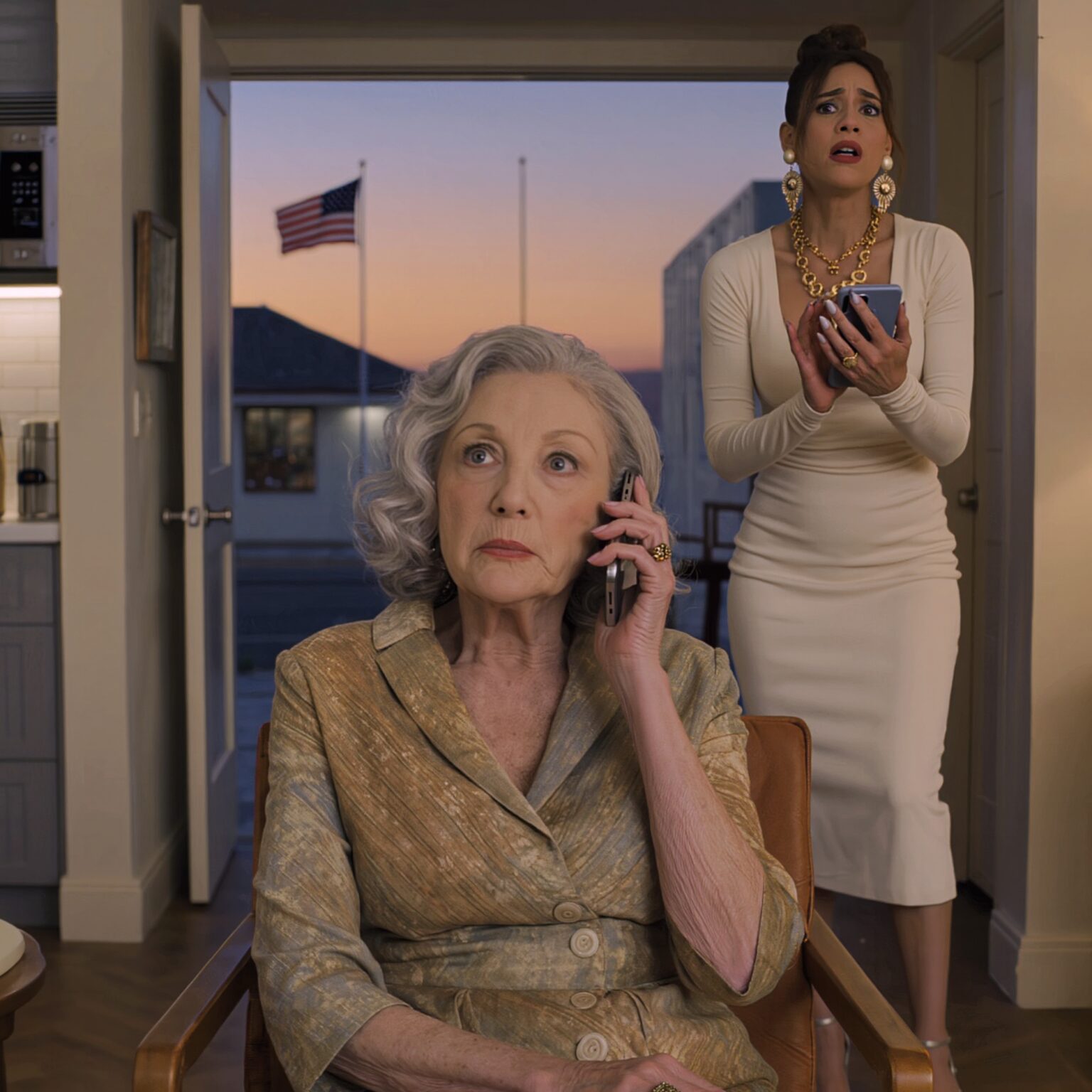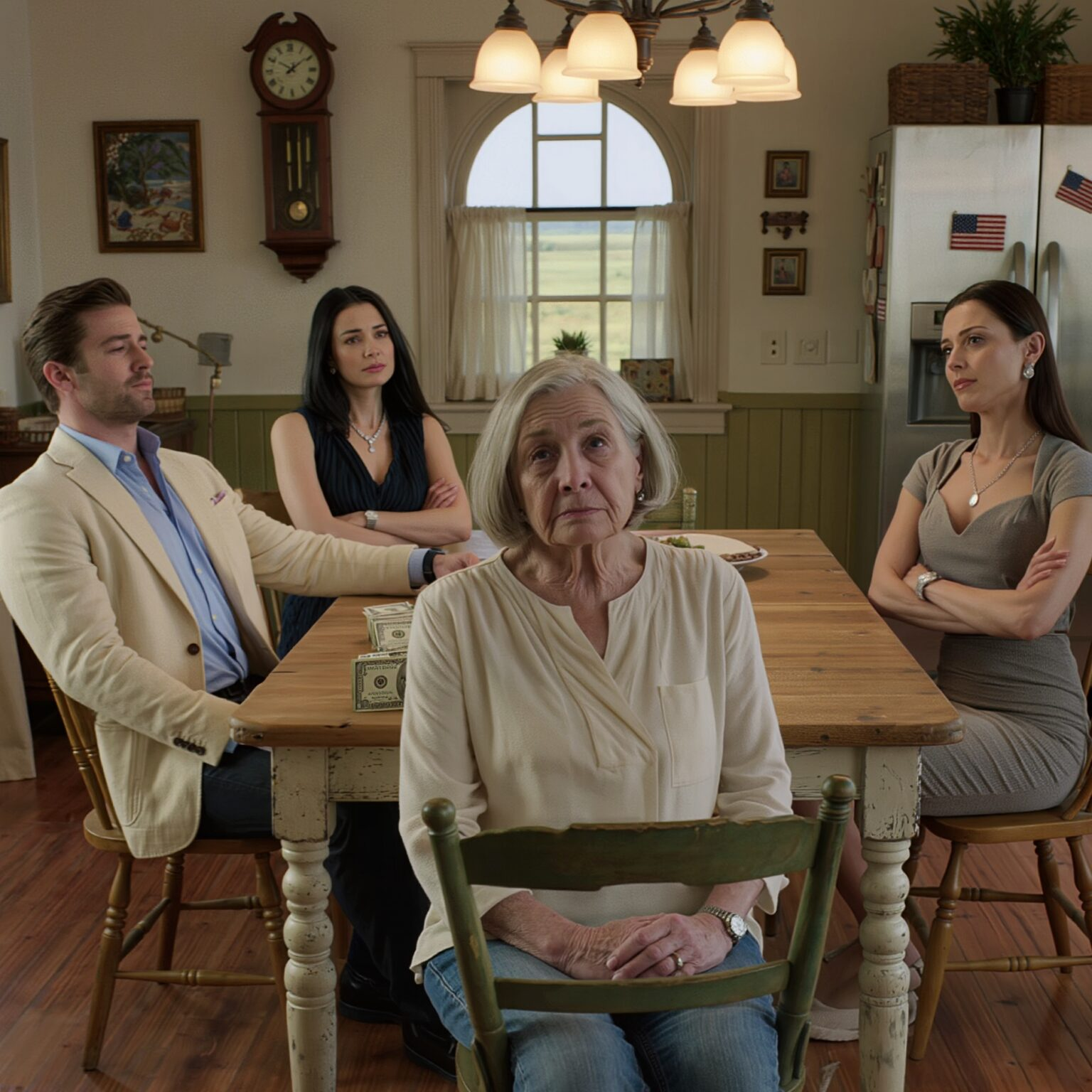
I should have known something was wrong when my son insisted on hosting a “goodbye dinner” at the most expensive steakhouse in the city. Not a birthday, not a reunion, not a holiday—goodbye. The word tasted metallic before I even arrived. That morning he had shown up with an envelope and a forced performance of emotion, voice shaking at all the wrong moments and eyes rehearsed too perfectly. He placed a single bank check in my hand with fingertips that didn’t touch mine and said, with a brittle smile that cracked at the edges, “Mom, I’m sorry, but this is what’s best for everyone. You can use this while you figure out your next steps.” I didn’t understand. I didn’t want to understand. But then he continued, in a tone that sealed the horizon shut, “You’re a burden. We’ve been carrying you. You’re old, cost too much, and your ranch is worth more useful than you are. Just… go live quietly somewhere. You’ll adjust.”
Adjust. As if losing a whole life, a whole landscape, a whole memory-filled span of land and horizon could be adjusted like a television volume. I looked at the check again. Fifteen thousand dollars. Fifteen thousand, to replace a four-million-dollar ranch I had built board by board, acre by acre, fence by fence, reservoir by reservoir, sweat by sweat. I asked him what he meant by sold, and he said it too casually, sipping his iced latte as if he were discussing a furniture sale instead of the last remaining proof of my decades of labor. “Contracts were finalized last night. Escrow closed. Wire cleared. It’s done. Don’t make this harder than it has to be.” His phone vibrated mid-sentence. He smiled at his screen instead of at me. “Anyway, dinner at eight tonight. We want to end this beautifully. Let’s be civilized. Dress nice.”
Civilized. That word perched like a vulture on my chest. I spent the afternoon walking through what used to be my living room, now echoing from removal trucks that had entered with alarming efficiency. My ranch wasn’t a mansion or palace, but it was a breathing thing: cattle dusted in golden sun, trees older than marriage vows, windmills that had carried storms and quiet mornings alike. Gone. Paperwork had devoured nature faster than drought.
By eight that night, I sat in the restaurant he chose. Everything dripped with theatrical luxury: crystal glasses, velvet seating, chandeliers hanging like frozen lightning above us. My son arrived in a suit that cost more than the check he tried to exile me with. His wife followed, diamonds at her ears, lips curved in victory rather than welcome. They greeted me with that same stretched politeness, the kind people use when they think they have finally defeated the last obstacle between them and the good life. I watched them toast to “new beginnings.” I watched them smile at each other with the relief of criminals who believe they have outsmarted every camera. I spoke little.
They began to discuss their plans openly, forgetting I had ears. “We’ll move to the penthouse first,” his wife said, twirling her glass with bored elegance. “Then maybe buy in Monaco later, once the ranch profit matures.” My son nodded, already scanning the room as if the world were made to applaud him. “I’ll finally be able to invest in the development deal. No mom to interfere. No old-fashioned rules. No guilt.” They laughed—not cruelly, which somehow was worse, but casually, socially, the kind of laugh people use when harm is normalized and conscience long retired. To them, I was not mother, not laborer, not grit and survival and bone and sacrifice. I was inventory they had liquidated. Luggage they had unloaded.
The waiter poured wine I did not request. The glasses sparkled against their faces, making them look accidentally angelic, which was almost amusing. Then my son clapped his hands softly, summoning the dessert menu and the final speech of the evening, which he had clearly rehearsed. “Mom,” he began, “this dinner is symbolic. It’s closure. You won’t have to worry anymore. We won’t either. You can rest now, live simply, fade out peacefully. No more responsibilities on either side.” Fade out. Fade away. Disappear. Die quietly but politely. The elegance of cruelty.
I didn’t respond immediately. Instead, I lifted my hand toward the entrance, signaling someone who had been waiting outside in a parked car for thirty-seven minutes. My son noticed the motion, his smile faltering—not collapsing, just curving slightly downward as if some subconscious part of him remembered for the first time that I have never gone down quietly. The doors opened. My attorney entered. He wasn’t dramatic, not cinematic, not storming the restaurant. He simply walked forward with a stack of files so thick they shifted the air around them. My son blinked, confused but still wearing the remnants of entitlement across his cheekbones. “Mom… what is this?” as if the very idea of consequence was foreign.
My lawyer placed the documents on the table with a calmness that made my son’s face begin to pale. “Mrs. Hendricks,” he said to me only, “all filings have been processed. Emergency injunction approved. Asset freeze active. The sale is void pending criminal review.” My son choked on his champagne. I watched his wife’s jaw clench so tightly her diamond earrings trembled. “Wait,” my son sputtered, voice stripped now of confidence, “it was legal. I had power of attorney. I had authorization.” My lawyer adjusted his glasses, tone sharpened only by truth, not anger. “Power of attorney signed under coercion, forged directive language, and fraudulent psychiatric statements is not power. It is theft. Your mother did not authorize the sale, nor the medical evaluation you filed claiming cognitive decline to justify it. Every entity involved—bank, buyer, transfer officer—has been notified. Criminal charges are now active.”
Silence landed not like peace but like collapse. My son’s face thinned out, color draining like water from a cracked vase. His wife pinched her wine glass stem until her knuckles whitened, but she stayed silent, which told me everything I needed to know: she had orchestrated this with him, or perhaps above him. I did not raise my voice. I had screamed silently all afternoon; I did not need to now. The restaurant hummed in its gold-lit arrogance as the truth settled around our table.
My son tried again. “Mom… we were just trying to help you. You don’t need all that land. You don’t even use it anymore.” And that is when the quiet inside me turned into iron. “I needed the land,” I said, “because it was mine. I built it. I maintained it. I poured youth and sun and decades into it. You didn’t ask. You didn’t support. You didn’t even visit unless you needed something. You didn’t want to help me—you wanted me to vanish so you could own the shell of my legacy.”
The attorney slid one final paper toward him. “This is a restraining order,” he explained evenly. “You will not contact her. You will not access accounts. You will not approach the ranch or its revenue structures. You will not manage or inherit, pending full legal resolution.” My son whispered, “Mom, please,” not with remorse but with shock that the world could ever deny him. My lawyer and I stood. The waiter cleared plates the way the world clears illusions—quietly, inevitably.
When I walked out of that restaurant, I did not feel victorious. I felt weathered, sea-touched, desert-dried. But I also felt oxygen where grief had been sitting. The ranch was safe again. Not because land matters more than blood, but because land that is earned deserves dignity. A mother is not a vault to crack, a door to lock, a country to colonize. A mother is not an early inheritance to be harvested while still breathing. A mother is not a burden simply because she survived long enough to become inconvenient to ambition.
Weeks later, court hearings began. His wife did not attend the second session. By the third, she had moved out. Predators devour each other when feasts disappear. My son called once through another attorney, asking for reconciliation, negotiation, settlement. I declined. Not with rage. With boundary. My ranch remains mine. My home remains mine. My name remains mine—not signed away on a yacht, not dissolved over a steak dinner, not erased by entitlement dressed in designer suits.
I sit now on my porch overlooking acres that breathe with me, not against me. Wind moves through the grass like memory choosing which parts to keep and which to scatter. I do not hate my son. But I no longer bend for him. I no longer shrink politely so he can stand in artificial grandeur. Betrayal is not motherhood repaid. It is just betrayal. And survival after it is not revenge. It is reclamation.
At that dinner, he thought he was burying me. Instead, he buried his access.