The Cold Rain of a Chicago Goodbye
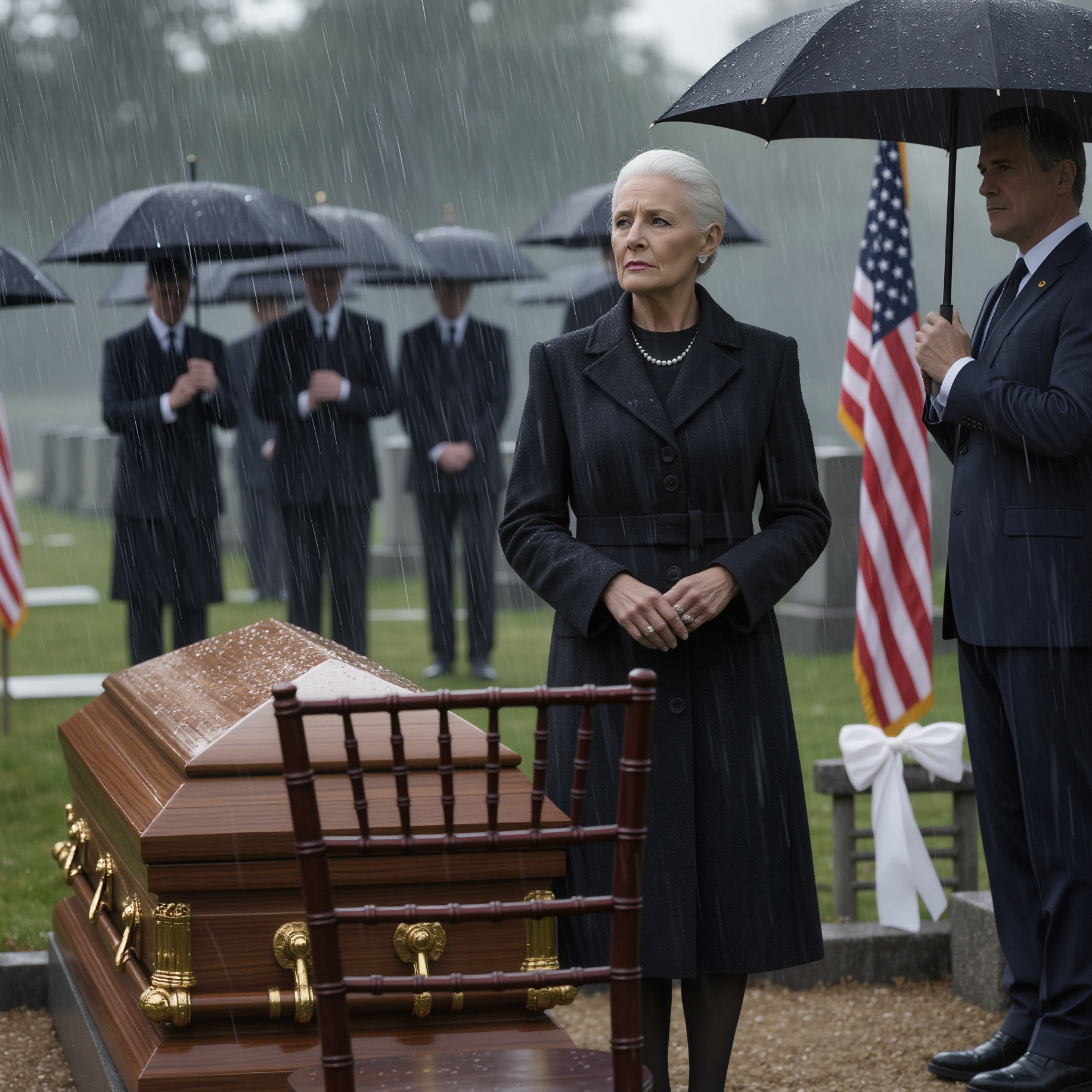
The sky over Chicago was the color of a bruised plum, heavy with the kind of freezing October rain that penetrates straight to the marrow. I stood at the edge of the open grave at Graceland Cemetery, my black umbrella trembling in the wind. Beside me was an empty space where my son, Marcus, should have been standing. In the mahogany casket before me lay Arthur, my husband of forty-four years, a man who had worked two jobs for three decades to ensure Marcus never knew the sting of a missed opportunity or a shallow bank account. Arthur had been a quiet man, a pillar of strength who believed that family was a sacred pact. As the priest’s voice was swallowed by the howling wind, I looked at the small gathering of aging friends and distant cousins. The one person who owed Arthur everything was three hundred miles away in a climate-controlled ballroom, toasted by champagne and the shallow laughter of people who didn’t know his father’s name.
The betrayal hadn’t happened in a vacuum. It was the culmination of a decade-long drift that began the moment Marcus married Julianna. Julianna was a woman of “atmospheres” and “social standings,” someone who viewed my husband’s calloused hands as a source of embarrassment rather than a badge of honor. Under her influence, Marcus had transformed from a grateful son into a man who treated his parents like an inconvenient background noise to his upwardly mobile life. When Arthur’s heart finally gave out, Marcus’s first question wasn’t about his father’s last moments; it was about the “status of the estate.” When I told him the funeral was set for Saturday, his response was a cold, clinical text: “Mom, Saturday is Julianna’s 30th. It’s a huge gala. I can’t just cancel. Dad would understand. He was always about duty, and my duty is to my wife now.”
Standing in the rain, watching the mud splash against the polished wood of the casket, I realized that Arthur wouldn’t have understood. Arthur would have been heartbroken. And as the reality of my son’s absence settled into my chest, I felt a strange, icy calmness replace my grief. I wasn’t just burying my husband today; I was burying the version of my son I had spent forty years loving. I realized that Marcus didn’t value the “duty” he spoke of; he valued the convenience of my silence. He assumed that because I was his mother, I would eventually forgive this ultimate transgression. He assumed the Chicago house, the lakefront property, and the seven-figure portfolio Arthur had built would eventually be his, regardless of how he treated the people who created it.
The Gala of the Damned
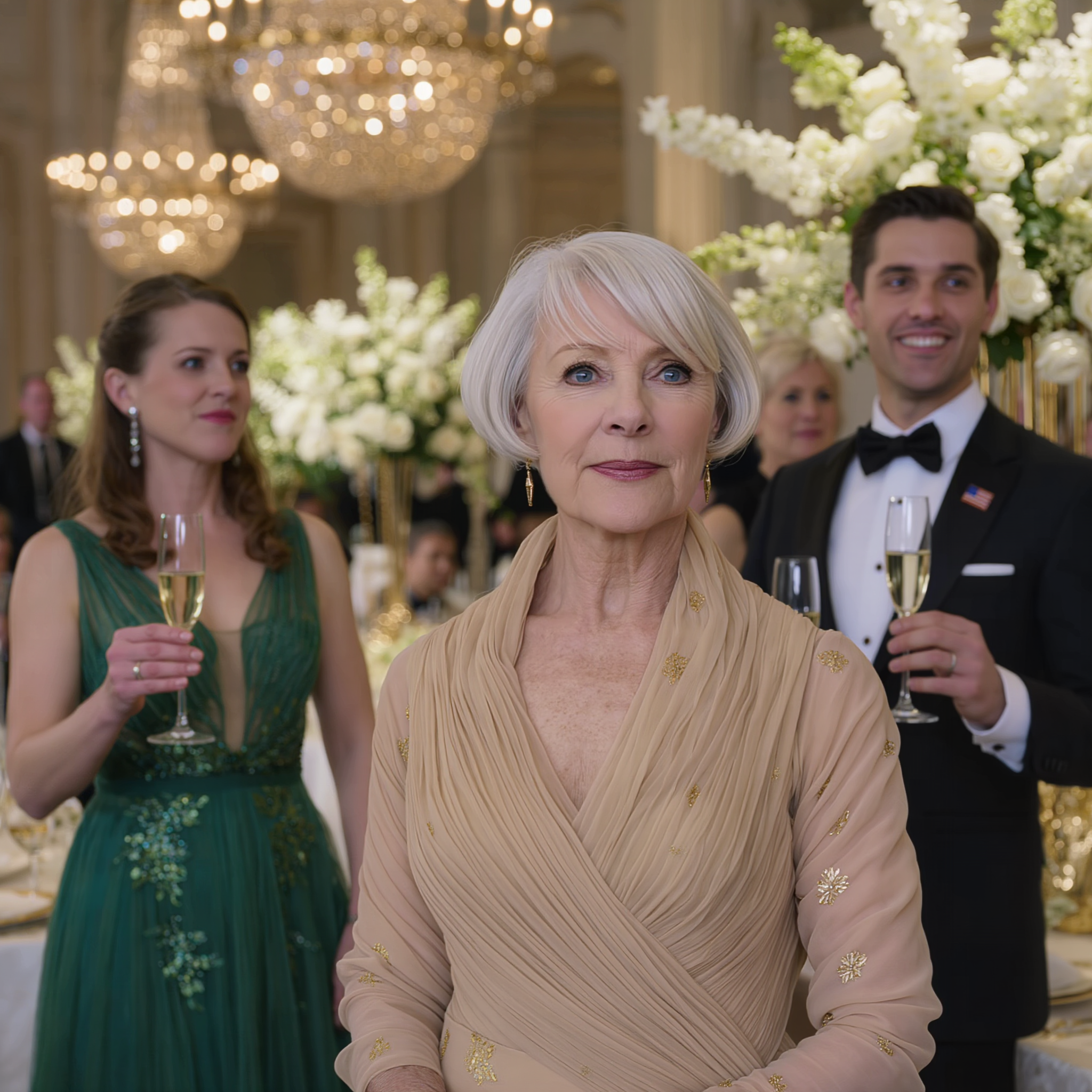
While the dirt was being shoveled onto Arthur’s grave, Marcus was, according to Julianna’s public Instagram stories, leading a “grand toast” at a luxury hotel in downtown Indianapolis. I sat in my quiet kitchen later that night, the house echoing with a silence that felt like a physical weight. I scrolled through the photos: Marcus in a thousand-dollar tuxedo, laughing as Julianna blew out candles on a cake that probably cost more than Arthur’s first car. They looked like the perfect couple—polished, wealthy, and utterly hollow. Marcus had chosen a party over a prayer; he had chosen a “vibe” over a final goodbye.
I looked at the documents Arthur had left on the desk in his study. He had always been meticulous. We had a joint will, one that left everything to the surviving spouse, and then to Marcus. It was a standard, loving agreement. But Arthur had also left a “letter of intent” for me, hidden in the back of his safe. It was dated six months ago. “Elena,” it read, “I see the way he looks at us now. I see the way she treats you. If the day comes where I am gone and he is not there for you, do not feel obligated by the blood in his veins. Our legacy is for those who honor it, not those who wait for it to be served on a silver platter.” Arthur had known. Even in his quiet way, he had seen the predator in his own son.
The Monday Morning Audit
The funeral was on a Saturday. By Monday morning, I was in the offices of our family attorney. I didn’t look like a grieving widow; I looked like a woman who was clearing a debt. I instructed my lawyer to begin the process of restructuring every single asset I owned. The Chicago house, which Marcus had already started measuring for “modern renovations” in his head, was placed into a charitable trust. The lakefront property was put on the market, with the proceeds designated for a scholarship fund for children of trade workers—men like Arthur.
I then looked at the “allowance” account. For years, Arthur and I had been funneling $5,000 a month into an account for Marcus to “help” with his lifestyle. We thought we were giving him a head start; we were actually funding his arrogance. I closed the account and redirected the funds. I canceled the private insurance we were still paying for his “entrepreneurial ventures.” I dismantled the financial safety net that Marcus didn’t even realize he was standing on. He thought he was a self-made man because he had a fancy title and a designer wife, but the foundation of his life was built on my husband’s sweat. I decided it was time for Marcus to see what it was like to stand on his own two feet.
The Silence of the Aftermath
Marcus didn’t notice the changes for two weeks. He was too busy basking in the afterglow of Julianna’s “social success.” But then, the first “insufficient funds” notification hit his phone. Then, the realization that the “Family Trust” he had planned to borrow against for a new venture was no longer his to access. He called me on a Tuesday evening, his voice full of the old, practiced charm. “Hey Mom, I think there’s a glitch with the bank. The monthly transfer didn’t go through. Also, Julianna wants to come up and look at the Chicago house—we’re thinking of listing it and moving into something more ‘current’ for you.”
“The house isn’t for sale, Marcus,” I said, my voice as steady as the rain had been on Saturday. “And there’s no glitch. The account is closed. As for your father’s estate, it has been redirected. You told me your duty was to your wife and her birthday party. I’ve decided that my duty is to your father’s memory. And your father’s memory has no room for a son who couldn’t find three hours to stand by his casket.”
The silence on the other end of the line was the most honest thing Marcus had given me in years. Then came the anger, the accusations of “senility,” and the threats to “contest the will.” But I had Arthur’s letter, and I had the records of thirty years of financial support. I had the law, and more importantly, I had the truth. Marcus realized, perhaps for the first time, that the “poor old parents” he had looked down on were the only thing keeping him from the mediocrity he so feared.
The Solitude of Peace
I still live in the Chicago house. It’s quiet, and sometimes the grief for Arthur is so sharp it takes my breath away. But the house feels lighter without the shadow of Marcus’s expectation hanging over it. I don’t follow Julianna’s Instagram anymore; I heard they had to sell their designer cars and move into a much smaller place because Marcus’s “ventures” weren’t as profitable as he had led everyone to believe.
I go to Graceland Cemetery every Sunday. I bring fresh flowers and I sit by Arthur’s side. I tell him about the students who are going to college on his scholarship. I tell him that the legacy he built with his calloused hands is finally doing some real good in the world. I standing in the Chicago rain now, and I don’t feel alone. I feel the strength of a man who loved me, and the peace of a woman who finally stopped feeding the ghost of a son who never truly existed.