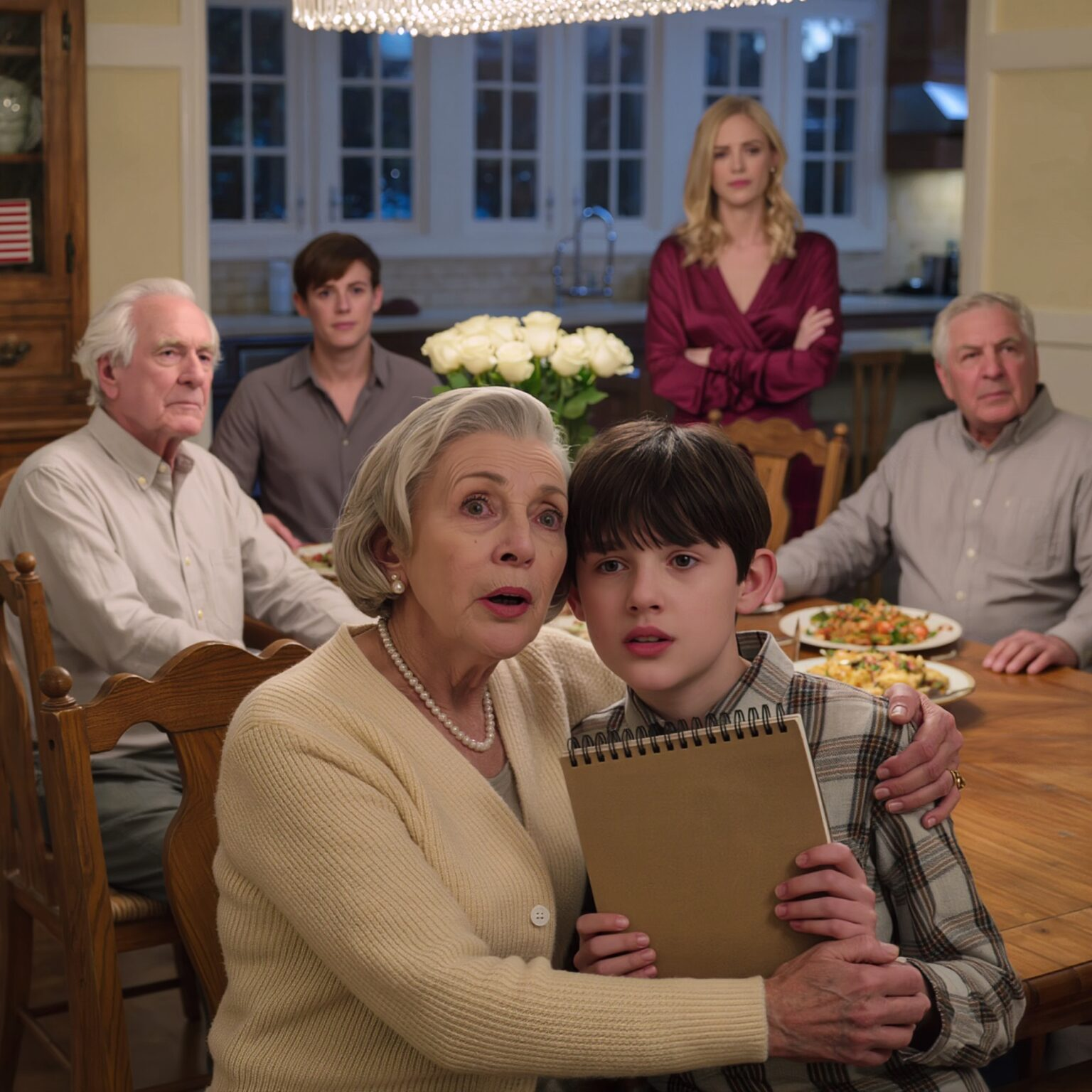
The Architecture of a Dream Wedding
For the past eighteen months, my life has revolved around my son, Julian’s, upcoming wedding. I worked for forty years in high-level management so that I could one day give my only child the celebration of a lifetime. When he proposed to Chloe, a woman who seemed sweet but had an insatiable appetite for the “finer things,” I didn’t hesitate. I opened a high-limit joint account specifically for the wedding expenses, depositing $150,000 of my own hard-earned savings into it. I gave Julian and Chloe the debit cards and told them to build their dream. I didn’t micromanage. I didn’t complain when the floral budget doubled or when Chloe insisted on a custom-made gown from a designer in Paris. I thought I was buying their happiness; I didn’t realize I was merely funding my own exclusion.
The Midnight Ultimatum
As the wedding date approached, Chloe’s attitude began to shift. She started making “suggestions” about my hair, my dress, and eventually, my presence. She told Julian that my “old-fashioned” energy was ruining her aesthetic. I tried to bridge the gap, offering to stay in the background, but the poison had already set in. Three days before the ceremony, while I was sitting at my kitchen table finalizing the guest seating chart, my phone buzzed. It was a text from Julian—not a call, not a face-to-face meeting, but a cold, blue bubble on a screen.
“Mom, don’t come to the wedding. Chloe is really stressed, and she doesn’t want to see you there. She says it’s her day and she needs to be surrounded by people who ‘get’ her. Please just stay home. I’ll send you pictures.”
The Silent Withdrawal
I sat in the silence of my home for nearly an hour. I didn’t cry. I didn’t call Julian to beg for an invitation to the wedding I was paying for. Instead, I remembered a piece of advice my father gave me decades ago: “Never let someone treat you like an ATM while they’re kicking you in the teeth.” At 11:30 PM, I logged into my banking portal. I looked at the joint wedding account. There was $82,000 remaining—money meant for the final payments to the caterer, the venue, the orchestra, and the luxury transport. I didn’t “split” the money. I simply exercised my legal right as the primary account holder and removed my name, transferring the entire balance back into my private personal account. I effectively turned their “unlimited” wedding fund into a $0.00 void.
The Day the Music Stopped
The fallout began at 9:00 AM the next morning. The wedding was forty-eight hours away, and the final balances were being auto-drafted. I turned my phone on to find twenty-seven missed calls and a string of increasingly frantic texts from both Julian and Chloe. The caterer had called them—the $30,000 payment for the five-course dinner had been declined. The venue had reached out—the $20,000 balance for the ballroom was unpaid. Chloe’s designer had put a hold on the veil.
“Mom! What did you do to the account?” Julian’s voice was hysterical when I finally picked up. “The payments are bouncing! Everything is being cancelled! We’re going to be humiliated!”
The Lesson in Aesthetics
“I didn’t do anything to ‘your’ account, Julian,” I said, my voice as calm as a still lake. “I simply closed my account. Since Chloe feels that my ‘energy’ ruins her aesthetic, I decided to remove all of my energy from the event—including my money. If I’m not ‘family’ enough to attend the wedding, I’m certainly not ‘family’ enough to fund it. You and Chloe want a day surrounded by people who ‘get’ her? I hope those people are prepared to pay for the lobster and the champagne.”
“We don’t have that kind of money!” Julian screamed.
“Then I suggest you scale back your ‘aesthetic’ to something you can actually afford,” I replied. “Maybe a courthouse wedding and a dinner at a diner. I hear the lighting there is very authentic.”
The New View from the Top
Julian and Chloe had to scramble to find a new, cheaper venue at the last minute. The “dream wedding” became a backyard BBQ at Chloe’s parents’ house, and half the guests didn’t show up because the “luxury” transport was cancelled. They are currently $40,000 in debt to vendors who sued for breach of contract. As for me, I took that $82,000 and booked a three-month solo cruise around the Mediterranean. I’m currently sitting on a balcony overlooking the Amalfi Coast, sipping a drink that I paid for myself. It turns out that when you stop paying for people to love you, you finally have enough money to love yourself.
I didn’t send them pictures. I’m too busy enjoying the view.