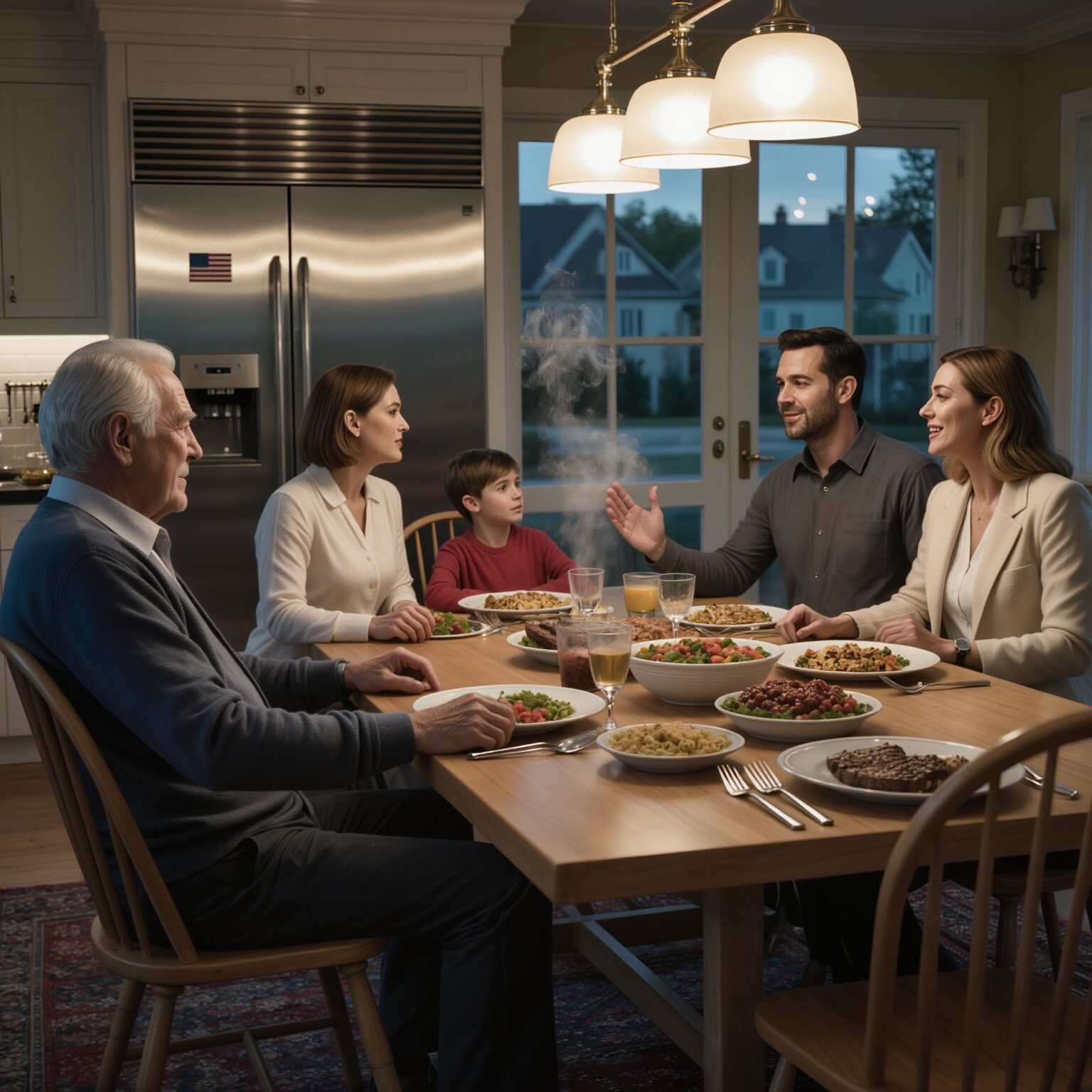
I stared at the plate in front of me like it was a stranger, something unfamiliar and unwanted — a pile of cold food left over from someone else’s meal, pushed toward me by the person I once thought cared about me most. The steak I ordered — medium-rare, cooked just the way I liked it — was gone. My son, Clayton, had eaten every last bite. Meanwhile, he sat across from me laughing and chatting comfortably with his wife and kids over their hot steaks, eyes bright, voices warm, unbothered by anything other than their own stories. Not once did he look at me. Not once did he apologize or even blink in my direction. The air around the table felt thick, humid with exclusion, and I realized then that the food on my plate wasn’t just cold leftovers — it was the embodiment of how I had been treated for years: an afterthought.
I didn’t shout. I didn’t slink away in embarrassment. I simply picked up the fork, cut into the cold steak — already firm and unappetizing — and took a bite. It was tasteless, as expected. And as I chewed, I felt the first tremors of something unfamiliar: a slow, rising clarity that this dinner — this moment — was about far more than a piece of meat.
Our family had always gathered for Sunday dinners, just like any other family. Roast here, pies there, laughter leaking between conversations like a warm breeze. But over the past few years — especially since my husband passed — those dinners changed. They became a subtle battlefield, a place where I felt less included, less respected, less acknowledged. My son and daughter-in-law’s voices grew louder, their opinions carried more weight, their children’s needs were always first. And me? I became the person who sat quietly, smiled politely, and took whatever was left — often literally.
That night began like any other. I arrived at their house early, arms full of fresh bread and the chocolate cake I had baked that morning, humming quietly about how wonderful it would be to see everyone together. The living room was warm with laughter and the heady scent of grilled meat. Conversation buzzed around me — about school, about work, about vacations and new shoes and who said what at whose birthday party last month. I offered hugs, cheek kisses, warm hellos. There were smiles, yes — but none that reached the eyes. None genuine enough to feel like inclusion.
By the time we moved to the dining room, hot steaks were set in front of Clayton and his wife, Marissa, glistening and steaming with inviting warmth. I felt a pang of hunger when I saw them. I really did. I had ordered my steak specially because I looked forward to it all week. But before anyone placed the steaming plate in front of me, Clayton leaned over, smiled at his family — a full, proud, comfortable smile — and then gently nudged my plate toward me, already cold and congealed. “Here,” he said without inflection, as though offering me the sort of dish that had been sitting out a long time was the most natural thing in the world.
Silence filled the moments that followed, but not the soft, peaceful kind — the suffocating kind that makes your throat burn and your hands tremble. My heart thudded. I forced myself to look past the plate at the people around the table. Their voices were cheerful, their laughter light, but it felt hollow — like a song sung in a vacuum. Not one of them met my eye. Not one acknowledged me beyond the courtesy of presence.
I took a breath. I could have stood up and walked out. I could have thrown the plate across the room. I could have screamed, cried, stamped my feet like a child. But something in me — something calm and strong — whispered that none of those reactions would serve me. “This is not about the steak,” it said. “This is about your worth.”
Instead of reacting with upset, I looked at the cold steak squarely and took a thoughtful bite. Tasteless, yes — tough, yes — but I didn’t spit it out. I chewed it deliberately, slowly, allowing the moment to settle into my bones like a lesson rather than a wound. And then I said something that surprised even me: “I’m glad you’re all enjoying your meal. This dinner looks wonderful.” My voice was soft, but it carried with it a clarity that was sharp, like a bell ringing above noise.
For a moment, there was a blink of confusion. Then polite murmurs of thanks. No apologies. No guilt. Just the continuation of their conversation — like they hadn’t just done something undeniably dismissive.
I finished my cold meal quietly and excused myself from the table when the plates were cleared. “I’m going to get some fresh air,” I said, my voice steady. My footsteps were slow but sure as I walked into the backyard, letting the cool evening breeze brush against my face. Stars were just beginning to glimmer in the darkening sky. I stood there for a long while, feeling something settle inside me — a strange mix of hurt and awakening.
It was out there, in the quiet space beneath the sky, that I first understood: this moment wasn’t about disrespect from my son. It was about a pattern — a growing distance between who I used to be in that family and who I had become: unseen, unheard, unprioritized. And the realization didn’t make me bitter; it made me aware.
I returned inside with grace. I didn’t demand apology. I didn’t confront them loudly. I simply sat with the rest of the family as they finished dessert, offered smiles when they were appropriate, and spoke kindly to the grandkids. The world didn’t fall apart. Nothing dramatic happened. But something deeper began to grow in me — a sense of self-respect that wasn’t dependent on others’ approval or attention.
After everyone left that night — the house returning to silence, the laughter fading like footsteps down a long hallway — I sat alone on the couch with a cup of warm tea. I thought about what happened at dinner, about the cold plate, about the eyes that never met mine. And I felt something shift — not like a wound reopening, but like a chapter closing firmly, deliberately.
I didn’t call my son that night. I didn’t text. I didn’t retaliate. I simply held onto the quiet understanding that pain has a way of teaching you things you might never notice in peaceful moments — things about yourself, your boundaries, your worth.
The next morning, I woke up early and walked through the nearby park where the sun glowed gently across frost-tipped grass. I felt lighter. Not happy in a forced way, but stable. Recognizing that someone else’s dismissal does not define your worth is a kind of freedom I hadn’t known I needed.
A few days later, I invited my son out for coffee — not confrontation, not accusation, but conversation. I chose a neutral café, a place where sunlight filtered through tall windows and coffee warmed your hands in winter. When he arrived, his eyes met mine — not avoiding, not indifferent — and I realized something important: distance can be built not just with silence, but with unspoken disappointment. That morning, I decided it didn’t have to stay that way.
I didn’t mention the cold plate.
I didn’t accuse him of neglect.
I didn’t hold a grudge.
Instead, I looked at him with the same calm clarity I found in that backyard under the stars, and I said simply, “I want to feel respected. I want to feel seen.” Not as a demand, not as a threat, but as truth spoken without apology.
My son didn’t dismiss me. He didn’t counterattack. He just listened — really listened — for the first time in a long while. And in the silence that followed, something shifted. Not dramatically, not beautifully overnight — but softly, imperceptibly, like dawn sneaking its light into day.
That was the moment I understood something deeper: Self-worth isn’t something you assert in a single loud moment. It’s something you live in every quiet breath, every mindful choice, every moment you refuse to shrink in the face of disregard.
And as I walked home from that café — the morning sun on my face and warmth in my chest — I realized I would never look at dinner tables the same way again.
Because sometimes the coldest plate on the table doesn’t represent rejection.
Sometimes it represents awakening.
And true respect always begins with the person in the mirror.