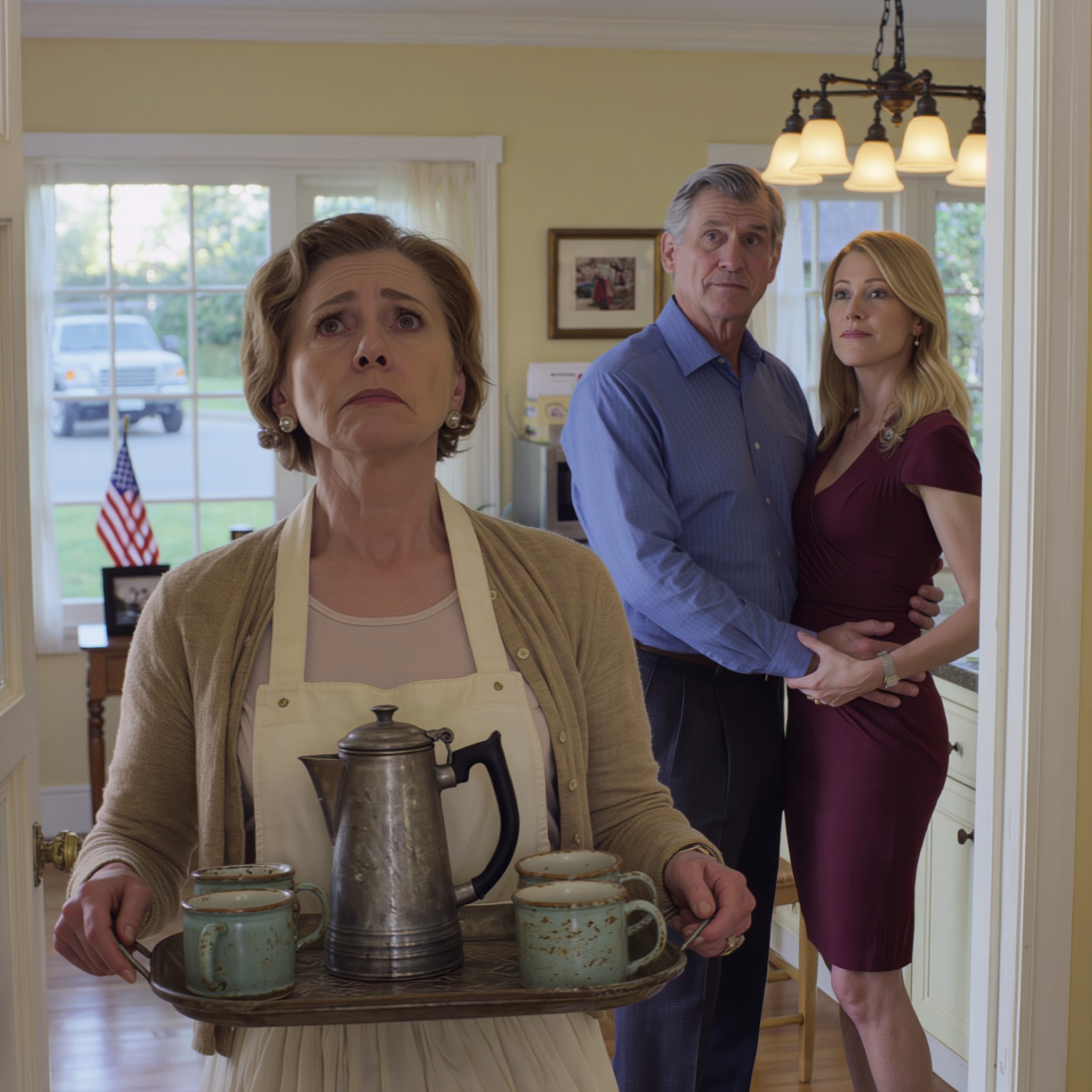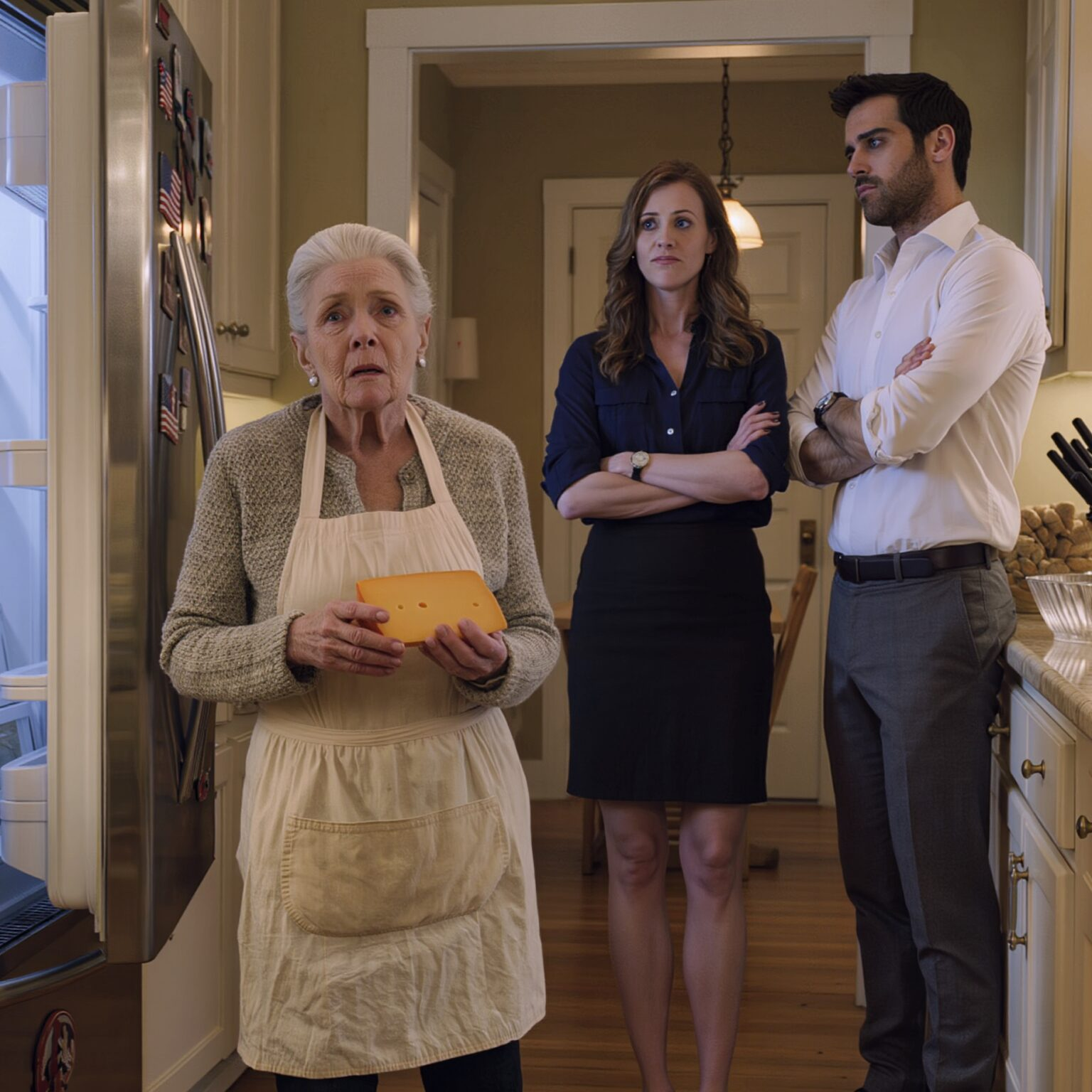
I had been stirring the soup for nearly an hour, tasting, adjusting, adding the exact herbs my daughter always loved when she was little. Rosemary, thyme, that hint of lemon she used to say made the whole house smell like safety. The table was set, the roast was resting, steam curled from fresh bread. It was my house, my kitchen, my hands that had prepared the meal. Yet when she walked in, it felt like I had trespassed in a place I built.
Her voice cut through the air before I even turned from the stove. “Don’t touch that food.” Not a request. A command. Sharp. Dismissive. Carved from entitlement she didn’t inherit from me. I turned slowly, wiping my hands on the apron she used to tug when she was small. She stood there with her chin lifted, perfectly made-up, as if decor was more important than decency. “My in-laws are coming,” she added, and the emphasis wasn’t explanation — it was accusation. Her eyes told me I was messy, inappropriate, unwanted, poorly timed, too ordinary for the people she was desperate to impress.
Before I could speak, he arrived. My son-in-law, with that calm arrogance that pretends to be composure. He looked at her first, never at me, the way a guard looks at his superior before performing obedience. “If my wife said so,” he announced, “that’s how it is.” His tone was smooth, bored, a man used to dismissing what he didn’t think about. Not cruel, not loud — just confident in a hierarchy he believed was natural: her first, his parents next, me at the bottom somewhere below convenience.
I stood there, staring at the table I had prepared, the linen I ironed, the candles I trimmed. Every item on it was mine — bought with money they never asked how I earned, cooked with hands they assumed would always serve. Suddenly the dinner wasn’t food. It was symbol, territory, a claim. It wasn’t that they didn’t want me to eat. It was that they didn’t want me associated with them when the polished, curated version of their life walked through the door.
I didn’t reply. I didn’t protest. Silence, I learned long ago, is not surrender — it is strategy. They moved around me like decorators, adjusting plates, criticizing placements, turning the evening into a performance I wasn’t cast in. When the knock came and his parents entered, everything changed in their posture — brighter smiles, softer voices, elegant words rehearsed like lines from a play. They complimented the scent, the dishes, the arrangement. My daughter took credit for the roast she didn’t season, the bread she didn’t knead, the hours she didn’t spend hovering over boiling stock. And her husband nodded proudly beside her, presenting her domestic grace like a prize ribbon.
No one looked at me. That was the point.
When they sat, I stepped back, not because I wasn’t welcome, but because I wanted to see the shape of the story without my presence. They began to eat. The compliments poured in. She glowed in them. Her husband preened like a man who had chosen well. I waited just long enough for their plates to empty halfway, the room thick with the joy of their false narrative.
Then I spoke — not to destroy, but to reveal.
“It’s wonderful to watch you enjoy the meal I prepared,” I said, voice steady, not trembling, not bitter. Just factual. The room froze like glass catching a crack. Forks paused mid-air. My daughter swallowed too slowly. Her husband’s posture broke, eyes darting, his carefully balanced pride tipping. His parents turned to me, surprised, polite, confused. “Oh, you cooked this?” the mother asked kindly, unaware of the storm beneath the table. I nodded. “All of it. Every dish. Every spice. Even the bread.”
The silence that followed wasn’t quiet. It was loud, heavy, exposing. My daughter’s cheeks flushed crimson, the heat of being seen without control. Her husband cleared his throat, trying to recover social footing. But the truth was out in the open, warm as the food on their plates, undeniable as their deception.
I didn’t stay to soothe embarrassment or fold myself into their script. I untied my apron, placed it gently on the counter, and stepped out onto the porch, leaving them with the heat of food they could not claim anymore. I didn’t slam the door. I didn’t wait to be called back. The sky outside was soft and dusky, and the scent of rosemary still lingered on my fingers. For the first time, I felt no ache in being excluded.
Inside, they would explain, correct, scramble for dignity. But out here, I finally understood my value had never been theirs to acknowledge.
I was not the meal. I was the hands that fed.
And when a mother steps away, even silently, the table shifts on its legs.