I remember the exact scent of the hospital room — bleach, plastic, a hint of metal, and that lingering dread that settles into the air where pain lives too comfortably. I had not yet gotten used to the machines, the constant beeping, the nurses’ shoes squeaking against polished floors, and the rhythmic hum of the oxygen pump breathing for me when exhaustion refused. I inherited twenty-three million dollars only seven days earlier. Twenty-three million. Twenty-three million for a woman who had never owned more than two pairs of heels and still washed her ziplock bags to reuse them. My late brother, wealthy in ways no one expected, left every cent to me because I was the only one who ever visited him, ever sat with him, ever remembered his birthday without being reminded by a Facebook notification.
That money brought silence, then shock, then greed — not mine, but everyone else’s. It was fascinating how people who never called suddenly found my number memorized. I smiled at their sweetness, their sudden warmth, their sudden “How have you beens,” and “We should get together soon.” But my son — my only child — my boy whom I lifted on my hip every morning, rushed to school in the rain, defended in principal offices, fed when he refused everything except chicken nuggets — he didn’t even ask how I was. Not when the check arrived. Not when the lawyers confirmed it. Not when the accounts shifted. He texted once: “Congrats.” That was all.
Then came the accident.
It was three in the afternoon in late autumn. The street was wet, not from rain but from careless gutter overflow. I stepped off the curb, the world spun once, maybe twice, and then metal kissed bone with the indifference only steel and velocity can carry. I remember lying down, and I remember thinking absurdly, The sky is too bright for this kind of pain. People shouted, sirens wailed, and the street evaporated behind tears I didn’t know I was shedding. When I woke, I was in a bed with rails, wrapped in wires, my leg pinned in titanium, my ribs wrapped like glass.
The nurse told me I’d been unconscious for three hours.
I nodded and asked for my son.
I dialed him, my voice shaking not from fear but embarrassment — embarrassment that I needed someone. “I’m in the hospital,” I whispered. “I had an accident.”
There was a pause. Not shock, not panic. A pause of calculation.
“I’m busy,” he finally said. “I don’t have time or money for hospital runs. You have the inheritance — use that.”
Before I could process those words, the line went dead. He hung up. Not a soft goodbye. Not a promise to come later. A hang up. Final. Dismissive. Efficient.
The nurse saw my face and adjusted the pillow, but even she could not move the pain in my chest where disappointment carved itself like initials on old wood. I tried to swallow, but tears rose faster than breath. Twenty-three million dollars in the bank and not a single soul willing to sit beside my bed.
I spent three weeks recovering, listening to other patients receive visitors — flowers, chocolates, balloons, laughter, arguments, embraces. My room remained still. No footsteps came down my hall. No familiar voice called my name. Silence became my companion. But silence is not cruel — it is honest.
On the twelfth day, the custodian, a woman named Lorraine, came in humming an old gospel tune. She watered the dusty plant in the corner and wiped my side table as if it belonged to royalty. She didn’t know about the money. She didn’t care. She brought butterscotch candies and told me her son married a woman she didn’t like but loved anyway because that’s what mothers do: they bend, they fold, they reshape themselves around their children’s storms.
I asked her why she hummed so much.
“Because it hurts less when I do,” she said, smiling with tired eyes.
That was the first day I ate an entire meal.
She visited even when she wasn’t on shift. She brought crossword puzzles, small prayers scribbled on sticky notes, and stories that filled the room with company. She didn’t ask for anything. Not money, not favor, not access. Just conversation.
When the doctors finally cleared me to go home, she walked me to the elevator. “If you ever need help,” she said, “I live only eight blocks away.”
Her kindness settled on me like a blanket fresh from a dryer.
My son never called again.
Not for discharge.
Not for updates.
Not for “Are you alive?”
Two weeks later, the estate lawyer called: my will needed to be updated formally, given the large inheritance. He assumed I would name my son — of course, why wouldn’t I?
He sat across from me with a pen ready, confident, prepared to hear the name we all expect mothers to say, even when they give birth to men who forget them.
“Beneficiary?” he asked.
I took a breath that didn’t shake this time.
“Lorraine Harris,” I answered.
He blinked. “I… I’m sorry… who?”
“The hospital custodian. The only soul who sat with me when I couldn’t sit on my own.”
He hesitated. “Your son—”
“Asked me to never call again,” I said. “So I won’t.”
That made it real.
He wrote the name. He filled the lines. He stamped the papers. Twenty-three million, the house, the stocks, the annuities, the trust — all to the woman who showed up not because she owed me anything, but because she once wished someone had shown up for her.
For months, I healed. I learned to walk again, first with pain, then with pride. I planted flowers. I painted the guest room. I made lemon tea and watched the sky without wondering who might call. When loneliness curled around me late at night, I let it sit. It didn’t scare me anymore. It was better than being surrounded by people who only stayed for what they could take.
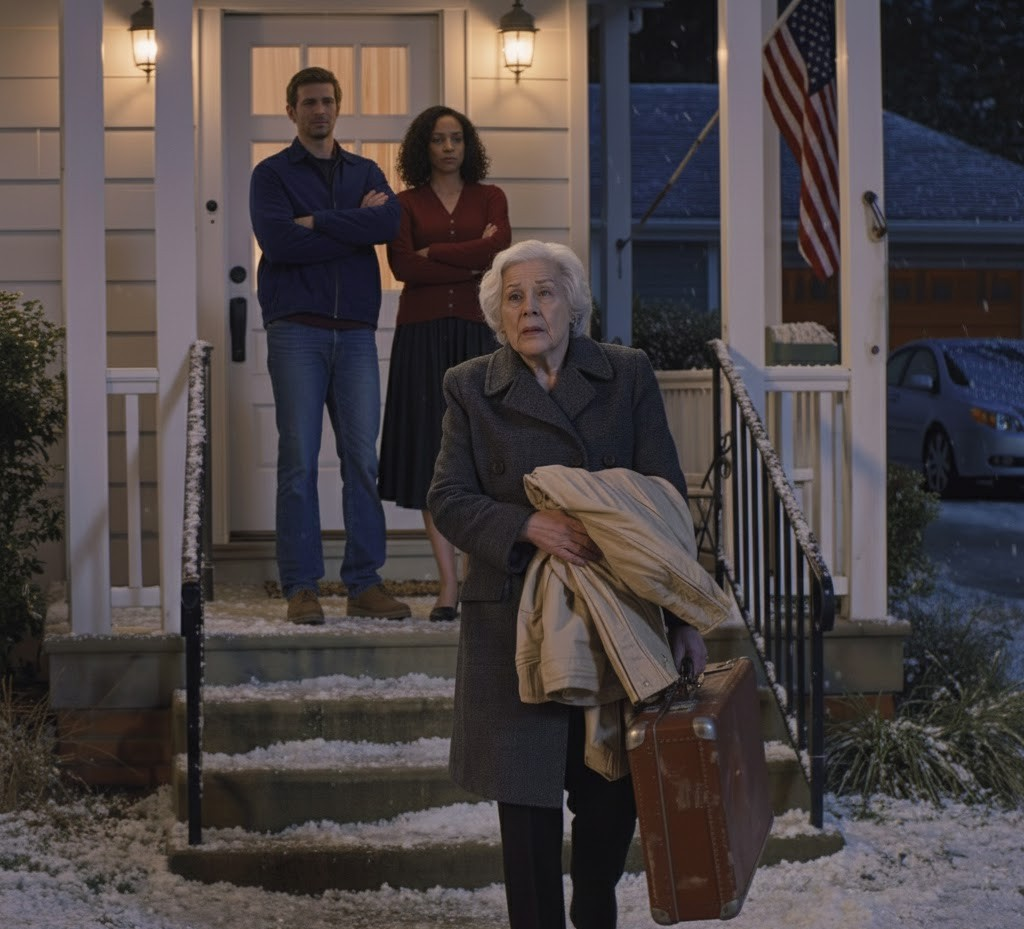
Then, almost exactly eleven months after the accident, my front door rattled with aggressive knocking. I opened it to find my son — pale, sweating, anxious. He hugged me but not tightly.
“I heard…” he began.
I said nothing.
“…the will. Mom, come on. That woman doesn’t deserve what’s ours.”
“Ours?” I repeated softly.
He stumbled over words. He gave excuses about stress, work, responsibilities, children I had not seen in four years, holidays I was not invited to, phone calls he never returned.
“I was busy,” he said again.
“So was I,” I replied.
He tried to smile. “We’re family.”
Family.
A word I cherished alone for decades. A word I lived for more than I lived for myself. A word I stitched into dinners and whispered prayers over fevered heads.
But a word is not enough when the actions contradict its meaning.
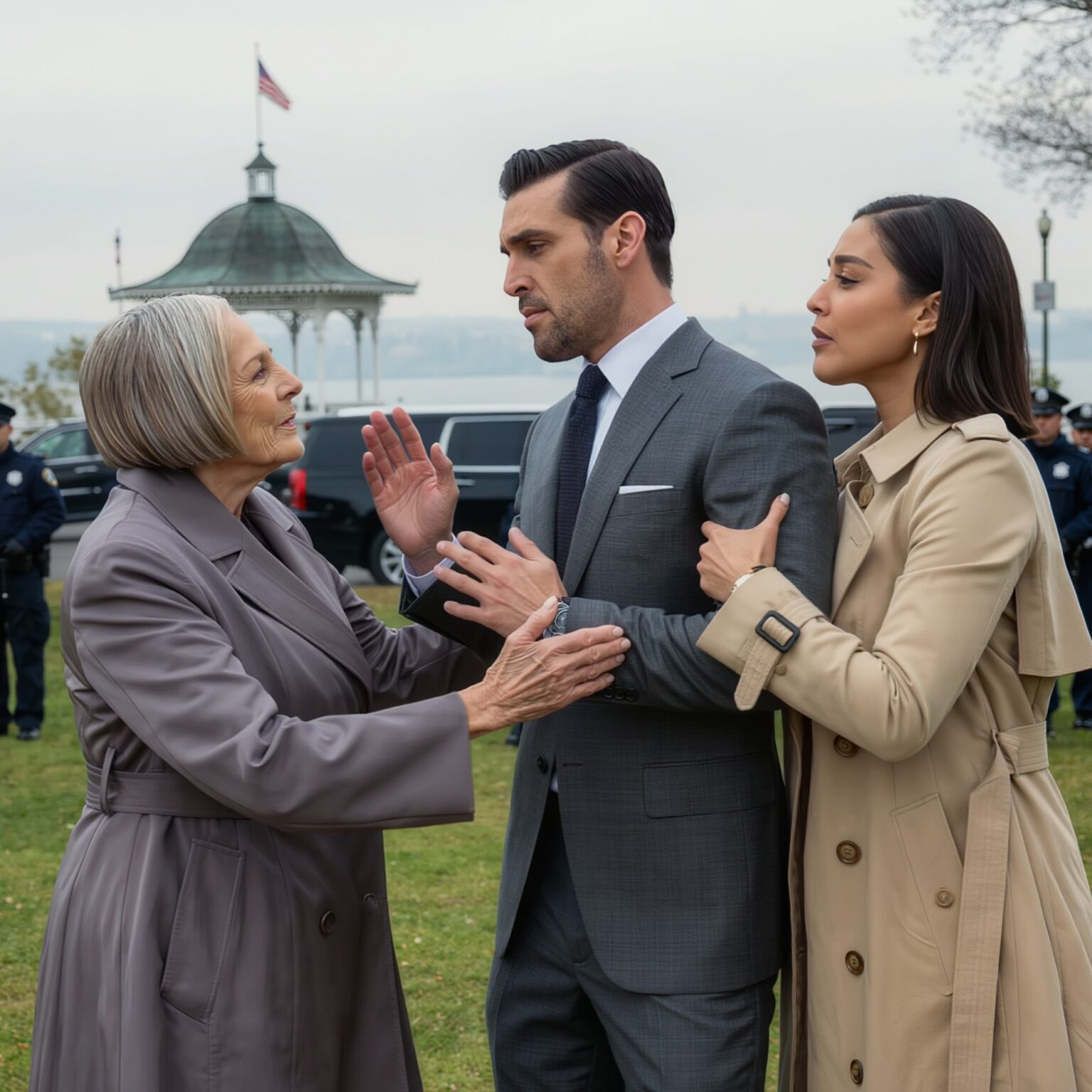
“I am changing nothing,” I told him.
He stared at me as if I slapped him.
“You’d give millions to a stranger over your own blood?”
“She is not a stranger,” I said. “She showed up when blood didn’t.”
He shook his head and left, slamming the door hard enough to wake the dust on picture frames. I didn’t cry this time. I brewed tea. I sat by the window. Peace turned longer, steadier, brighter.
Three days later, Lorraine knocked — shy, hesitant, holding her phone like it might explode. “Your son called the hospital,” she said. “He yelled at me. Said I manipulated you.”
I exhaled slowly. “Did that hurt you?”
“No,” she smiled sadly. “I’ve been yelled at by better people for worse reasons.”
I laughed — really laughed — for the first time since before the inheritance.
I told her to sit. I poured tea. We watched the sky again. Two women who didn’t ask for fortune, who didn’t chase wealth, who simply needed softness in a world that punishes gentle people.
Months turned to a year. My son never called again. His absence became a landscape I no longer resented. He taught me to choose myself, not through kindness, but neglect.
When the day finally came — when the lawyer, the executor, the documents all aligned — I sat in the office with Lorraine beside me. She trembled. Not with greed, but disbelief.
“This is too much,” she whispered.
“No,” I replied. “Not after what you gave me.”
“What did I give you?” she asked.
And I answered:
“Time. Presence. Humanity. You stayed.”
She cried then, tears she wiped quickly with rough hands that had scrubbed floors, lifted trash bags, and held lonely patients’ palms until the pain dulled.
Twenty-three million dollars is a number. A large one. But not larger than dignity. Not larger than loyalty. Not larger than a chair pulled up in a cold hospital room at midnight by someone who had no reason except heart.
When the papers were done, she hugged me — real, tight, honest.
“I don’t know how to thank you,” she whispered.
“Just don’t leave,” I said, “when it matters.”
She remained in my life. Not as nurse, not as employee, not as charity, not as project — but as friend. As daughter, in a way life forgot to give me the first time around.
My son moved to another state. I learned this not from him, but from someone who saw his address listed for a real estate transfer. He remarried. He never reached out again. I didn’t chase. Love is not love if it must beg to be seen.
Sometimes, in quiet evenings, I sit by the same window where dust met sunlight like small galaxies, and I think of the twenty-three million that changed everything — but not because I had it.
Because I gave it to someone who showed up when I was broken and invisible.
The accident broke my bones.
Abandonment broke the illusion.
But the kindness of one woman rebuilt me in silence.
So yes, twenty-three million left my name.
But so did the grief of waiting for a child who couldn’t carry love.
I lost a son.
I gained a world.
And I will repeat the truth without trembling:
I regret nothing.