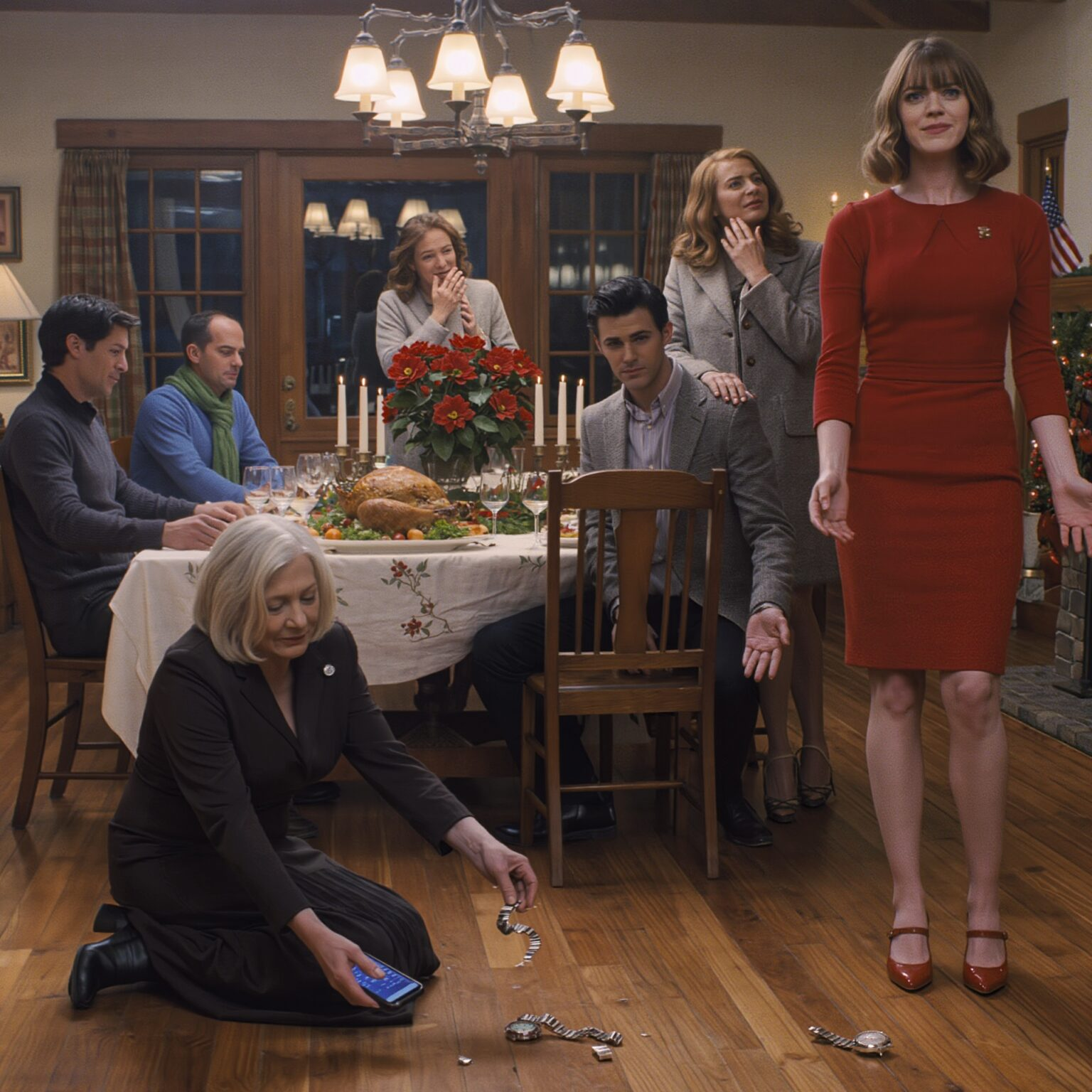
I remember that dinner clearly — the way the chandelier light caught the crystal glasses and cast little rainbows onto the pristine white tablecloth as though the universe was showing off while my heart was quietly shrinking. It was supposed to be a celebratory occasion: my husband and I had been married for fifteen years, and a casual family dinner at his father’s penthouse felt like a milestone rather than a showdown. I had inherited a modest amount from a distant relative who had always been fond of my curiosity and kindness — nothing vast or flashy, just enough to make me feel seen in a way I hadn’t felt before. I didn’t broadcast the fact. I didn’t perform it like it was a badge of honor. I simply appreciated it quietly in my heart.
But my husband — never one to let kindness stand alone without commentary — decided the dinner was the perfect place to mock that inheritance. Not gently. Not in passing. But with deliberate derision. Halfway through Caesar salad and lukewarm conversation about wine pairings, he turned to me and said, loud enough for the room to hear:
“It’s cute that she thinks ten thousand dollars is an inheritance. Bless her heart — she saved pennies and calls it treasure.”
There was laughter afterward — forced smiles, glances at crystal stemware, attempts at polite conversation about stocks and yachts — but in that moment I felt something inside me tighten, not with humiliation so much as clarity. I wasn’t hurt because of the money. I was hurt because someone I had chosen to stand beside in partnership chose to broadcast my worth through a lens of ridicule rather than respect.
After another round of chuckles and awkward sips of white wine, something unexpected happened: his father — a man I had only seen at holidays and special events, a man whose wealth was whispered about like folklore — leaned across the table and placed his napkin down with a decided calm. He didn’t clear his throat. He didn’t call for quiet or cut off the waiter. He simply looked me in the eye with a seriousness that felt like recognition rather than dismissal, and said quietly:
“I’m tired of his antics. Let’s see how poor he laughs when the tables turn.”
The words landed not as spectacle — not as drama — but as truth delivered with the kind of clarity that pierces awkwardness and confronts arrogance without needing to escalate.** There was no sound after he spoke. No eruption. No applause. No theatrical confrontation. Just the palpable shift in the air that happens when someone else names what everyone else was thinking. I looked at his father with a mixture of surprise and guarded understanding, while my husband’s grin — that smug, comfortable mask he wears in social settings — faltered just a little, like a greeting card that was read one card too many times.
We finished dinner in a sort of quiet suspension — not silence, but the kind of subdued space where everyone becomes acutely aware of their own breathing and the weight of words that were not meant to sting only the one they targeted. I didn’t try to defend myself. I didn’t offer excuses or explanations. I simply presented myself in the calm steadiness of someone who knows their own story, even when others attempt to narrate it for them.
Later that evening, after the table was cleared and the last of the rich dessert vanished under polite conversation, I walked with his father to the window that overlooked the city — lights flickering like distant fireflies on water. He didn’t ask me to justify who I was. He didn’t make a spectacle of wealth or size of bank accounts. He simply said, gently:
“Your worth doesn’t shrink just because someone else chooses to inflate themselves at your expense. Never let his voice be louder than your sense of self.”
I didn’t respond immediately. I just listened — the rare kind of listening where your heart doesn’t race to defend or correct, but absorbs truth without demand. I realized then that inheritance isn’t measured in dollars alone. It’s counted in quiet integrity, in having endured life with dignity, in being generous with your heart even when others are stingy with their respect.
On the drive home later, my husband was quiet — not sulking, but noticeably subdued — the kind of stillness that descends when someone’s ego has encountered its own reflection in someone wiser than they are prepared to face.
At home, as I set down my handbag and walked through the familiar rooms where shared life unfolded not in crystal glasses but in real conversations, I realized something deeply fundamental:
Your worth is not determined by the size of your inheritance,
nor by the noise others make about it.
It is measured by what you do with what you have,
and how you carry yourself when others fail to carry you with respect.
I didn’t gloat.
I didn’t confront him again.
I chose something subtler, stronger, and far more transformative:
I honored the truth of who I am — not through rebuke,
but through quiet consistency.
And that — more than any monetary figure ever could —
became the inheritance I actually carried forward.