I never imagined that a single storm could tear my life apart so completely. One moment I was standing in my living room, sunlight filtering through the curtains, and the next moment the tornado had come out of nowhere, ripping through my neighborhood with a ferocity that seemed impossible, flattening everything I had built over decades. Furniture splintered, photographs tore from frames, and walls cracked like brittle porcelain. I felt the world beneath me shiver and break, and I understood in that instant that life had changed forever. I had survived the storm, but my home—my safe haven, the place that held all my memories—was gone.
After the emergency crews left and the streets were cleared, I had nowhere to go. I had no other family close by, and friends were already struggling with their own losses. My mind went immediately to my son. My eldest, the one I had raised from a boy into a man, the one I had watched walk across the stage at his graduation, the one I had tucked into bed during sickness and sleepless nights—I went to him for help. I packed a suitcase with the few things I could salvage: clothes, medications, a few cherished mementos. My heart was heavy, not just from the destruction, but from the embarrassment of needing help at my age. I wanted to show strength, but there was no way around this—my home was gone, and I was alone.
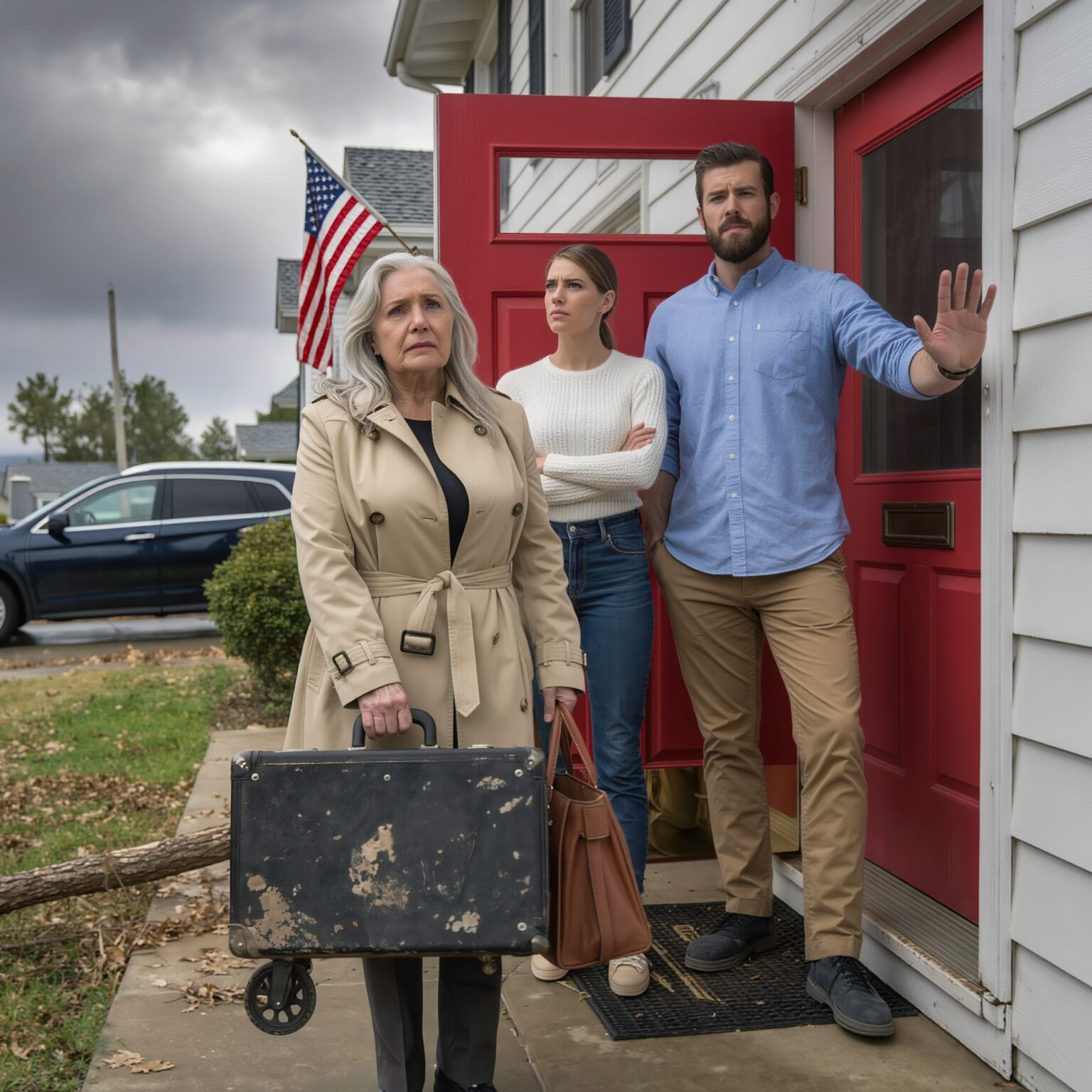
I arrived at my son’s house, hoping to find warmth, understanding, a familiar embrace. Instead, I found hesitation, awkward glances, and a statement that cut deeper than any storm ever could. “We want our privacy,” he said, his voice steady but firm. “My girlfriend doesn’t want you here, so I didn’t bring it up.” I froze, my suitcase still in hand, the weight of loss suddenly magnified by rejection. I had not expected kindness; I had expected compassion. I had not expected confrontation; I had expected comfort. But standing there in front of my son, I realized how little I had truly known him as an adult, how little the years had bridged the gap between child and parent when resentment or pride got in the way.
I didn’t cry. Not immediately. Instead, I listened to the logic, the practicalities, the excuses. The words sliced through the remnants of my hope, leaving jagged edges. I wanted to argue, to remind him of all the years I had sacrificed, the nights I had stayed awake caring for him, the meals I had prepared, the love I had given. But instead, I nodded and turned away, realizing that begging for acceptance from someone who could not see my pain was pointless. My strength would have to come from somewhere else.
That night, I slept in my car. The moonlight reflected off the remnants of the neighborhood I had loved, and the wind whispered through broken branches like a reminder of impermanence. I could have called other children, other family members, but I knew my pride would not allow it. I understood then that life was a series of storms, some of which come in the form of weather, and others in the form of people we once trusted.
The days that followed were grueling. I found shelter in a small motel, eating leftovers from the convenience store and slowly coming to terms with the destruction. I would visit the site of my home each day, staring at the rubble, watching neighbors pick through what remained. And though my heart ached, a different kind of clarity began to emerge. My son had chosen his comfort over my need. I could lament this choice or I could decide to survive, to rebuild, to reclaim my life.
I began making calls, first to insurance, then to friends who could help with small repairs, then to local charities. Slowly, a plan formed. I wasn’t going to let my home define me or my sense of dignity. I rented a small apartment nearby, enough space to call mine, and started making it into a home again. The first night I cooked a simple meal on a borrowed stove, I realized that independence, however forced upon you, can feel empowering. It can feel like a victory even when life has stripped everything else away.
Weeks turned into months. I met other people in the community who had lost everything, and we shared stories, meals, and resilience. I learned to find beauty in small things: the first flower to bloom in a window box, a neighbor offering extra soup, a stray cat curled on a warm porch. And though my son remained distant, the anger and disappointment slowly gave way to understanding. People are complex. Choices are complicated. Love doesn’t always translate into support when ego, fear, or inconvenience intervenes.
One morning, I received a small package from my son. Inside was a note, brief and carefully worded: “I hope you are safe. I wish I could help more.” It wasn’t an apology, and it wasn’t comfort, but it was acknowledgment. And sometimes, acknowledgment is the first step toward reconciliation. I tucked the note away and felt a small flicker of hope. Perhaps over time, bridges could be rebuilt, but I realized that I did not need him to define my survival or my worth.
The experience taught me something profound: storms, both literal and metaphorical, are tests not just of endurance, but of self-reliance. They expose the cracks in relationships and reveal who is truly present in our lives. They force us to confront not only loss, but our own ability to navigate the aftermath with dignity and resilience. I learned that love is complicated, family is complex, and independence can be born out of the harshest trials.
Even now, every time the wind whistles outside, I am reminded of that night. Not with fear, but with a sense of power. I survived a tornado. I survived rejection from my own child. And I learned that even when doors are closed, life offers windows. I rebuilt my home, piece by piece, and more importantly, I rebuilt my sense of self. I realized that my worth was not contingent on someone else’s acceptance. My courage, my dignity, my perseverance—they were mine, and no storm, nor son, could ever take that away.
Looking back, I am grateful for the experience, as harsh as it was. It taught me lessons that comfort never could: the necessity of self-reliance, the strength found in solitude, and the quiet victories of surviving when everything seems lost. I am stronger now, more confident, more capable, and more compassionate toward myself. And though I still hope one day my son will understand the depth of what it means to turn away someone who only sought shelter and love, I no longer depend on it. My life, rebuilt, stands on its own.