I should have felt crushed — truly devastated — when my daughter-in-law announced, “You’ll be moving into our old apartment, and my parents will take over your farm.” Those words should have stabbed like knives. They should have weighed on me like a crushing wave. But when they fell into the room that day — in the middle of my son’s wedding reception, no less — I simply smiled and said something that even surprised me in the moment: “I realize now that life’s worth more than any address or field.” And in that smile, something quiet and profound started to happen.
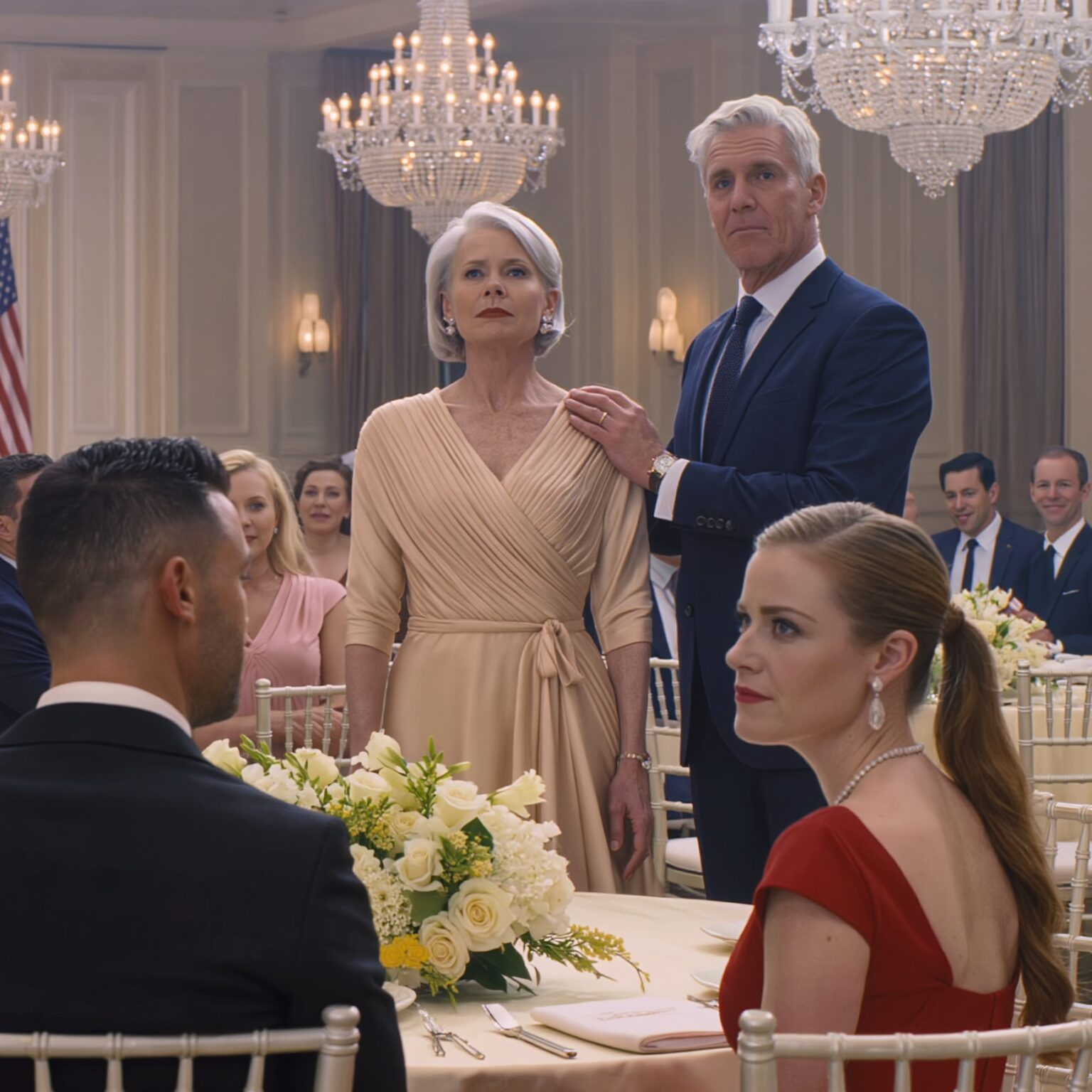
The wedding reception was meant to be a joyful culmination — a celebration of love, unity, the joining of families. My son, Jonathan, stood there beside his beautiful bride, Emily, the two of them glowing against the backdrop of flowers and soft lights. Friends and relatives clinked glasses and laughed, the music drifted through the hall like warm air, and I was genuinely happy for them. My heart was full. I had watched my son grow from a curious boy who once chased fireflies at dusk on our farm into a kind, thoughtful man ready to build a life of his own. But then came that quiet announcement delivered with calm precision — a sentence meant to bind my future to an old apartment I hadn’t lived in for years, and to hand over my beloved farm to my daughter-in-law’s parents.
My first reaction should have been shock. A rage so fierce that it would have lit up the room with wild fire. I should have felt betrayed, wounded, humiliated. But instead… I smiled. Not out of acceptance. Not out of weakness. I smiled because in that moment I had already seen something deeper, something no one else noticed yet: the way Jonathan’s eyes flickered with hesitation, the way a few cousins turned their gaze toward mine with uncertainty, the way the room’s energy itself seemed to twitch under the weight of those words. That smile was not agreement — it was clarity.
As the silence hovered like an unfinished sentence, I took a breath and spoke.
“I realize now,” I said gently but firmly, “that life’s worth more than any address or field.”
The room blinked.
Even the band paused mid-note.
I didn’t say it angrily. I didn’t raise my voice. I simply spoke a truth I’d been discovering quietly for years: that what matters most in life isn’t the physical places we inhabit, but the meaning we put into them — the memories, the love, the work we’ve poured into them, the way they shape our hearts.
I felt a strange calm wash over me as the energy in the room shifted. Some guests looked confused. Some looked sympathetic. And a few — the ones who truly knew me — nodded, as though they had always understood where I was coming from.
Slowly, I continued.
“Our farm,” I said softly, “was never just a piece of land. It was where Jonathan took his first steps, where his laughter filled the barn at harvest, where every sunrise felt like promise. And that meaning can never be transferred like a deed or a document. It stays with the heart.”
I paused, breathing in the warm hum of the reception. I thought about the countless mornings I had spent walking the fields, the evenings watching sunsets that turned the haystacks to gold, the sound of my husband’s voice teaching Jonathan to guide the tractor straight. Those memories weren’t stored in soil or fences — they lived in me.
Then I turned slightly to look at my son, the man standing proud in his wedding suit — and I said something more.
“Jonathan, I raised you to hold on to what’s important. And what’s truly important isn’t a building or a parcel of land. It’s the people we love, the legacy we leave with them, and the wisdom we share along the way.”
There was a hush — the kind of silence that isn’t awkward, but poised, like the moment before truth finally settles into understanding.
My daughter-in-law’s face was unreadable — polite, composed — but something in her eyes suggested she had expected resistance, bitterness, perhaps anger. Not peace. Not grace. Not this calm certainty that life, even in disappointment, still had meaning greater than what she had tried to define.
The band resumed softly. Conversations picked up again as if my words had gently redirected the current of the room. Not with force — but with warmth.
Later that night, after the final dance was danced and the last plate cleared, I found myself outside on the wide terrace overlooking the rolling fields where the farm once sprawled with life and promise. The sky was wide above me, dotted with stars that seemed to stretch forever. I felt the quiet hum of breath in the night air and wondered how so many people could stand in a room full of laughter — but say something so cold with such a calm voice.
I didn’t hate them for it.
I simply understood that people protect what they fear losing.
They fear losing control.
They fear losing comfort.
They fear being forgotten.
And sometimes they fear the echoes of their own insecurities.
I knew all this not because I was naive — but because I had lived life long enough to see how love, loss, hope, and disappointment shape the human heart.
My son wandered out onto the terrace too, the laughter of the reception fading behind him. He stood beside me, not speaking at first — just breathing in the night, the gentle sigh of wind brushing against us.
“You were right,” he finally said quietly. “About what really matters.”
I reached out and placed a hand on his shoulder — not as someone in complaint or challenge, but as someone who knew the complexity of love.
“Son,” I said softly, “life will always ask us to choose what matters most. It’s not always easy. But the choices we make with love — instead of fear — are the ones that build a life worth remembering.”
He looked at me then — truly looked — with something like gratitude in his eyes that wasn’t just words, but depth.
Maybe that night changed him.
Maybe it changed others too.
Maybe it changed the way they saw legacy.
Because what I realized in that still moment wasn’t just about the farm, or an old apartment, or who gets what in a will. What I realized — and what I taught without anger or drama — was something far deeper: that life isn’t measured by square footage or farmland acreage — it is measured by integrity, love, and the stories we carry in our hearts long after the celebrations fade.
I didn’t leave the reception angry.
I didn’t escalate.
I didn’t demand recognition.
I simply chose peace.
And in peace, I found strength.
The next morning, just after sunrise, when the world was still brushed with gold and the air smelled like possibility, my son came to me again. This time, his tone wasn’t defensive or tense — it was reflective.
“Mom,” he said, “I was thinking about what you said. I don’t want our family to lose sight of what matters. Not land. Not titles. Not control.”
I nodded, feeling warmth fill my heart even before the sun lit up the sky.
“When I think about the legacy I want to build with Emily,” he continued, “I think about love, not ownership.”
That was the moment I knew true transformation had begun.
Later that afternoon, my daughter-in-law approached me — quieter than before, tentative, unsure — and she said something humble: “I’m sorry if I overstepped. I just… thought I knew what was right.” She didn’t make excuses. She didn’t demand praise. She simply acknowledged her mistake — and that, in itself, was a gift.
I smiled — not with triumph, but with compassion.
“Thank you for saying that,” I told her. “Legacy isn’t about what we control — it’s about what we choose to uplift.”
She nodded.
And so, with calm hearts and honest conversations, what could have been a wound became a bridge — not just between me and my daughter-in-law, but between the past and the future of our family.
That night, the farm wasn’t a symbol of loss.
It became a symbol of meaning.
Not because of who owned it.
But because of the love that rooted there.
And in that understanding — everything changed.