At My Nephew’s Rehearsal Dinner, the Bride’s Mother Sat Me at the Staff Table and Told Everyone “She’s Just the Help.” She Had No Idea Who Was Paying for Her Champagne.
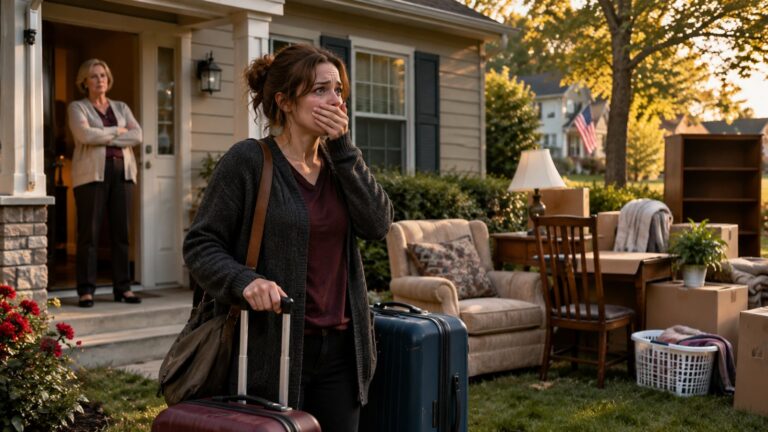
“You’re over there, hon. By the kitchen door. The family tables are full.”
Patricia didn’t even look at me when she said it. She just pointed with her champagne glass, like I was a delivery she wasn’t expecting.
My name is Linda. I’m 58, and I live in Columbus, Ohio.
And the groom, Danny, is the boy I raised from the day he turned six.
My sister Carol died in a car accident on a Tuesday in March. I remember it was a Tuesday because I’d just bought her a birthday card and it was still in my purse when the hospital called. Danny’s father had been gone since before he could walk. So it was me. A 34-year-old dental receptionist with a one-bedroom apartment and a little boy who wouldn’t sleep unless the hallway light was on.
I left that light on for twelve years.
So yes, I’d been looking forward to this weekend. I bought a navy dress at Macy’s that I absolutely could not afford. I got my hair done. I practiced not crying in the car.
The rehearsal dinner was at a country club in Dublin. White tablecloths. Little gold name cards. A string quartet playing something I’m pretty sure was Taylor Swift.
I looked for my name card. It wasn’t at the family table. It wasn’t at any table.
That’s when Patricia found me.
She’s the bride’s mother. Tall, blond, very good teeth. I’d met her exactly twice, and both times she called me “Lisa.”
“Oh, there you are,” she said. “We put you with the photographer and the coordinator. You don’t mind, right? It’s more relaxed back there.”
I opened my mouth. Nothing came out.
A woman next to her, one of the bridesmaids’ moms I think, leaned in and whispered, “Who’s that?”
And Patricia said, not even quietly, “Oh, she’s sort of Danny’s babysitter from when he was little. Just the help, really. Sweet of her to come.”
Just the help.
I felt my face go hot. My hands were shaking so bad I had to hold my purse with both of them.
I wanted to say something. I wanted to say, I sat in the ER with that boy when he broke his arm falling off the garage roof. I filled out his college applications at my kitchen table at 2 a.m. I sold my car so he could do that semester in Spain.
But it was his weekend. Not mine.
So I smiled. I said, “Of course.” And I walked to the little table by the kitchen door.
Here’s the part Patricia didn’t know.
Three weeks earlier, she’d called Danny in a panic. The bar package had “fallen through.” Open bar for 140 guests, gone, unless someone paid $9,000 by Friday.
Danny called me that night. He sounded so embarrassed. He said he’d figure it out.
I didn’t let him. I paid it the next morning, out of the money I’d been saving to retire. I told the club manager one thing: don’t tell anybody it was me.
So every glass of champagne in that room? Including the one Patricia was waving around while she told people I was the help?
That was mine.
I sat there, picking at a dinner roll, watching the family tables laugh.
Then the quartet stopped. Someone tapped a microphone.
And Danny stood up, looked straight across the room, past all the gold name cards, right at the little table by the kitchen door.
“Before we eat,” he said, “I need to fix something.”
Patricia’s smile froze.
The whole room turned around to look at me.
I wanted to crawl under that table. I’m not a person who likes being looked at. I spent twenty years answering phones and handing people clipboards. Nobody looks at the receptionist.
Danny put the microphone down on his chair and walked across the room. Past the family tables. Past Patricia, who had both hands around her glass now. Past the quartet, who were very carefully staring at their music.
He stopped in front of me and held out his hand.
“Aunt Linda,” he said. “You’re in the wrong seat.”
“Danny, honey, it’s fine,” I whispered. “Really. Go sit down.”
“It’s not fine.” His voice cracked a little, the way it used to when he was fourteen and trying very hard not to cry about something. “Come on.”
He walked me back to the head table. Megan, the bride, was already standing up. She pulled out her own chair, the one right next to Danny, and said, “Sit here. Please.”
I sat. My knees were not cooperating.
Danny picked the microphone back up.
“Most of you don’t know this woman,” he said. “So let me tell you who she is.”
And then he told them.
He told them about the hallway light. About the Tuesday in March. About the time I drove four hours to Cleveland in a snowstorm because he forgot his cleats for the state semifinal. About the car I sold. He told them I never missed a parent-teacher conference, not once, even the year I had pneumonia and showed up in a face mask.
People were quiet. A couple of the bridesmaids were dabbing their eyes with napkins.
Then Danny looked at Patricia.
“And three weeks ago,” he said, “when the bar package fell through, somebody paid nine thousand dollars in one morning so we wouldn’t have to cancel. I found out yesterday. The club manager told me by accident.”
He held up his glass.
“So everybody, if you’re enjoying the champagne tonight, you can thank the woman who got moved to the kitchen table. My mom.”
He didn’t say aunt. He said mom.
I don’t remember exactly what happened next, because I was crying too hard. I remember people clapping. I remember Megan squeezing my hand under the table. I remember the photographer, the one I was supposed to be sitting with, giving me a little thumbs-up from across the room.
And I remember Patricia.
She came over later, when the dessert was out. She didn’t sit. She stood next to my chair, twisting her napkin.
“Linda,” she said. First time she ever got my name right. “I didn’t know. I’m so sorry. I assumed…”
“I know what you assumed,” I said. I wasn’t angry anymore. Just tired. “It’s okay. It’s their weekend.”
She nodded. For a second I thought she was going to argue. Instead she said, quietly, “Would you let me pay you back? For the bar?”
“No,” I said. “But you can do something else.”
“Anything.”
“Next time somebody’s sitting at the table by the kitchen door,” I said, “go find out who they are.”
She didn’t say anything. But she nodded again, and I believe she meant it.
The wedding was the next afternoon.
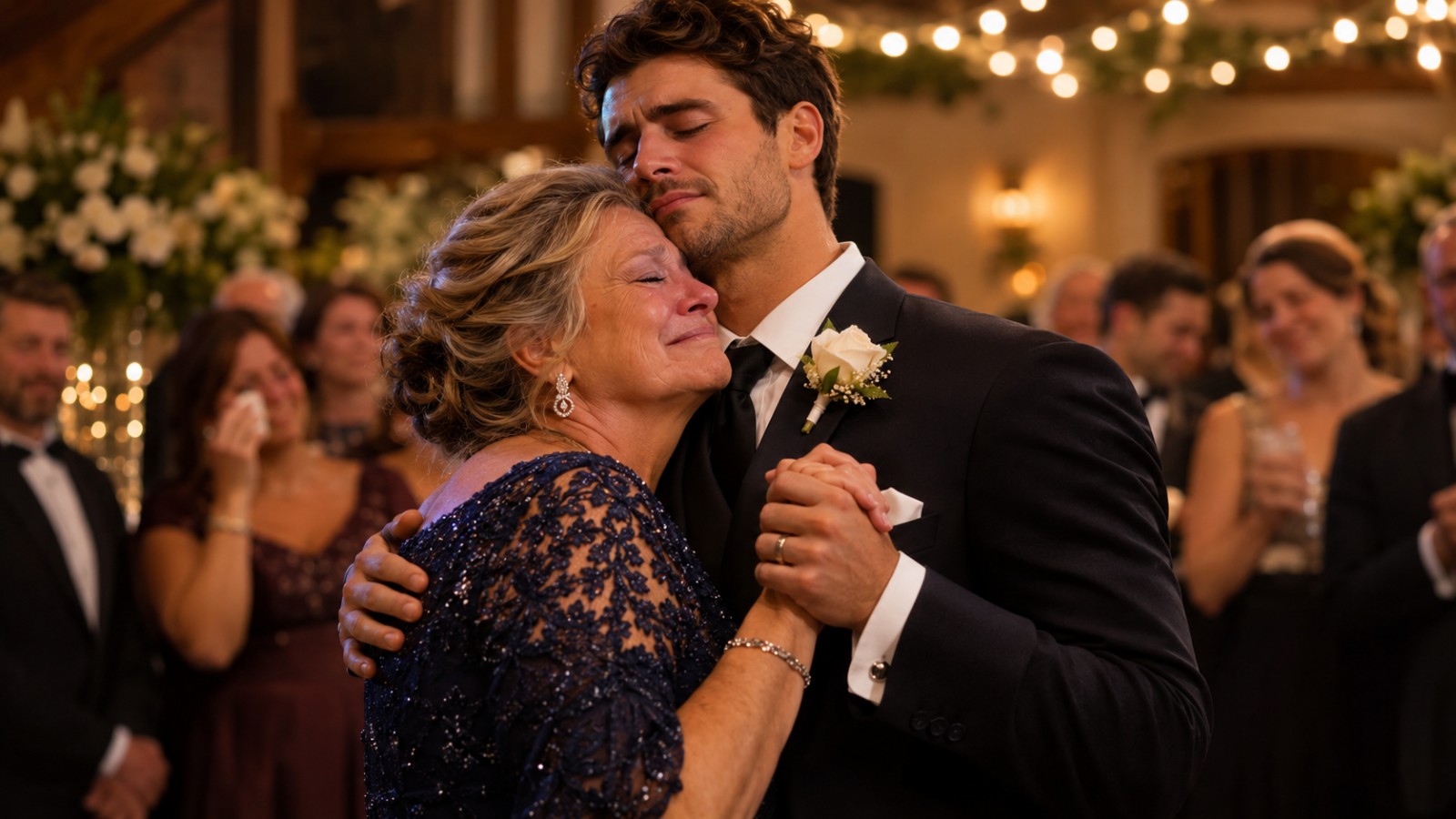
When it came time for the mother-son dance, the DJ said, “And now, Danny would like to invite his mother to the floor.”
I stayed in my seat. I honestly thought he meant someone else. Some part of me still did.
Then Danny walked over, just like he had the night before, and held out his hand.
They played “In My Life.” Carol’s favorite. He’d remembered.
Halfway through the song, he leaned down and said, “You left the light on for me for twelve years, Aunt Linda. I’m just returning the favor.”
I laid my head on his shoulder, and for three minutes and twenty seconds, I was exactly where I was supposed to be.
THE END.
Family isn’t the name on the card. It’s the person who kept showing up. >> Who was the person who “left the light on” for you growing up? Tell us in the comments.