I Was Homeless at 17 and Secretly Slept in My High School’s Boiler Room. Twenty Years Later, the Janitor Who Found Me Got a Phone Call.
The boiler room was the warmest place in the whole building.
That’s why I chose it.
Every night at 6:30, after the custodians locked the front doors, I slipped through a broken basement window behind the gym. I folded flattened cardboard boxes into a bed beside the big steel pipes. I used my backpack as a pillow.
And every morning at 5:45, I snuck into the girls’ locker room, took a cold shower, and walked into first-period chemistry like nothing was wrong.
My name is Dr. Imani Carter. I’m 37 years old.
When I was seventeen, I lived in the basement of Allderdice High School in Pittsburgh, Pennsylvania, for 54 days.
Nobody knew.
Almost nobody.
My mother struggled with addiction my whole childhood. Some years were good. Most weren’t.
In October of my junior year, she disappeared with a man she’d met a few weeks earlier. The landlord changed the locks two weeks later. I came home from school and found my clothes in garbage bags on the sidewalk.
I didn’t have grandparents. My father had never been in the picture. I was too old for most foster homes and too scared of being separated from the only thing I had left.
School.
I had a 4.0. I was in AP Biology and AP Chemistry. I wanted to be a doctor more than anything in the world.
If I told anyone I was homeless, I was sure they’d take that away from me too.
So I didn’t tell anyone. I carried my life in two backpacks and a gym bag, and I found the boiler room.
Day 54 was a Saturday in December.
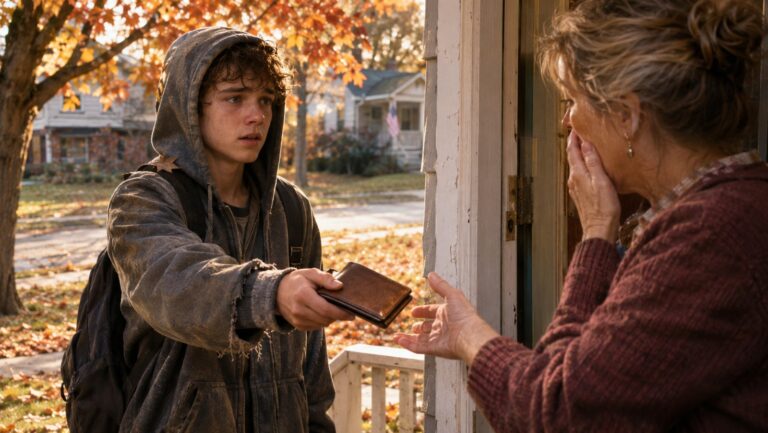
It had snowed all night. I didn’t hear the footsteps until they were right outside the door.
The door creaked open. A flashlight beam hit my face.
I scrambled backward against the pipes, heart pounding, clutching my backpack like a shield.
It was Mr. Kowalski.
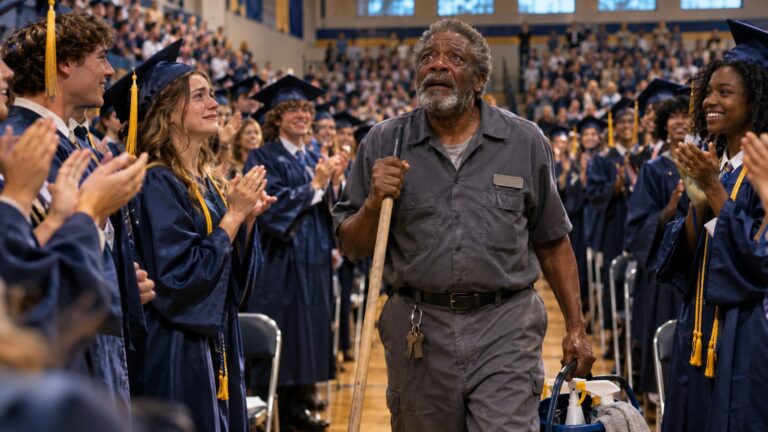
Everybody at Allderdice knew Mr. Kowalski. The old head janitor. Sixty-something, white mustache, Steelers cap, always humming polka music while he mopped the cafeteria. Kids made fun of him behind his back.
He stood in the doorway for a long time, looking at my cardboard bed. My two backpacks. The textbooks stacked neatly beside them. The little calendar I’d drawn on the wall in pencil, with 54 days crossed out.
I waited for him to yell. To call the police. To call the principal.
Instead, he turned off his flashlight.
“You eaten today, kiddo?” he asked quietly.
He took me upstairs to the custodians’ break room. He made me two grilled cheese sandwiches on a hot plate and a cup of hot chocolate from a packet.
I ate them so fast I burned my mouth.
He didn’t ask questions. He just sat across from me, sipping his coffee, until I started talking.
And then I told him everything. My mom. The garbage bags on the sidewalk. The window. The cold showers. The 4.0.
“I’m sorry,” I sobbed. “Please don’t tell anyone. They’ll put me in foster care in another district. I’ll lose everything. I just need to make it to graduation.”
Mr. Kowalski was quiet for a long time.
“My wife and I never had kids,” he said finally. “Always wanted ’em. Didn’t work out.”
He stood up and rinsed his coffee cup in the sink.
“Our spare room’s been empty for thirty years,” he said. “Mrs. K makes a pot roast on Sundays that’ll knock your socks off. You’d have to put up with my polka music.”
I stared at him.
“Why would you do that?” I whispered. “You don’t even know me.”
He shrugged.
“I know you’ve been sleeping next to my boiler for two months and you still made the honor roll,” he said. “That’s enough for me.”
That afternoon, he drove me to his little brick house in Greenfield.
His wife, Dorothy, opened the door. She took one look at me — the backpacks, the red eyes — and pulled me into the biggest hug I’d ever had in my life.
“Oh, honey,” she said. “You’re home now.”
They did everything the right way. They called a social worker the next Monday. They went through the background checks and the home visits and the paperwork, and they became my legal foster parents in February.
Mrs. K packed my lunch every day. Mr. K drove me to school every morning in his old Buick and pretended he didn’t know me in the hallway, so I wouldn’t be embarrassed.
He came to every science fair. He sat in the front row at my graduation and cried so hard that the people around him passed him tissues.
When I got a full scholarship to the University of Pittsburgh, he told every single person in the Giant Eagle checkout line.
I became a doctor. Then a surgeon. I moved to Boston, then Baltimore, then back to Pittsburgh, where I’m now chief of pediatric surgery at a children’s hospital.
I called the Kowalskis every Sunday for twenty years.
Mrs. K passed away four years ago. Mr. K was eighty-three now, living alone in that little brick house.
And last spring, he called me. For the first time in twenty years, he was the one calling with bad news.
“Kiddo,” he said, and his voice was shaking. “I didn’t want to bother you. But I don’t know who else to call.”
His pension fund had collapsed. His medical bills had piled up after a fall. He was three months behind on his property taxes. The county was going to put a lien on the house.
“They’re gonna take it,” he said. “The house Dottie and I lived in for fifty-one years. The house where you… where you came home.”
He was crying.
I’d never heard him cry. Not even at Mrs. K’s funeral.
“Mr. K,” I said, “I’ll be there tomorrow.”
I didn’t tell him what I was going to do.
I spent that night on the phone. With the county treasurer’s office. With his bank. With a lawyer friend of mine.
The next afternoon, I knocked on the door of the little brick house in Greenfield.
He opened it in his old Steelers cap, looking smaller and older than I’d ever seen him.
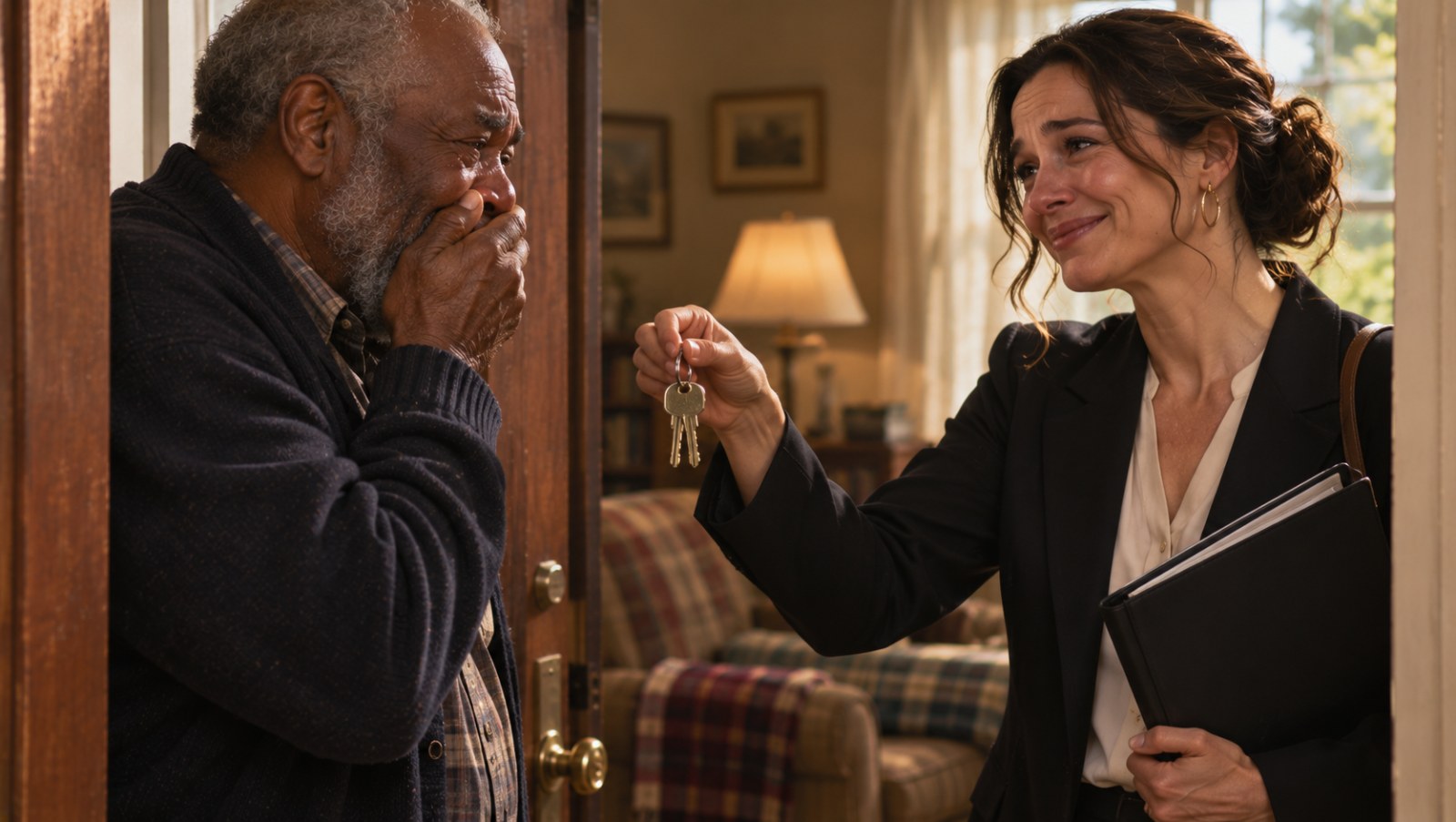
I handed him a folder.
Inside were the receipts. His property taxes, paid in full. His medical bills, paid. The rest of his mortgage — eleven thousand dollars he’d never told anyone about — paid off.
And on top of it all, a new deed.
Same house. Same name. No debt.
He read every page. Then he read them again.
“I can’t take this,” he said. “Imani, this is too much. This is your money.”
I took his old, rough hands in mine. The same hands that made me grilled cheese on a hot plate when I was seventeen and starving.
“Do you remember what you said to me in the boiler room?” I asked.
He shook his head.
“You said, ‘You’ve been sleeping next to my boiler for two months and you still made the honor roll. That’s enough for me.'”
I squeezed his hands.
“You gave me a home when I had nothing. You never asked for a single thing back. That’s enough for me, Mr. K.”
He cried right there in the doorway. So did I.
Then he wiped his face with his sleeve, cleared his throat, and said, “Well, don’t just stand there, kiddo. Come inside. I’ll make you a grilled cheese.”
I go over every Sunday now. We watch the Steelers. He plays his polka music too loud.
And on the wall of my office at the hospital, there’s a pencil drawing I made when I was seventeen. A little calendar with 54 days crossed out.
Under it, I wrote one sentence:
“Somebody opened the door.”
THE END.
One act of kindness can change the course of an entire life — and sometimes, it comes back home. >> Who was the person who opened the door for you? Tell us about them in the comments.