My Landlord Raised the Rent on Every Tenant Except the Old Man in 4B. When I Finally Found Out Why, I Owed Him an Apology.
“Three hundred dollars?” Mrs. Delgado from 2A was waving the letter in the lobby like a weapon. “Three hundred dollars a month? Who does he think we are?”
Every tenant in the building had gotten the same notice that morning.
Every tenant except one.
“Not him,” Mr. Patel from 3C muttered, nodding at the elevator. “Not 4B. His rent’s the same as it was when Reagan was president.”
I looked up just as the elevator doors opened. An old man stepped out, leaning on a cane, wearing a tweed cap and a cardigan with leather patches on the elbows.
Mr. Abramowitz. Apartment 4B.
He smiled at all of us. “Good morning,” he said.
Nobody said good morning back.
My name is Jasmine Carter. I’m 33, I’m a paralegal, and I’ve lived at 41-18 Ditmars Boulevard in Astoria, Queens, for six years.
It’s not a fancy building. Six floors. A radiator that clanks all winter. An elevator that works most of the time. But the rent was fair, the landlord fixed things fast, and I loved my little apartment.
Until that letter.
Three hundred dollars was a lot for me. It was everything I’d been saving for a car.
And the more I found out, the angrier I got.
Mrs. Delgado found out first. She always found out first.
“He pays nine hundred dollars,” she said at the tenants’ meeting in the laundry room. “For a two-bedroom. Since 1987. I saw the receipt on his kitchen table when I dropped off his mail.”
The room exploded.
“That’s illegal!”
“That’s favoritism!”
“Maybe he’s the landlord’s father.”
“The landlord’s name is Ferreira, his is Abramowitz. Not his father.”
“Then what? Blackmail?”
People laughed. But not really.
Someone suggested a petition. Someone else suggested a lawyer. Somebody said we should stop holding the door for him.
I was the paralegal. So, of course, everybody looked at me.
“Jasmine,” Mrs. Delgado said, “you go talk to Ferreira. You know the legal words.”
I didn’t want to. But I was angry enough to do it.
The landlord, Paulo Ferreira, owned three buildings in Astoria. He was in his fifties, a big man with a gray mustache, and his office was a tiny storefront under the elevated train on 31st Street.
I walked in with the rent letter and a folder full of notes.
“Mr. Ferreira, I’m here on behalf of the tenants of 41-18,” I said. “We’d like to understand why one tenant is exempt from a rent increase that the rest of us—”
“Mr. Abramowitz,” he said.
He wasn’t angry. He just looked tired.
“Yes,” I said. “Mr. Abramowitz.”
He leaned back in his chair and looked at me for a long time.
Then he said, “Sit down, Ms. Carter. Do you want coffee? This is going to take a while.”
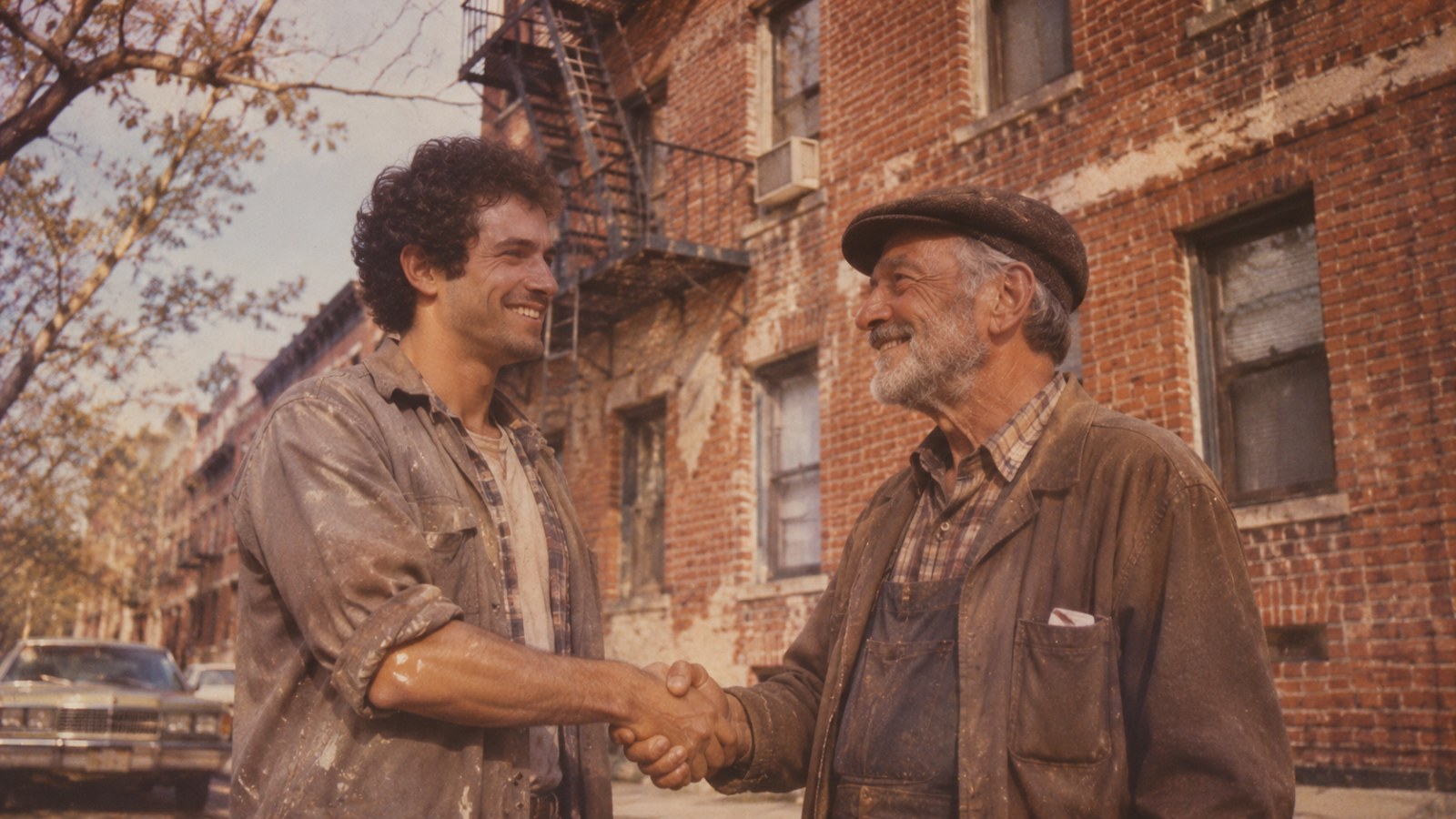
“In 1987,” Paulo Ferreira said, “I was twenty-two years old. I’d been in this country for three years. I was working construction and sleeping on my cousin’s floor in Jackson Heights. I had four hundred dollars in the bank.”
He poured two cups of coffee from a dented pot.
“I heard about a building on Ditmars that was going to be auctioned. It was falling apart. Rats. Broken boiler. Nobody wanted it. I wanted it more than anything in the world. I thought, if I can fix this building, I can have a life here.”
“What happened?”
“I went to six banks. Six. They all laughed at me. A kid with an accent and no credit, wanting to buy a building.”
He smiled a little.
“The sixth bank was where Mr. Abramowitz worked. He was a loan officer. Fifty-something years old. He listened to me for an hour. He didn’t laugh once.”
“He couldn’t approve the loan,” Ferreira said. “The bank wouldn’t let him. I didn’t have enough for the down payment. I needed eighteen thousand dollars.”
He set his cup down.
“Two days later, he came to the job site where I was working. He found me on a scaffold, covered in plaster. He handed me an envelope.”
I already knew what he was going to say. I felt it in my chest.
“Eighteen thousand dollars,” Ferreira said. “His own money. His savings. He and his wife had been saving it for twenty years to buy a little house on Long Island. He gave it to a stranger he’d met once.”
“Why?”
“I asked him that. He said, ‘Because somebody did it for my father when he came here from Poland with nothing. I’ve been waiting forty years to pass it on.'”
I didn’t have anything to say. I just sat there holding my coffee.
“There was no contract,” Ferreira said. “No interest. He told me, ‘Pay me back when you can.’ I paid him back in four years. Every penny. And when I finally owned the building outright, I knocked on his door with the last check, and I asked him what else I could do.”
“What did he say?”
Paulo Ferreira laughed, and his eyes got wet.
“He said, ‘Well, my wife has always wanted to live somewhere with a view of the bridge.'”
Apartment 4B faces the Triborough Bridge. It has the best view in the building.
“So I gave them 4B,” Ferreira said. “I told them they would pay the same rent forever. Nine hundred dollars. His wife, Miriam, passed in 2014. He’s eighty-nine now. And as long as I own that building, his rent will never go up one dollar.”
I walked out of that office and stood under the train tracks for a long time while the N train roared overhead.
Then I went home and called a tenants’ meeting.
I told them everything. Every detail. The scaffold. The envelope. The twenty years of savings. The house on Long Island they never bought.
When I finished, the laundry room was silent except for a dryer tumbling somewhere in the corner.
Finally, Mrs. Delgado wiped her eyes with a dish towel.
“I told everybody not to hold the door for him,” she said quietly. “God forgive me.”
Nobody organized it. It just happened.
Mr. Patel started bringing Mr. Abramowitz’s groceries up from the lobby. The Nguyen kids in 5A started reading to him on Sunday afternoons because his eyes were getting bad. Mrs. Delgado brought him soup every Thursday and stayed to talk for hours.
And me? I knocked on the door of 4B one Saturday with a box of rugelach from the bakery on 31st Street.
“Mr. Abramowitz,” I said, “I owe you an apology.”
He looked confused. “For what, dear?”
“For thinking the worst about you.”
He smiled the same gentle smile he gave all of us in the lobby, every single morning, even when nobody smiled back.
“Come in,” he said. “Have you ever seen the bridge at sunset? Miriam used to say it looked like a necklace.”
We sat by his window that evening while the lights came on across the Triborough Bridge.
He told me about his father, who arrived at Ellis Island in 1921 with eleven dollars. About the shoemaker on Delancey Street who gave his father a job and a bed in the back of the shop. About Miriam, who never once complained about the house on Long Island they didn’t buy.
“Do you ever regret it?” I asked. “Giving the money away?”
He thought about it for a long time.
“Every night I look out this window and see the bridge Miriam loved,” he said. “And every month, a young man I once met on a scaffold refuses to raise my rent. I got the house, sweetheart. It just came with better neighbors.”
Mr. Abramowitz passed away this spring, at ninety-one. Peacefully, in his chair by the window.
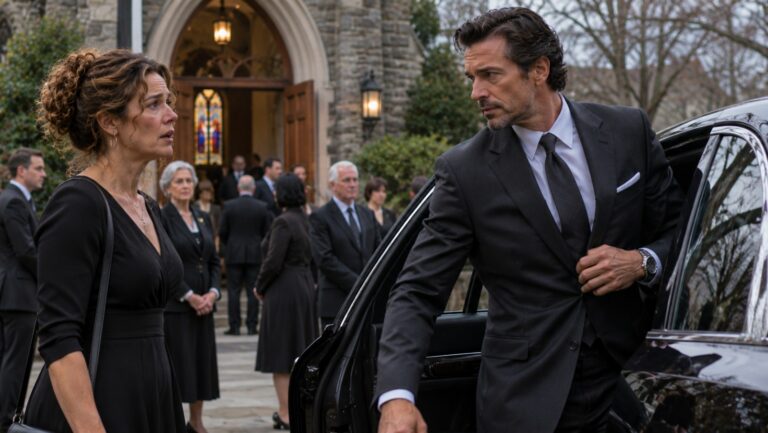
The whole building went to the funeral. Paulo Ferreira gave the eulogy and cried so hard he had to stop twice.
Afterward, Ferreira told us something else. Mr. Abramowitz had left him a letter, with instructions to share it with the tenants.
It said: “Please don’t raise the rent on the next person who lives in 4B. Find someone who is starting from nothing. And when they ask why, tell them it was already paid for.”
The new tenant moved in last month. A young nurse from Haiti, working night shifts at Mount Sinai.
She pays nine hundred dollars.
And every morning, everyone in the lobby says good morning.
THE END.
Kindness passed on is never really spent. It just keeps moving into new hands. >> Have you ever judged someone and later found out you were completely wrong? Tell us in the comments.