My Twin Sister and I Didn’t Speak for 11 Years. Then a DNA Test Said We Weren’t Twins at All.
“Your results are in,” the email said. “Open to discover your family story.”
I almost didn’t click it.
My daughter, Mia, had given me the DNA kit for my fortieth birthday. “You never talk about your family, Mom,” she said. “Maybe you’ll find out something cool. Like we’re related to royalty.”
I spit in the tube to make her happy.
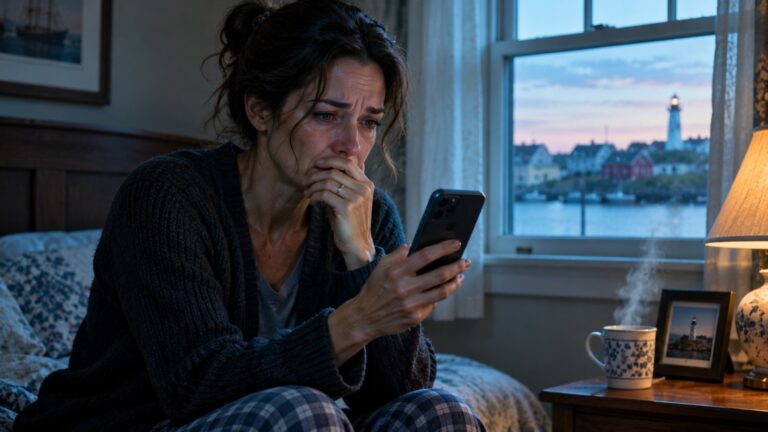
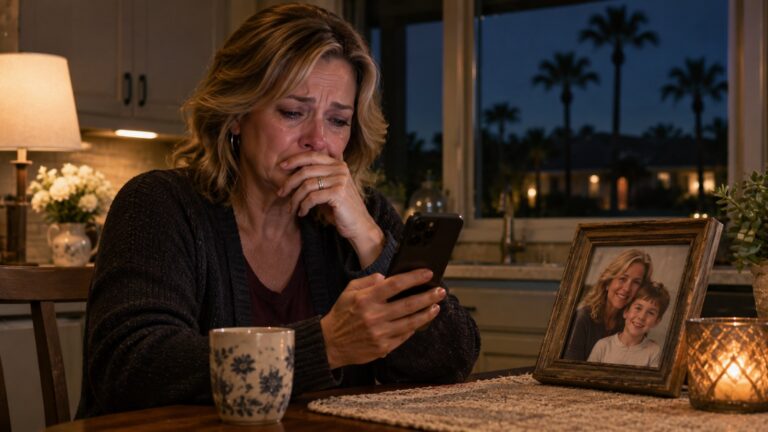
Six weeks later, I opened the results at my kitchen table in Savannah, Georgia.
And the floor fell out from under my life.
My name is Lauren Ashby. I was born on April 14, 1984, at St. Joseph’s Hospital in Augusta, Georgia.
Four minutes after my twin sister, Leah.
We weren’t identical. Leah had dark hair and brown eyes like Mama. I had light brown hair and green eyes that nobody in the family could explain. “Your great-grandmother’s eyes,” Mama always said.
But we were twins in every way that mattered.
We shared a bedroom until we were eighteen. We had a secret language nobody else understood. We finished each other’s sentences. When Leah broke her arm falling off a fence in third grade, I cried harder than she did.
And then, at twenty-nine, we stopped speaking.
It was about Mama.
When she got sick, Leah moved back home to take care of her. I stayed in Savannah with a new job and a new baby. I sent money. I visited when I could. Leah said it wasn’t enough.
At Mama’s funeral, it all came out. In the church parking lot, in front of everybody.
“You were never really part of this family,” Leah screamed. “You always had one foot out the door.”
“And you always needed someone to blame,” I screamed back.
I drove home that night. Neither of us called.
One year turned into five. Five turned into eleven. I missed her wedding. She missed my divorce. Our birthday came every April, and every April, I’d hold my phone and not call.
So that was my family story, the way I knew it.
Then I read the DNA results.
“Parents: Unknown match. Siblings: No match found for Leah Ashby.”
Leah had taken the same test two years earlier. I knew because she’d posted about it once on Facebook, back when I still looked at her page. Our accounts should have matched.
They didn’t.
Not as twins. Not as sisters. Not even as cousins.
But there was one match. One name, at the very top, under “Close Family: Full Sibling.”
A woman named Rachel Moreno. Age forty. Born April 14, 1984.
In Augusta, Georgia.
I read it twenty times. I thought there was a mistake. I called the company. A very patient woman explained that full-sibling matches don’t happen by accident.
“Ma’am, this woman shares about fifty percent of your DNA. She’s your sister. And based on the matching birth date, she may be your twin.”
I hung up and sat in the dark for an hour.
Then I did the thing I hadn’t done in eleven years.
I called Leah.
She answered on the fifth ring. I almost hung up.
“Lauren?” Her voice was the same. Exactly the same. “Is somebody dead?”
“No,” I said. “Leah, I need to show you something. Can I come up?”
There was a long silence.
“Mama’s house,” she said. “Saturday.”
The farmhouse outside Augusta hadn’t changed. Same peeling blue shutters. Same tire swing in the pecan tree.
Leah was sitting on the porch steps when I pulled in. Her hair was going gray at the temples. So was mine.
I handed her the printout without saying a word.
She read it. Then she read it again. Her hand started to shake.
“That’s not possible,” she said.
“I know.”
“We were born four minutes apart, Lauren. Mama told us a hundred times.”
“I know.”
She went inside without a word. I heard her rummaging through closets. When she came back, she was holding a shoebox I remembered from childhood. Mama’s “important papers” box.
At the very bottom, under our baptism certificates, was a yellowed letter from St. Joseph’s Hospital. Dated 1986.
Leah read it out loud, her voice getting quieter with every line.
“Dear Mr. and Mrs. Ashby,
We are writing to inform you of a possible error in our newborn nursery during the week of April 14, 1984. Due to a staffing shortage and a mislabeled bassinet, two infant girls born that day may have been returned to the incorrect families.
After review, the hospital believes the error was corrected before discharge. However, we are required to notify you of this incident.
If you have concerns, please contact our patient records office.”
Clipped behind it was a second note. In Mama’s handwriting.
“I called. They said it was nothing. I chose to believe them. She is my daughter. God gave her to me. I won’t let anyone take her.”
Leah sat down hard on the steps.
“Mama knew,” she whispered. “She knew there might have been a mix-up, and she never said a word.”
I couldn’t speak.
Because I understood it then. All of it. Why I had green eyes nobody could explain. Why Mama held me a little tighter sometimes, like she was afraid I’d disappear. Why she always said, “You’re mine. Don’t you ever forget it.”
She wasn’t saying it for me.
She was saying it for herself.
“So who’s Leah’s twin?” I said finally.
Leah looked at me with tears running down her face.
“Lauren,” she said, “I don’t think I ever had a twin.”
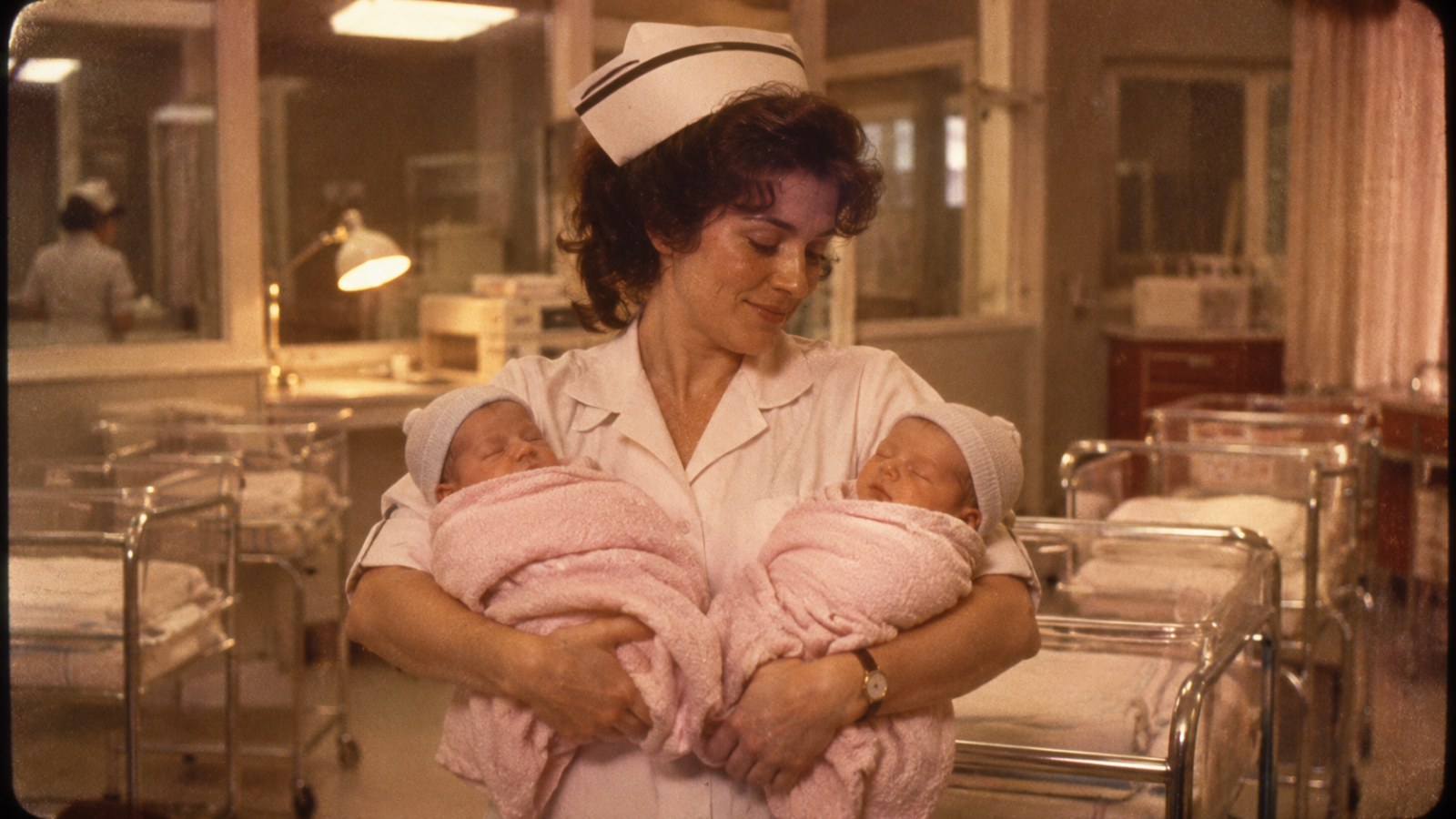
She was right. The hospital records, when we finally got them, told the whole story. On April 14, 1984, two baby girls were born at St. Joseph’s. Mine, to a family named Moreno. Leah, to Mama and Daddy.
But two days earlier, a set of twin girls had been born to the Morenos. One of them was moved to a different nursery for jaundice treatment. When she was brought back, she was put in the wrong bassinet.
The Ashbys went home with two babies that week. Leah — and me.
The Morenos went home with only one.
They were told their second daughter had died of complications.
Rachel Moreno lives in Charleston, two hours from my house.
She was told her whole life that her twin sister died at two days old. She grew up visiting a tiny grave with no body in it.
When I called her, she didn’t say anything for almost a minute. Then she said, “Do you have green eyes?”
“Yes.”
“So do I,” she said. And she started to cry.
We met in a coffee shop in Beaufort, halfway between our cities. I walked in and saw myself sitting at a corner table. Same eyes. Same nose. Same way of tapping my fingers on a cup when I’m nervous.
Leah came with me. She held my hand under the table the whole time.
At one point, Rachel looked at Leah and said, “I’m sorry. I know this must be hard for you.”
Leah squeezed my hand.
“I spent eleven years being angry at her for not being enough of a sister,” she said. “And it turns out she was never even supposed to be mine. But she was. She is.”
She looked at me.
“DNA doesn’t get a vote.”
It’s been a year now.
I have two sisters. One who shares my blood, and one who shares my whole life.
Rachel and I talk every day. We’re learning each other, slowly. Her mother, my birth mother, is eighty-one and cried for two hours the first time she held my hand.
And Leah and I?
We spent our forty-first birthday together on Mama’s porch, under the pecan tree, the way we did every year until we were twenty-nine.
Rachel came too. We made a cake with three names on it.
When we blew out the candles, Leah leaned over and whispered something in our old secret language. The one only the two of us ever understood.
It means, “You’re mine. Don’t you ever forget it.”
THE END.
Family isn’t only who you’re born to. It’s who stays. >> Would you want to know the truth if it meant changing everything you believed about your family? Tell us in the comments.